Sprinkler Winterization & Spring Startup in Cary, Raleigh & the Triangle
Blow out your system before the first freeze and start it up right in spring — seasonal service that prevents burst pipes and dry spring lawns.
Two visits that protect your whole system
The Triangle gets just enough hard freezes to crack a backflow assembly or split a pipe if water’s left sitting in the lines. A fall winterization — blowing the system out with compressed air — is cheap insurance against a spring surprise that can cost hundreds to repair.
In spring, a proper startup is more than turning the water back on: we pressurize slowly, check every zone for freeze damage and leaks, reset the controller, and make sure you head into the season with even coverage. Put both on a seasonal plan and you never have to think about it.
Seasonal services
Fall protection, spring readiness, and freeze repairs.
Fall winterization / blow-out →
Compressed-air blow-out that clears the lines and backflow so nothing freezes and cracks.
Spring startup & activation →
Slow pressurization, a full zone check, and controller reset to start the season right.
Backflow freeze protection →
We protect and, if needed, repair the backflow assembly that freezes most often.
Freeze-damage repair →
Cracked backflow, split pipe, or broken valve from a freeze — repaired fast.
Drip & micro-spray zones →
Beds run at a fraction of turf pressure and need clearing separately, filter and regulator included.
Commercial & HOA sites →
Scheduled, documented winterization for multi-controller properties and common areas.
Seasonal maintenance plans →
Scheduled fall + spring visits so winterization and startup never get missed.
Controller reprogramming →
Reset to your town’s current schedule for the new season.
Choose your town
Every town has its own page, written for local water rules and conditions. All six core towns are live.
Cary, NC
Raleigh, NC
Apex, NC
Morrisville, NC
Holly Springs, NC
Fuquay-Varina, NC
Why seasonal service matters here
Freeze insurance
A blow-out is a fraction of the cost of a freeze-cracked backflow or burst pipe.
No dry-spring surprise
A real startup catches winter damage before your lawn pays for it.
Set it and forget it
A seasonal plan schedules both visits so nothing slips.
How much air pressure is safe to push through a system
Clearing a system is a question of air volume, not air pressure, and the two get confused constantly. What drives standing water down a lateral and out through the heads is cubic feet per minute — lots of moving air at modest pressure. A pancake compressor from the garage offers plenty of pressure and almost no volume. It will hiss through a zone for ten minutes, mist a little water from the nearest heads, and leave the rest of the line full while the homeowner believes the job is done. That is the system that splits in January.
Pressure is the part that has to stay held down. Rigid PVC gets no more than about 50 psi; poly tolerates more, but there’s no reason to hunt for the ceiling. Excess air blows seals out of rotor gear drives and can crack a fitting outright. There’s also a rule about never feeding air into a closed system: a zone stays open the whole time the compressor runs, and each zone gets short passes rather than one long one, because air moving through a dry rotor builds heat fast.
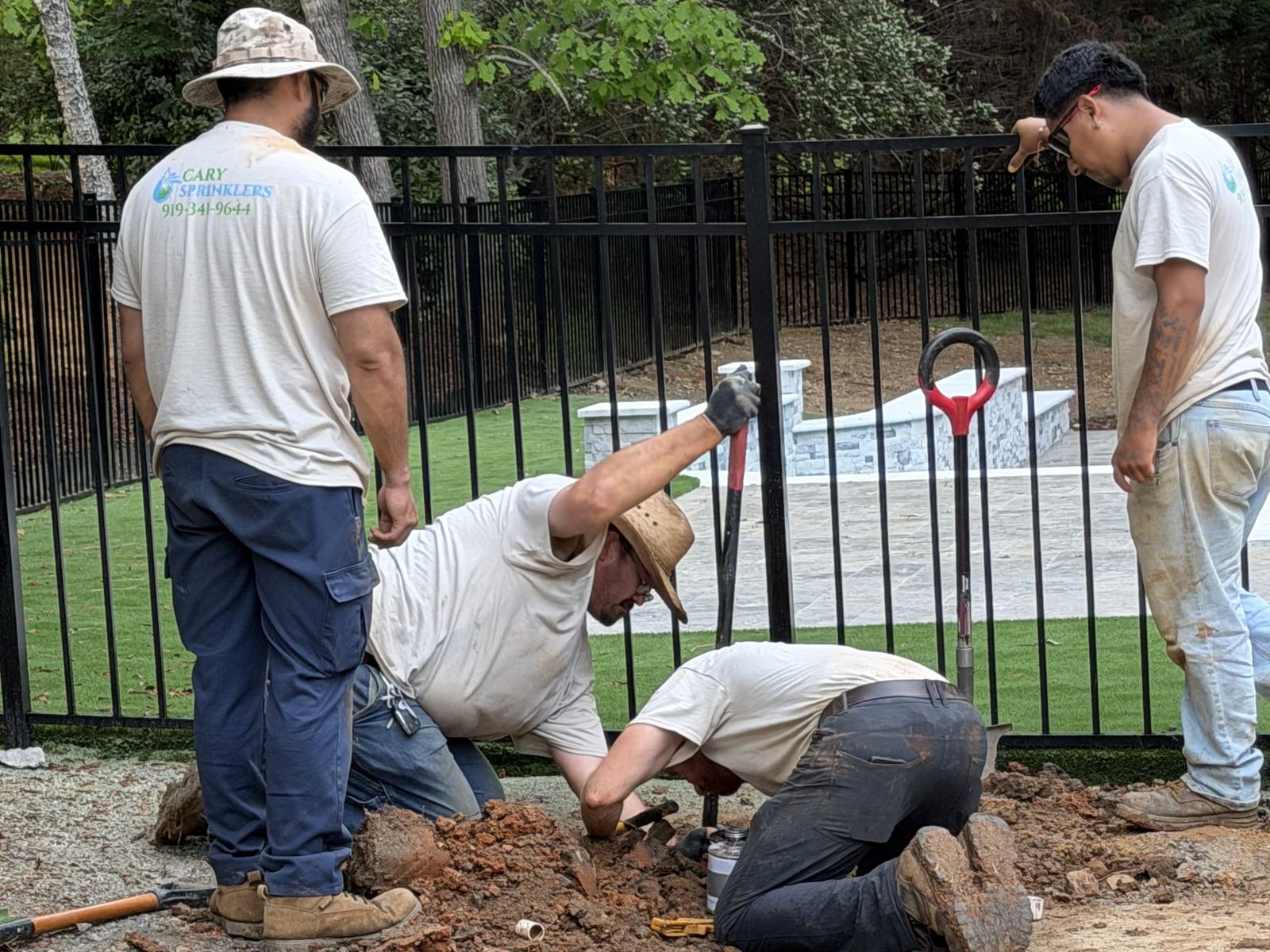
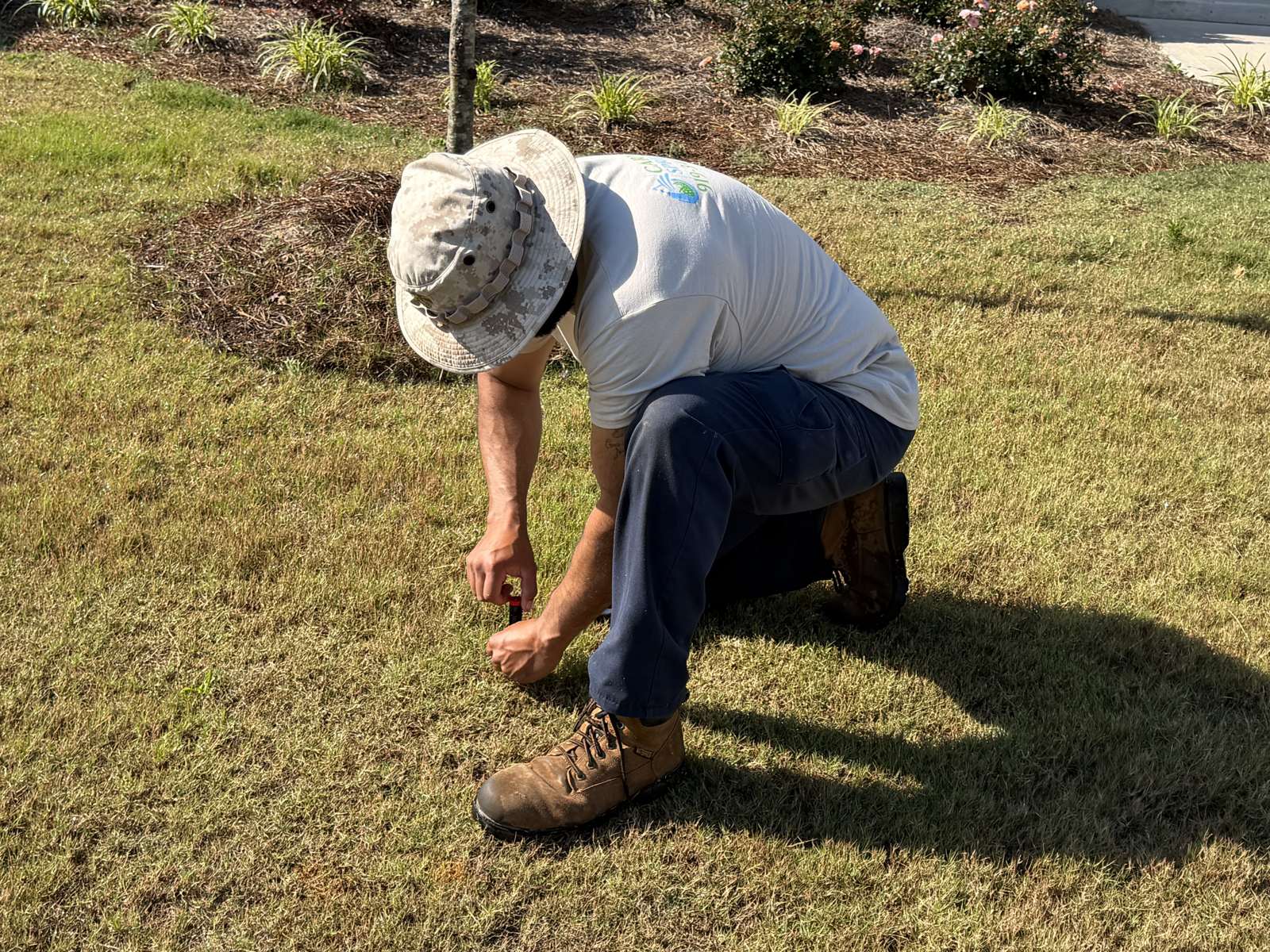
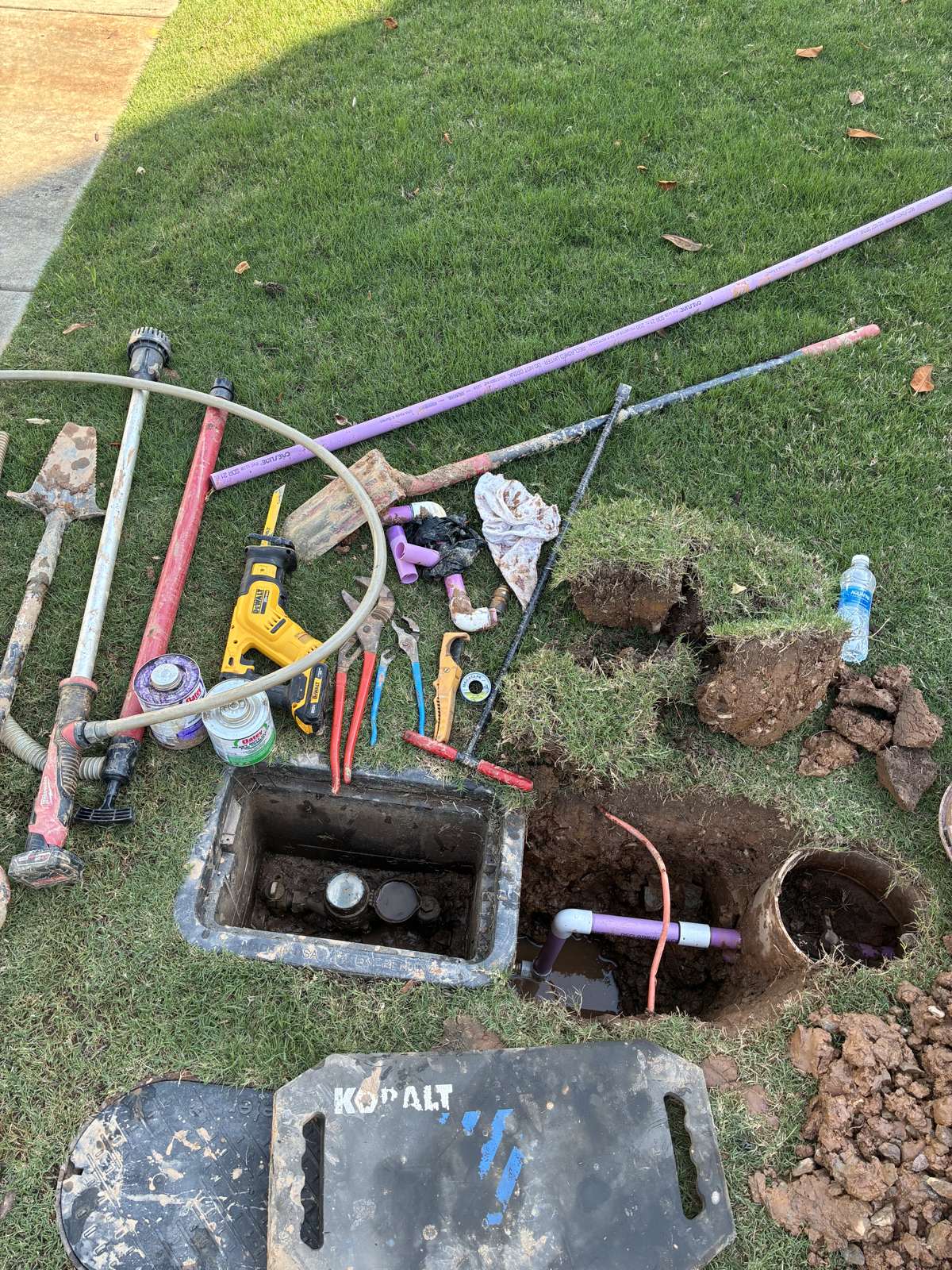
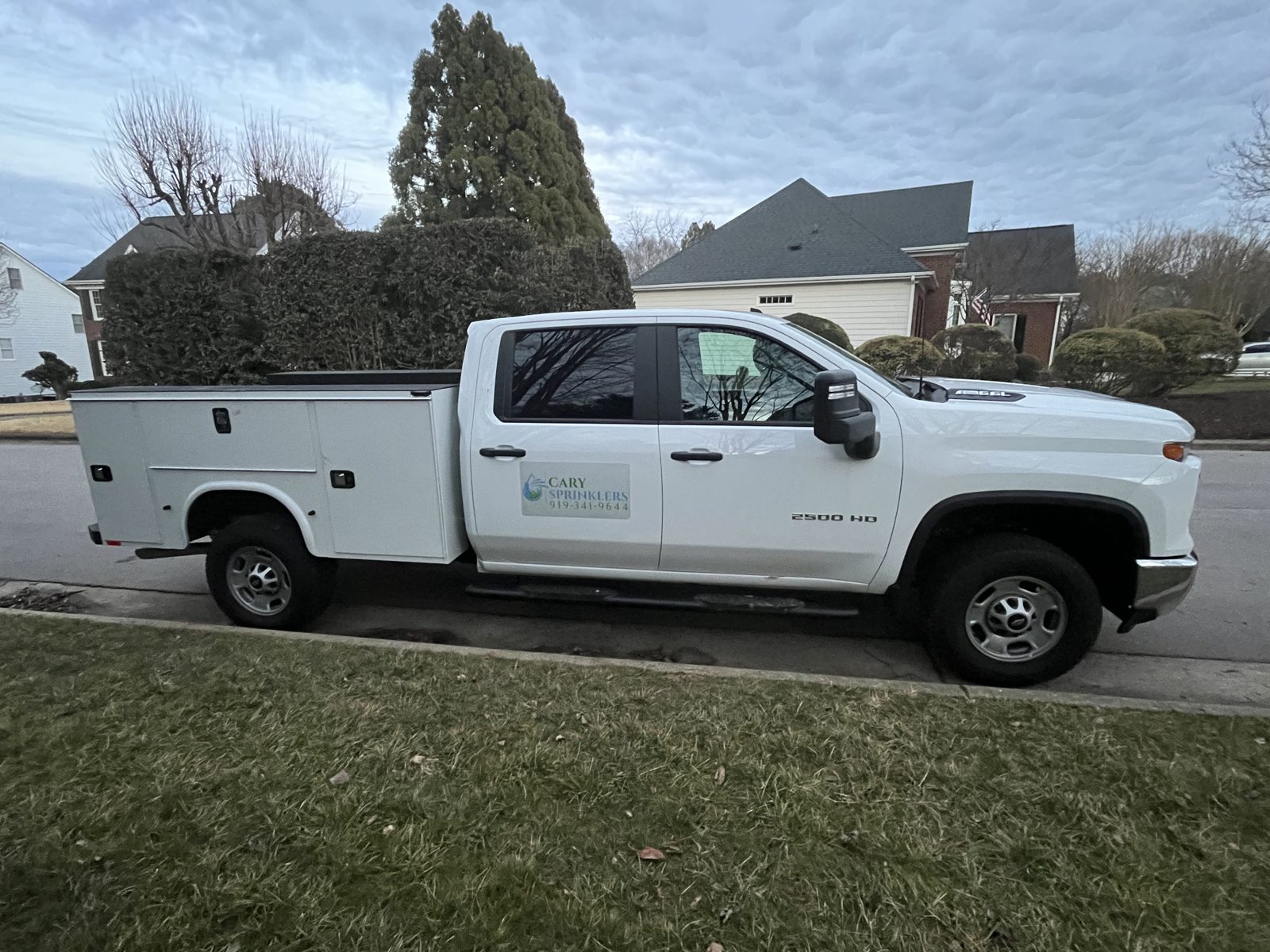
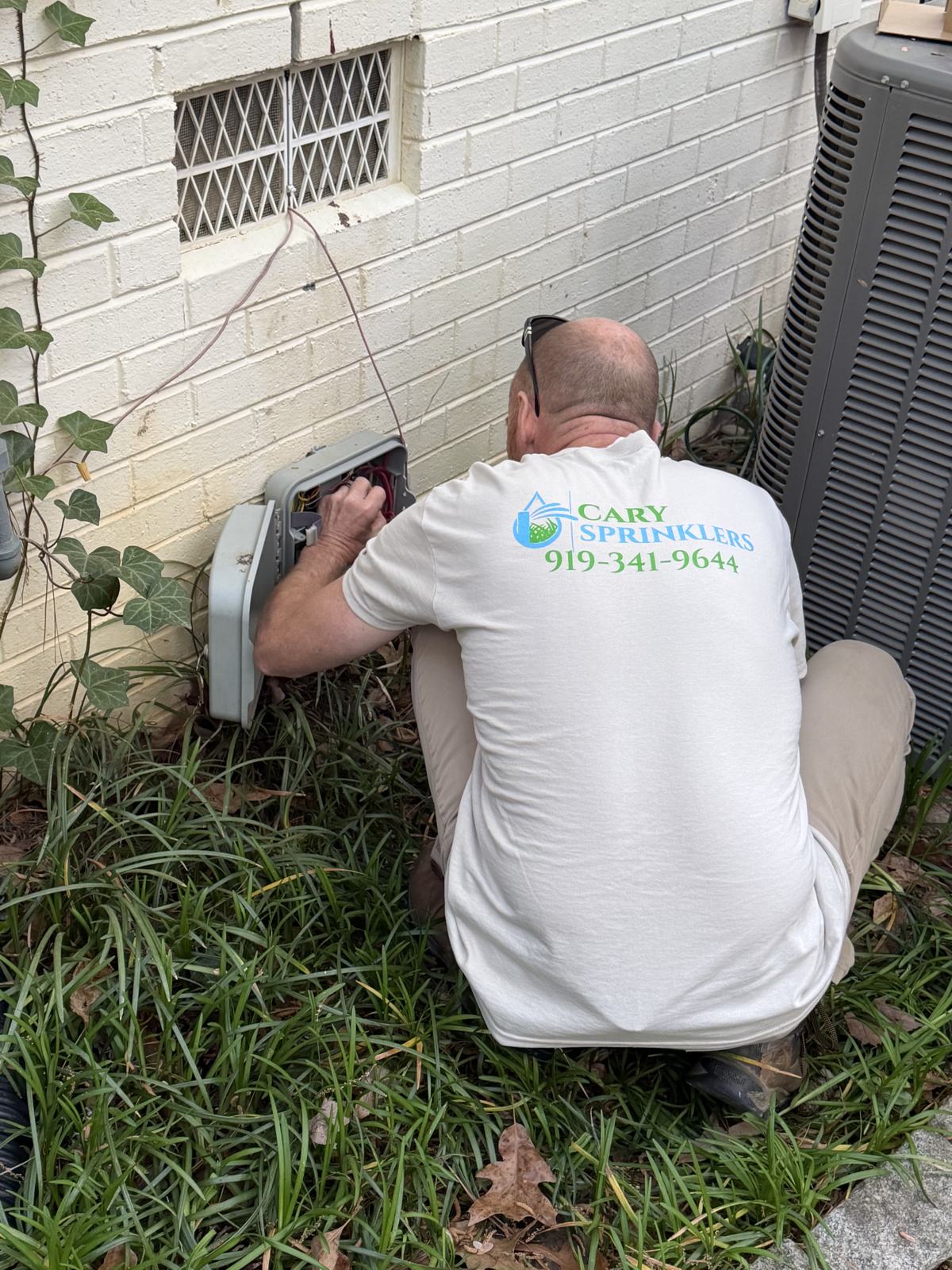
Recent work around the Triangle
What our Triangle neighbors say




Why the backflow assembly is the first thing to crack
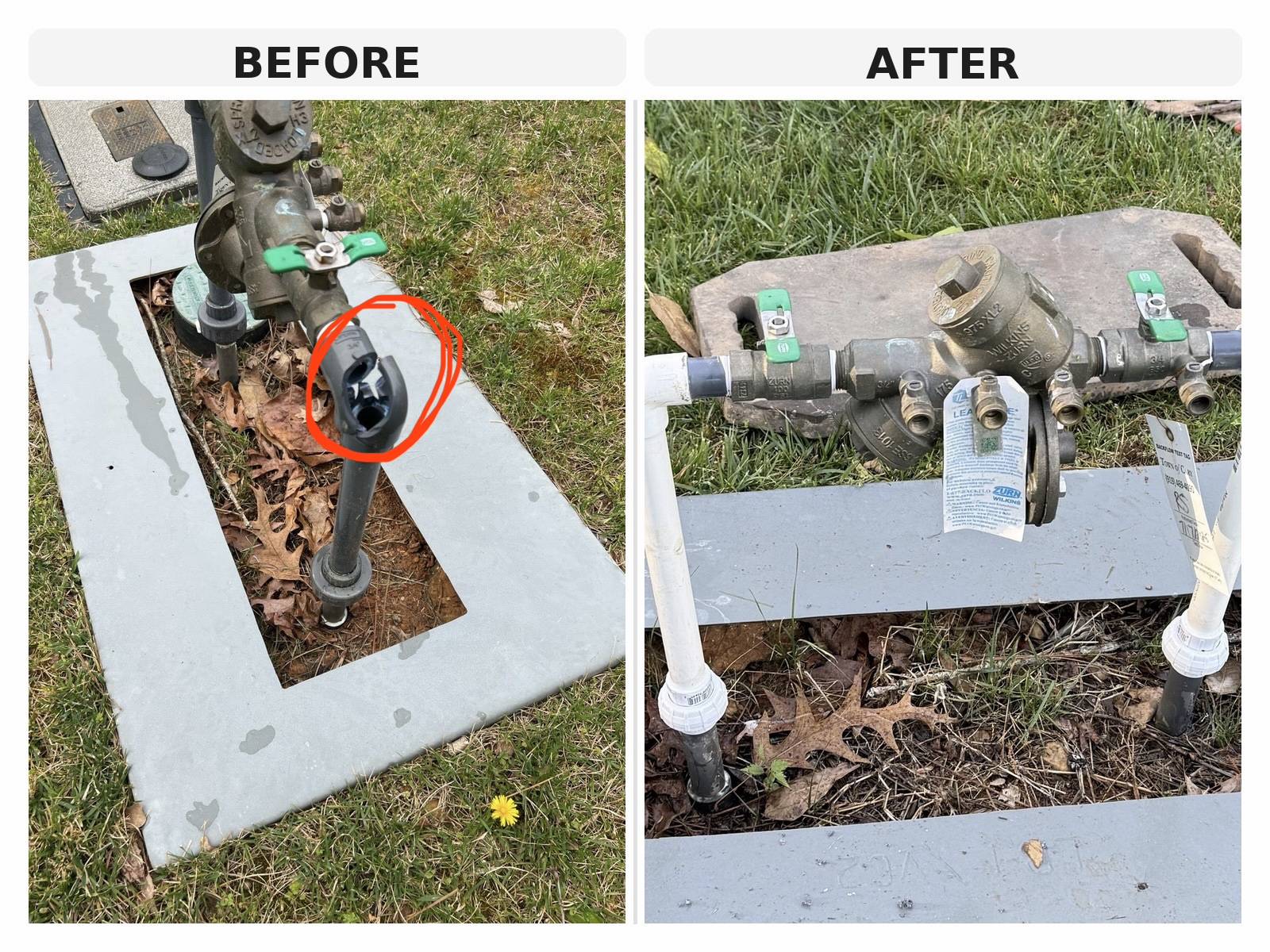
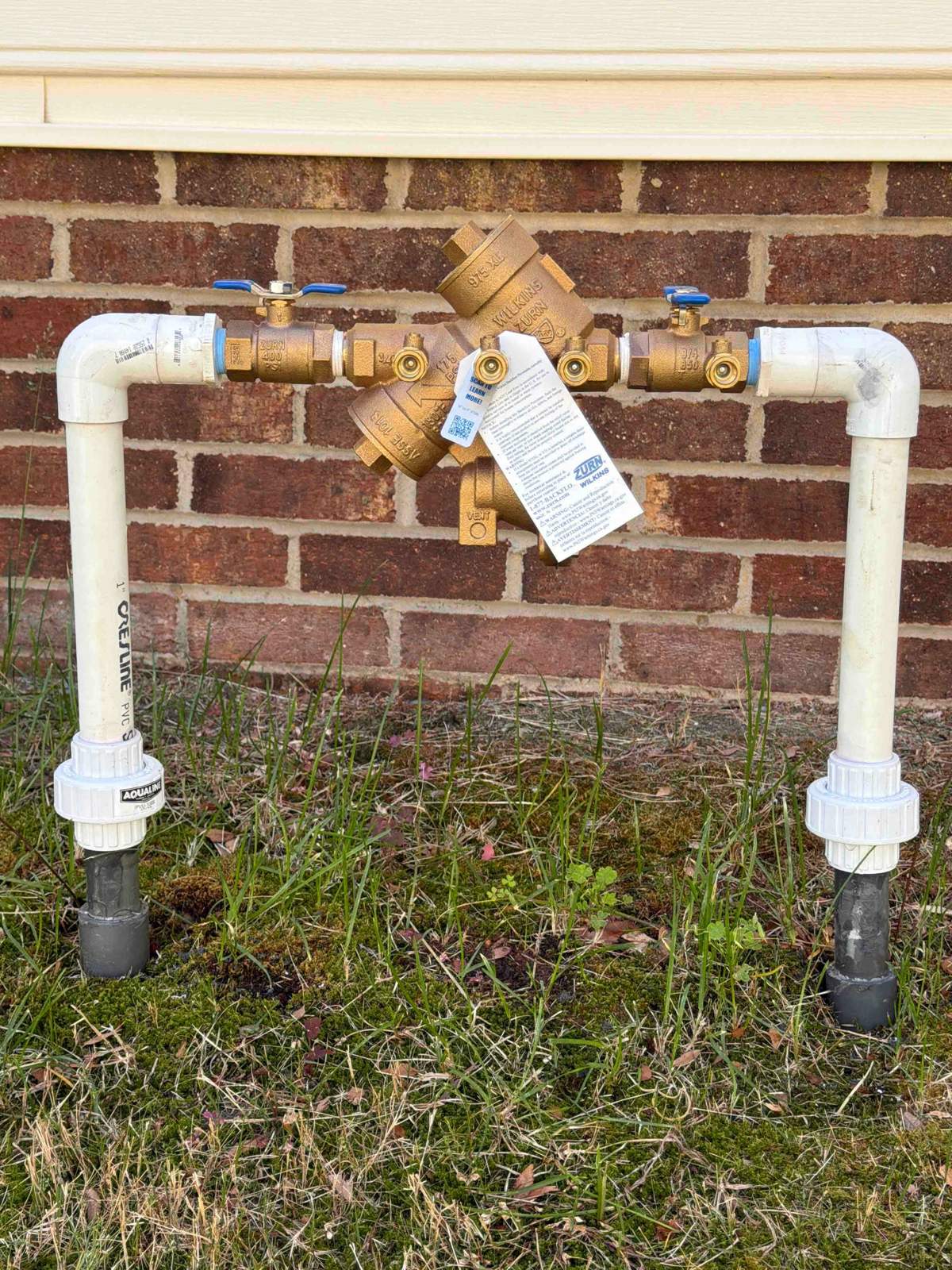
Everything else is buried, where the ground holds enough warmth to carry a system through most Triangle cold snaps. The backflow assembly is the exception. It stands above grade beside the house or in an enclosure near the meter, out in open air, and it’s made of brass. Brass doesn’t stretch. Water expanding into ice will split the body, lift the bonnet, or crack a test cock rather than bulge and recover.
Test cocks usually go first. They’re small threaded ports holding no more than a spoonful of water apiece, and a spoonful is all it takes. A hairline crack won’t announce itself until spring, when it weeps and the device can’t hold pressure long enough to pass certification.
Which is why the assembly gets its own attention at the end of a blow-out. Test cocks come open, ball valves get set to roughly forty-five degrees so nothing is trapped between two closed seats, and the unit gets insulated without trapping moisture against the brass. Those few extra minutes in November save replacing a device that has to be certified before your water is turned back on.
Picking the week to blow the system out
Timing is the awkward part of a Triangle winter. The first hard freeze usually lands in the back half of November, yet we also get stretches of sixty-five-degree afternoons well into December. Clear the lines in October and you’ve surrendered the last month of watering, which matters if fescue went down in September and hasn’t rooted, or if shrubs are entering winter dry. Hold out until the weather feels properly wintry and you’re gambling on one clear night in the low twenties that arrives with no lead-in — and that’s the night that does the damage, not the cold spell everybody watched coming.
We book most blow-outs into the second half of November, once overnight lows start touching freezing and the lawn has stopped drinking. Anything planted after that gets hand-watered for the rest of the season.
Skip the service two years running and it catches up with you. Water sits in the assembly and the low points all winter, something lets go quietly during a January snap, and it surfaces in April as a flooded valve box. Putting both visits on an irrigation maintenance plan takes the date off your list.
Drip and micro-spray zones need a different hand
Drip and micro-spray zones don’t get handled like lawn zones, and forcing the issue is how emitters end up loose in the mulch. A drip zone runs behind a filter and a pressure regulator that steps the supply down near thirty psi, and the tubing past it is thin-walled with emitters pressed into it. Send lawn-zone air through that and you pop emitters off the line and drive grit backward through the screen.
The correct approach is gentler and mostly mechanical: drop the pressure, pull and drain the filter screen, open the flush cap at the far end of the run, and let the line empty. There isn’t much water in there to begin with, and the tubing sits shallow enough that gravity handles most of the work.
Come spring, drip zones are where the start-up finds the most. Filter screens silt up over a season. Emitters plug with mineral scale or fill with fine root hair. Voles and rabbits chew through quarter-inch tubing when there’s little else to eat, and fresh mulch buries the flush cap where nobody can find it. So every drip zone gets run and walked, not just switched on.
Winterization & startup FAQ
When should I winterize in the Triangle?
Before the first hard freeze — typically late fall. We blow the system out with compressed air so no water is left to freeze and crack.
What exactly is a blow-out?
We push compressed air through each zone to clear all the water from the lines and backflow, which is what actually prevents freeze damage.
What does spring startup include?
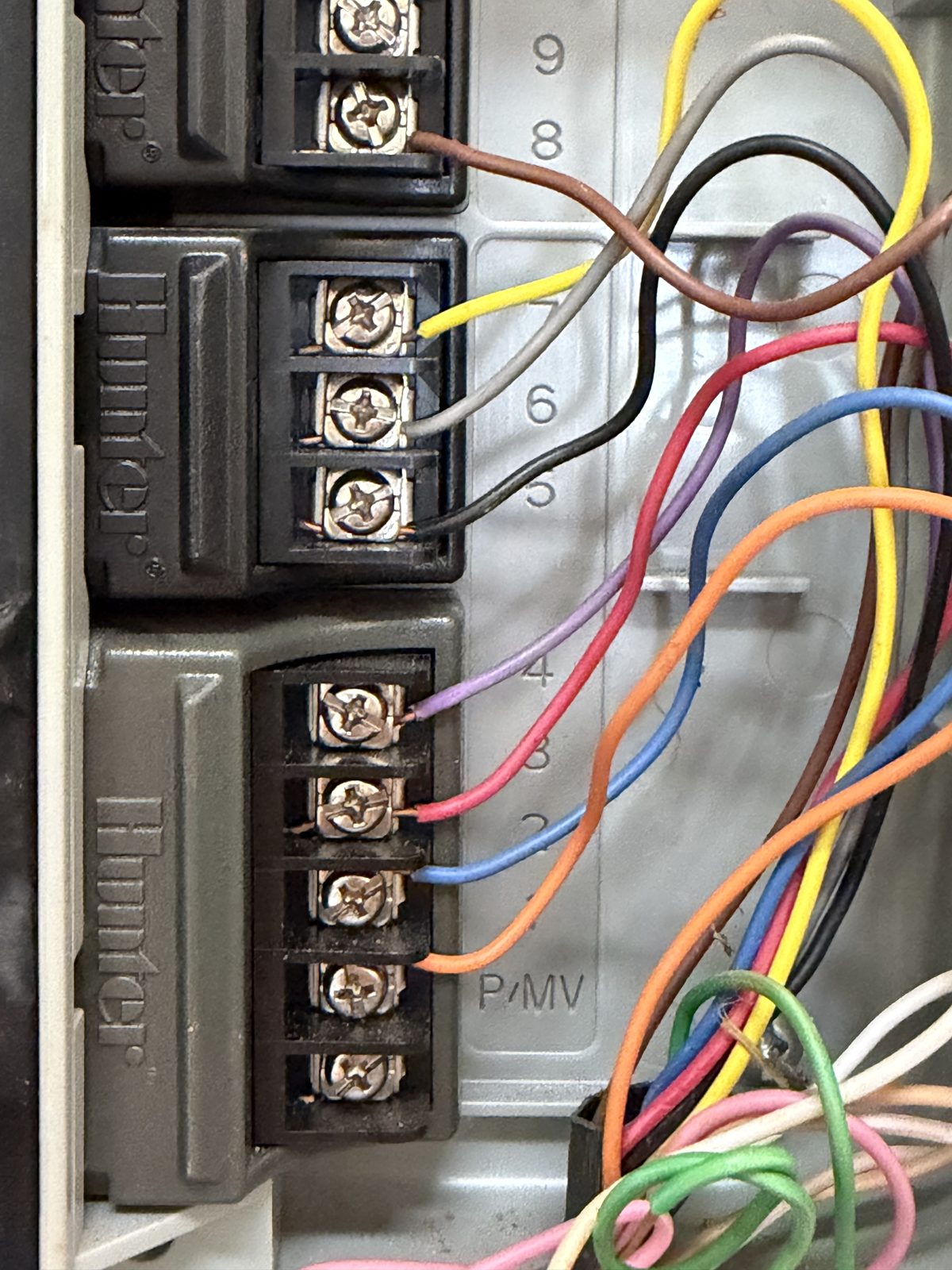
Slow pressurization, a full zone-by-zone check for freeze damage and leaks, and a controller reset for the season.
Can I put both on a plan?
Yes — a seasonal maintenance plan schedules fall winterization and spring startup so you never have to remember.
Protect your system this season
Schedule a winterization, a spring startup, or a seasonal plan with a local team.
Get your free winterization & startup quote
Tell us what’s going on and we’ll get right back to you — usually the same day. Prefer to talk? Call or text 919-341-9644.
- Local, licensed & insured
- Upfront pricing — no surprises
- 100% guarantee + 12-month workmanship warranty