Backflow Testing & Repair in Cary, Raleigh & the Triangle
Backflow testing and RPZ repair that keeps your irrigation compliant with Cary, Raleigh, and every Wake County town’s rules — and protects your drinking water.
Required on every system — and the rules vary by town
Every irrigation system in the Triangle needs a backflow preventer to keep lawn water from siphoning back into your drinking water, and every town requires it to be tested on a schedule. The catch: the schedules differ. Cary runs a three-year residential cycle (annual if you have a booster pump or chemical feed); Raleigh Water wants residential tested by July 1 every three years and commercial annually; Fuquay-Varina tests every year through BSI Online. Miss it and you get compliance notices.
We test, repair, and replace backflow assemblies to code, handle the freeze-cracked RPZs that spring brings, and coordinate the paperwork so your account stays clear. One call keeps you compliant.
Backflow services
Testing, repair, replacement, and the paperwork.
Backflow testing
Certified testing on your town’s schedule, with results filed so your account clears.
Backflow valve repair →
Rebuild or replace a failed or freeze-cracked reduced-pressure assembly to code — see the full page.
Freeze-damage repair
Spring’s most common call — a cracked RPZ from a hard freeze, repaired fast.
New backflow installation
The correct code-compliant assembly installed for a new or upgraded system.
Compliance filing
We coordinate the required test paperwork with your town or its vendor.
Commercial backflow
Annual commercial testing and repair for HOA and multi-property systems.
Choose your town
Every town has its own page, written for local water rules and conditions. All six core towns are live.
Cary, NC
Raleigh, NC
Apex, NC
Morrisville, NC
Holly Springs, NC
Fuquay-Varina, NC
Why call us for backflow
We know each town
Cary, Raleigh, Apex, Fuquay — the cadences and filing differ, and we track them.
Test and repair
If it fails, we fix it on the spot instead of sending you to a plumber.
Paperwork handled
We coordinate the filing so your account clears without you chasing it.
Inside the assembly: two checks and a relief valve
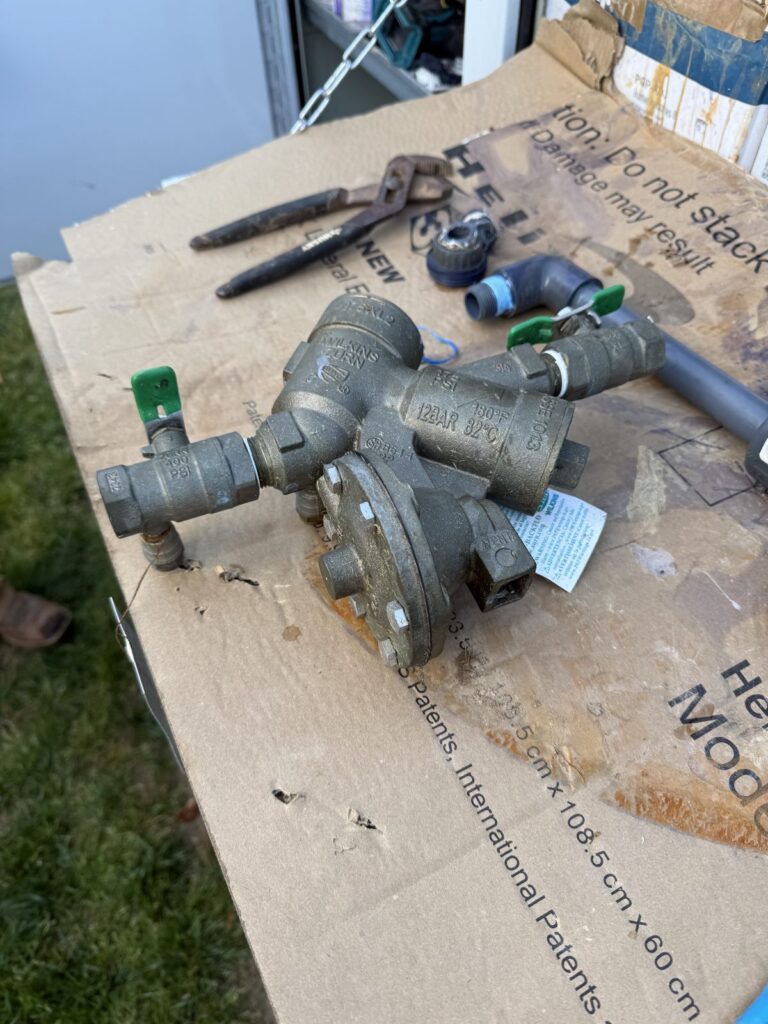
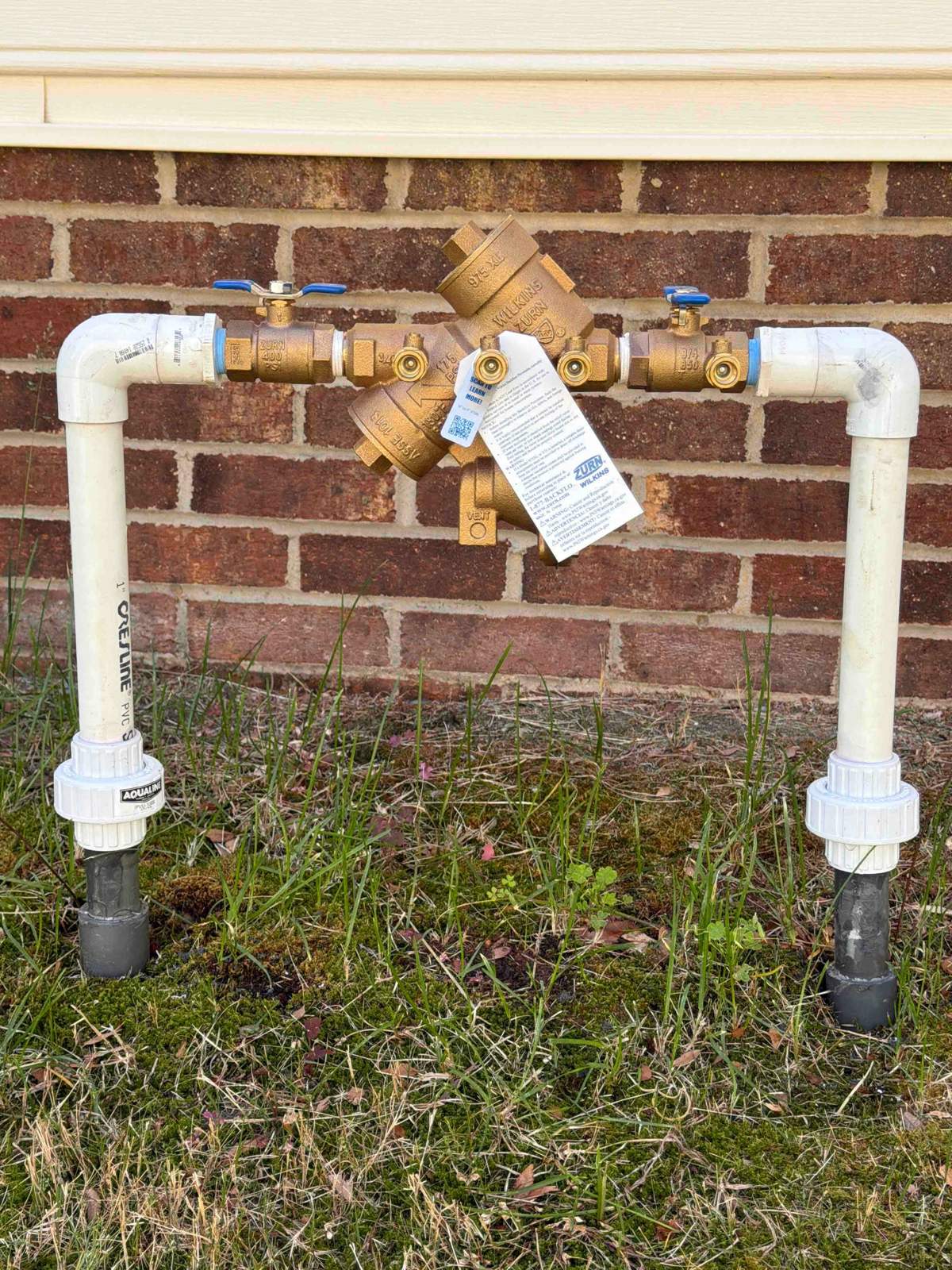
That box near your water meter or against the foundation has exactly one job — let water travel out to your sprinkler zones and never let it travel back toward the house. On a reduced-pressure assembly, two spring-loaded check valves sit in line one behind the other, and between them is a relief valve that dumps water onto the ground the instant pressure in that middle chamber climbs too close to supply pressure. The dumping is deliberate. A puddle under the assembly on a dry day is the device telling you something inside it has stopped sealing.
Two things wear out. The first is rubber — seat discs and o-rings that harden with age and quit making a clean seal. The second is the springs and the moving poppets they push, which a single grain of grit can hold a fraction off the seat. Fine sediment travels through any municipal main, and every upstream line break sends more of it downstream. So a failed test usually reads one of two ways: a check leaking backward, or a relief valve opening early or refusing to open at all. Test cocks seize too, quietly, until somebody tries to turn one.
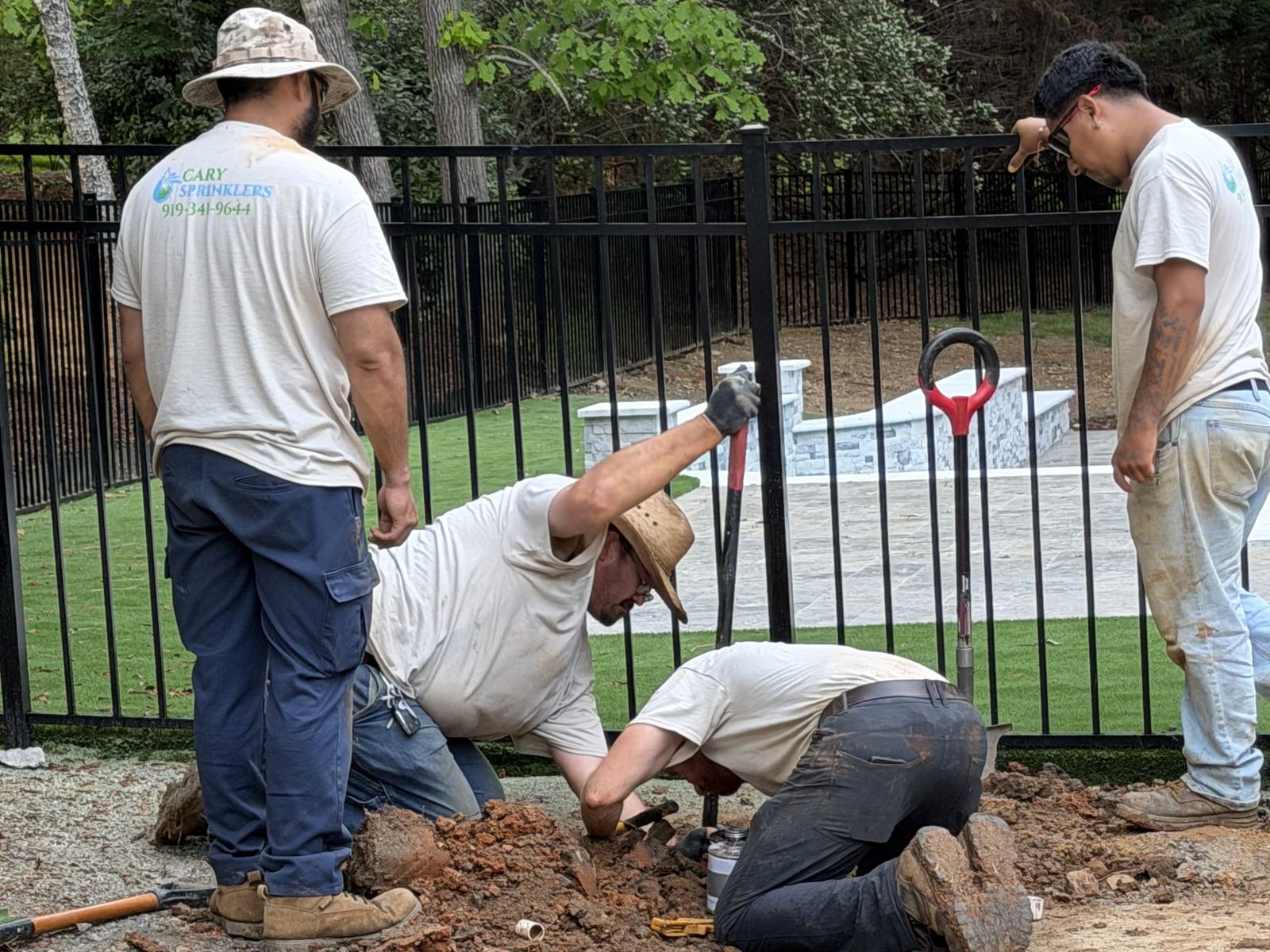
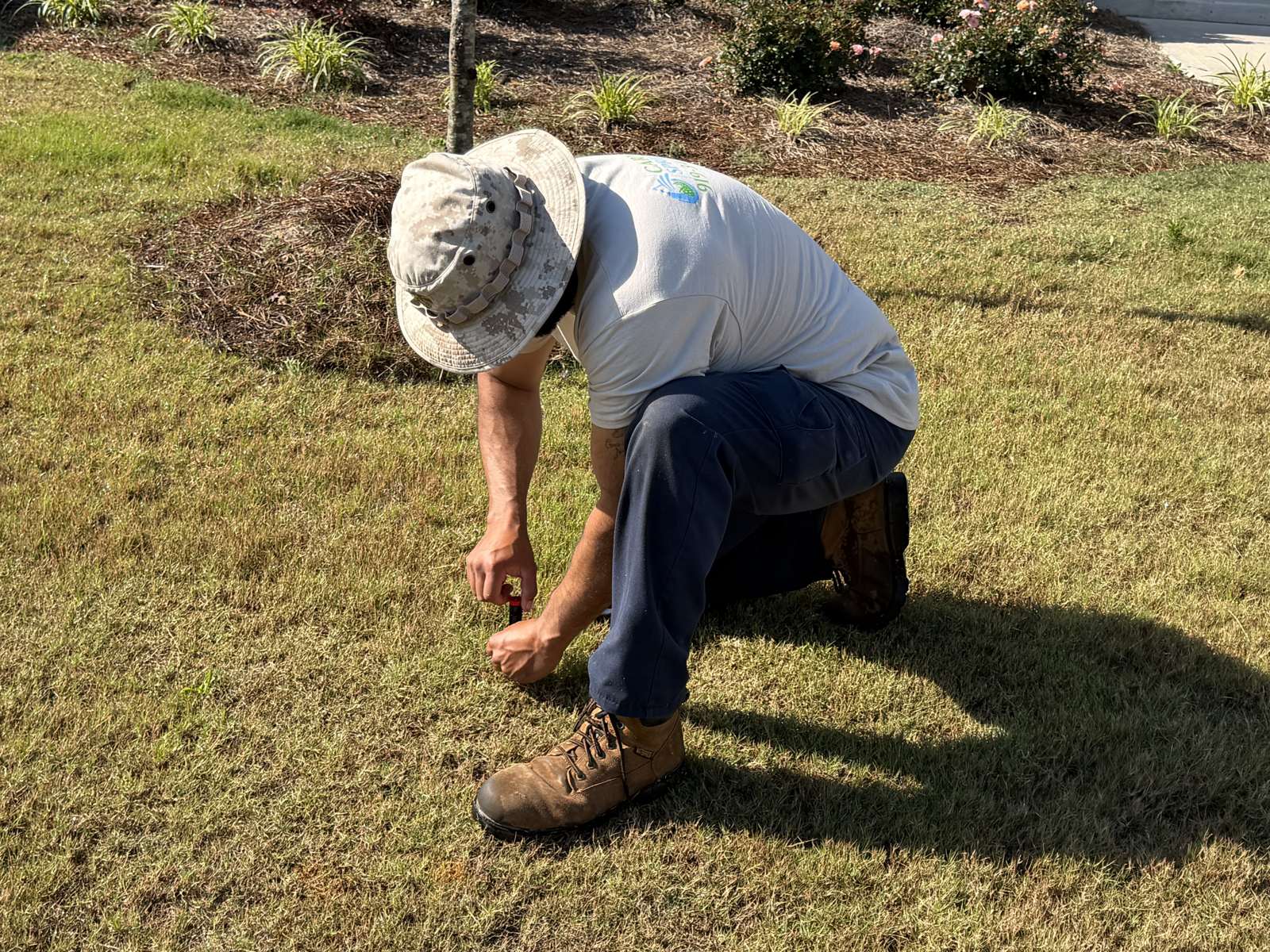
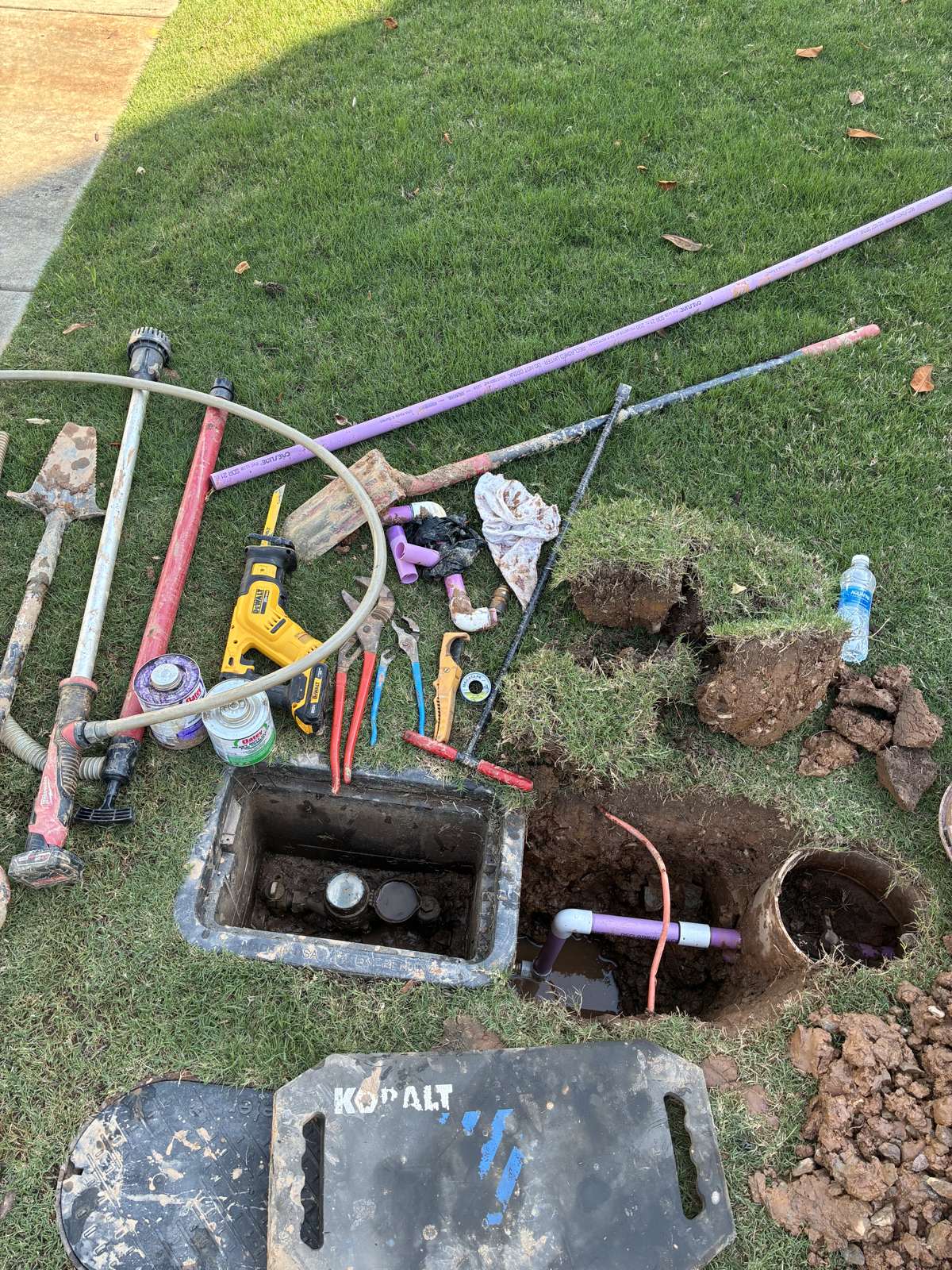
Recent work around the Triangle
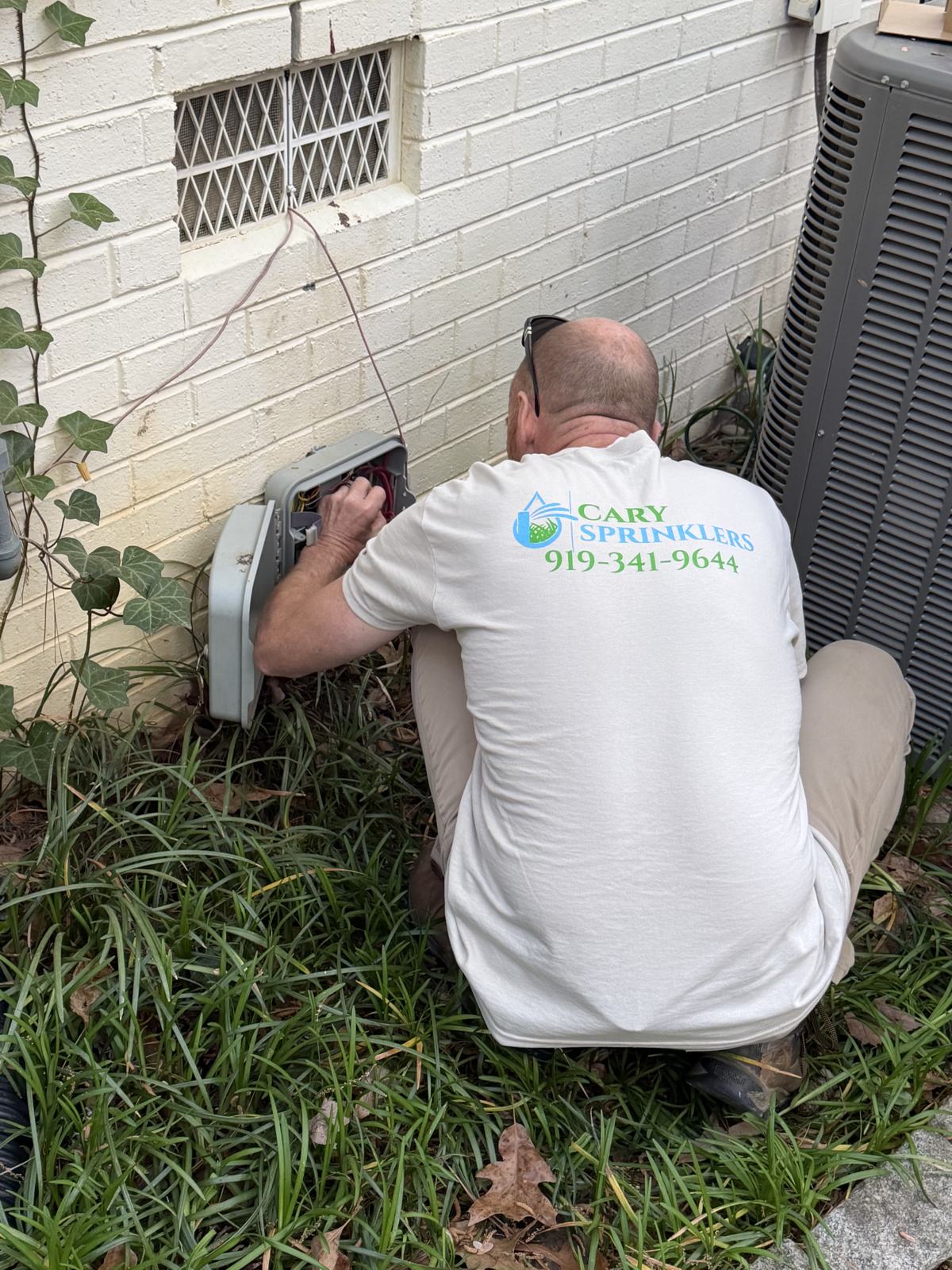
What our Triangle neighbors say




Which schedule applies depends on who bills you for water
Homeowners tend to assume the testing interval follows their mailing address. It follows whoever bills them for water, and around here those aren’t always the same thing. Morrisville is the clean example: the Town of Cary supplies the water there, so Cary’s requirements apply — a preventer on every system, residential retesting every third year under NC Senate Bill 166, and a move to annual testing if there’s a booster pump or a chemical feed on the line.
Elsewhere the cadence shifts. Apex, supplied from the shared Cary–Apex Water Treatment Facility on Jordan Lake, requires an irrigation permit alongside the preventer. Holly Springs runs a town backflow program of its own. Fuquay-Varina tracks annual testing through BSI Online, so your due date lives in a vendor database and the reminders come from there rather than from Town Hall. Raleigh Water sets a three-year residential cycle with a July 1 deadline, annual for commercial, and wants a City-certified tester doing the work.
The shortcut is simple. Read the top of your water bill. Whichever utility’s name is printed there sets your interval, your form, and who’s allowed to sign it.
When a test lapses — and where the paperwork ends up
Nothing happens the day you miss one. What arrives instead is a notice, then a firmer one with a date on it, and in some towns a warning that irrigation service can be shut off at the meter until a passing result is on file. There’s no backdating available: a test carries the day the gauge went on the assembly, so a lapse gets closed by testing now, not by explaining later. And if that catch-up test fails, the clock keeps running while parts go in — which is why we carry rebuild kits and try to close both halves in one visit.
The result doesn’t live in your kitchen drawer. It goes to the utility or to the vendor tracking compliance on its behalf, and that filed record does two jobs. It keeps your account clear when the town audits its list, and it answers a question that surfaces at closing. Attorneys and buyers’ agents increasingly ask for current backflow documentation with the rest of the file, and an irrigation system with no testing history reads as deferred maintenance on a house that’s otherwise ready to go.
Rebuild an older assembly, or replace it?
When one fails, the first question is whether parts are still made for it. A rebuild kit — fresh rubber, new springs, sometimes a poppet — brings most units back to a passing result in a single visit, and when the body is sound that’s the right money to spend. We rebuild wherever new internals will hold.
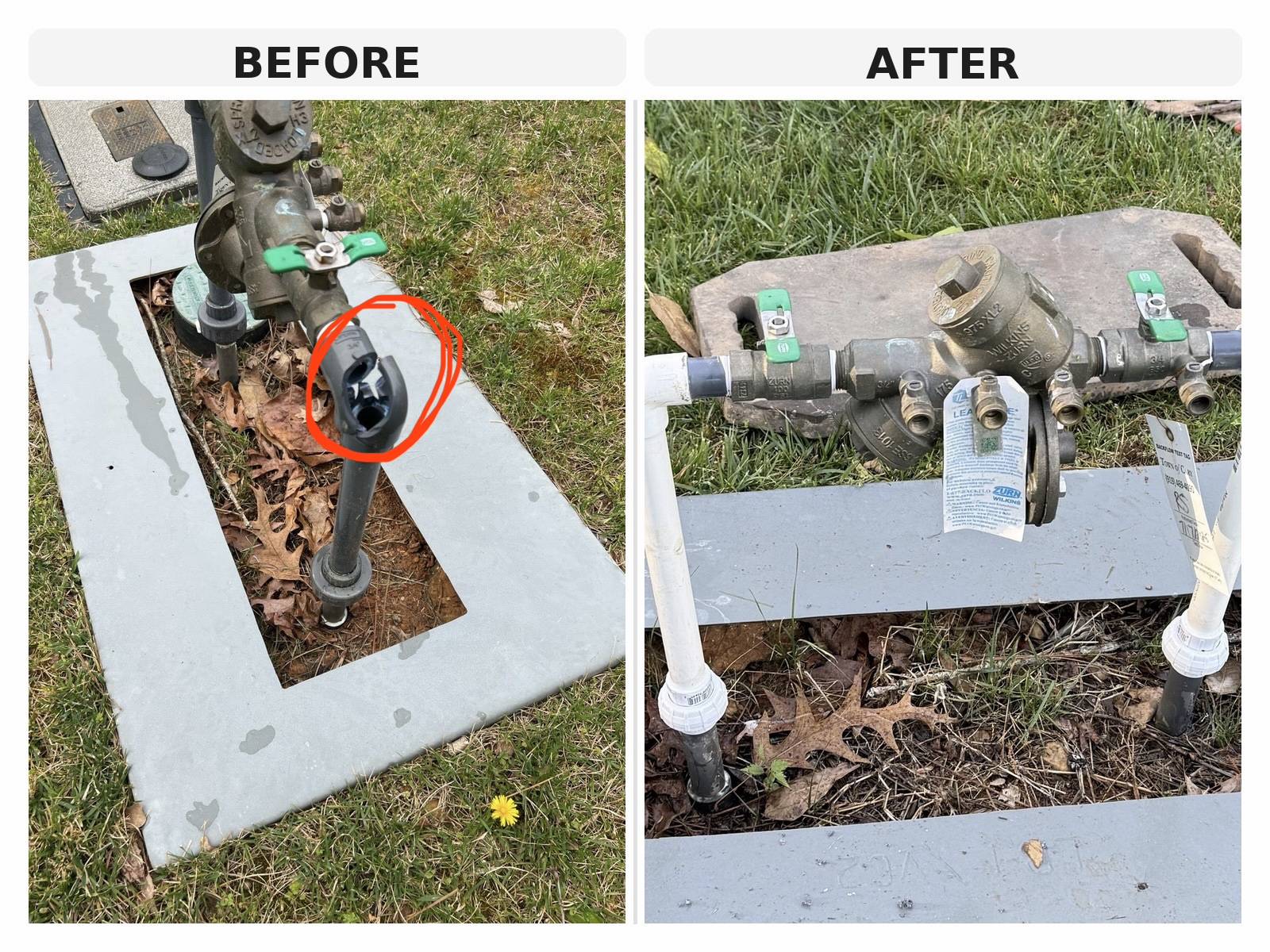
Replacement earns its keep in three situations. First, a cracked body: water left standing through a hard freeze splits the casting, and the crack is often hairline enough that it only weeps under test pressure. Second, an assembly old enough that kits have to be hunted down — a repair that takes three weeks to source isn’t much of a repair. Third, an assembly that was wrong from the day it went in: undersized for the system, mounted too low, or crowded so tightly against a wall that nobody can get a gauge onto the test cocks. Replacing in that last case fixes the reason it keeps failing instead of resetting the countdown.
If yours split last winter, the way to stop the repeat is a fall blowout — that’s winterization & startup.
Backflow FAQ
How often does my town require backflow testing?
It varies: Cary is a three-year residential cycle (annual with a booster pump/chemical feed), Raleigh residential is every three years by July 1 (commercial annual), and Fuquay-Varina is annual. We track your town’s rule.
My backflow failed the test — now what?
We repair or replace the assembly to code and coordinate the retest so your account clears. Most failures are a rebuildable RPZ or freeze damage.
Why did my RPZ crack over winter?
A hard freeze on water left in the assembly splits it — the most common spring backflow call. A fall winterization prevents it.
Do you handle commercial and HOA backflow?
Yes — annual commercial testing, repair, and replacement for HOA and multi-property systems.
Stay compliant, keep your water safe
Book backflow testing or a repair with a local team that knows your town’s rules.
Get your free backflow testing quote
Tell us what’s going on and we’ll get right back to you — usually the same day. Prefer to talk? Call or text 919-341-9644.
- Local, licensed & insured
- Upfront pricing — no surprises
- 100% guarantee + 12-month workmanship warranty