Sprinkler, irrigation & drainage services in Raleigh, NC
From Inside-the-Beltline classics to brand-new North Raleigh builds — every irrigation, drainage, and lighting service we offer in the capital, on one page.
Your local sprinkler & irrigation team in Raleigh
Raleigh is the biggest yard-count in our service area, and the range is wider than anywhere else — a 1950s Inside-the-Beltline system running on brittle poly one street over from a brand-new build in North Raleigh with a WiFi controller nobody has programmed. We work across that whole spectrum.
Below is every service we bring to Raleigh, along with the water rules that Raleigh Water enforces and that your system needs to respect.
Everything we do in Raleigh
Every service below has a dedicated Raleigh page with local detail, pricing guidance, and its own FAQ:
- Sprinkler Repair in Raleigh
- Irrigation Repair in Raleigh
- Irrigation Maintenance in Raleigh
- Backflow Testing & Repair in Raleigh
- Sprinkler Installation in Raleigh
- Smart Controllers in Raleigh
- Winterization & Spring Startup in Raleigh
- Commercial & HOA Irrigation in Raleigh
- French Drains & Drainage in Raleigh
- Landscape Lighting in Raleigh
What Raleigh homeowners deal with
Raleigh Water has its own rulebook, and it decides more about your irrigation than most homeowners realize.
What to know about water in Raleigh
Raleigh’s water utility — Raleigh Water — protects the Neuse River watershed, and it takes cross-connection control seriously: an RPZ is required on residential lawn irrigation, residential backflows must be tested every three years by July 1, commercial ones annually, and the city expects certified testers and kept records. A failed device has to be repaired or replaced and retested, with the passing result submitted inside 15 days.
Raleigh is also particular about who may test. It does not accept every NC-certified tester — the tester has to hold certification from one of four approved schools, attend the city’s own orientation, and stay registered, and reports from anyone with an expired certificate are rejected outright. Non-compliance carries real cost too: a metered irrigation system that falls out of compliance is disconnected, and reconnection is charged every time.
Raleigh also has permanent conservation rules that apply whether or not there is a drought: landscape irrigation is capped at one inch per week, and watering onto streets, driveways and other hard surfaces is prohibited outright. Most homeowners have never heard of the one-inch rule, and a controller left on a factory schedule will sail past it.
On top of that sit three drought stages. Stage 1 cuts in-ground irrigation to a single day — odd addresses Tuesday, even addresses Wednesday — between midnight and 10am only, with a half-inch weekly cap. Stage 2 bans in-ground systems and hose-end sprinklers entirely, leaving hand watering and drip. Stage 3 stops all outdoor watering. Raleigh spent much of 2026 in Stage 1, from late April until the restrictions lifted in August, so this is not a hypothetical.
The part that costs people money: Raleigh Water reads irrigation meter data to find systems running on the wrong days. By July 2026 the city had reviewed irrigation meters and found 46% in violation — over 800 of them — and officials noted plainly that most homeowners simply had not realised their automatic systems were still running. If you have an in-ground system in Raleigh, the schedule is worth setting deliberately rather than assuming. We program controllers to whatever stage is current.
The other Raleigh reality is age. Inside-the-Beltline systems often mix three eras of parts — original poly, 90s add-ons, and whatever the last owner patched in. Diagnosing those takes experience with old systems, not just a parts swap.
Common calls we get in Raleigh
- An ITB system with a mind of its own. Mixed-era components fail in odd ways; we trace the fault to its source instead of guessing.
- “I got a violation and I water on the right days.” Usually the controller has a second program nobody knew about, or a start time that survived a power cut. We find it and set the schedule properly.
- A big bill after a line let go. Raleigh’s leak adjustment policy specifically excludes irrigation, so a split line is entirely on you — finding it early is the whole game.
- The July 1 backflow deadline. Raleigh’s test cycle sneaks up on people — we test, repair, and get your paperwork in.
- Low pressure at the top of a sloped lot. Raleigh’s rolling terrain needs head-by-head pressure work, not just new nozzles.
- Standing water after summer storms. Clay plus compacted urban soil means French drains and surface drainage do the work grass cannot.
Raleigh neighborhoods we serve
We spend a lot of Raleigh time Inside the Beltline — Five Points, Hayes Barton, around North Hills — plus North Raleigh subdivisions and the newer construction pushing toward Wake Forest. City lot or half-acre, the diagnosis process is the same.
Recent work around the Triangle
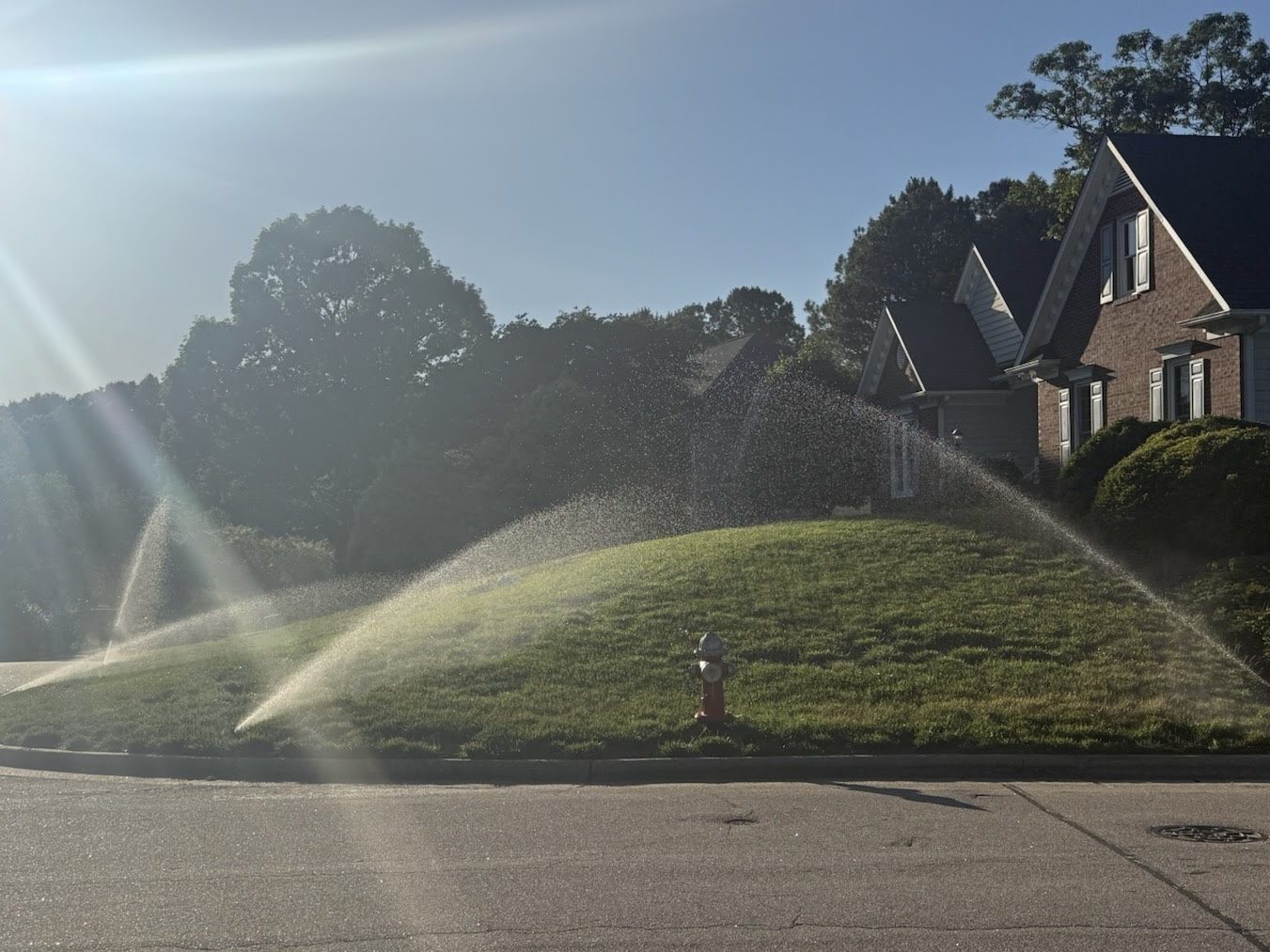
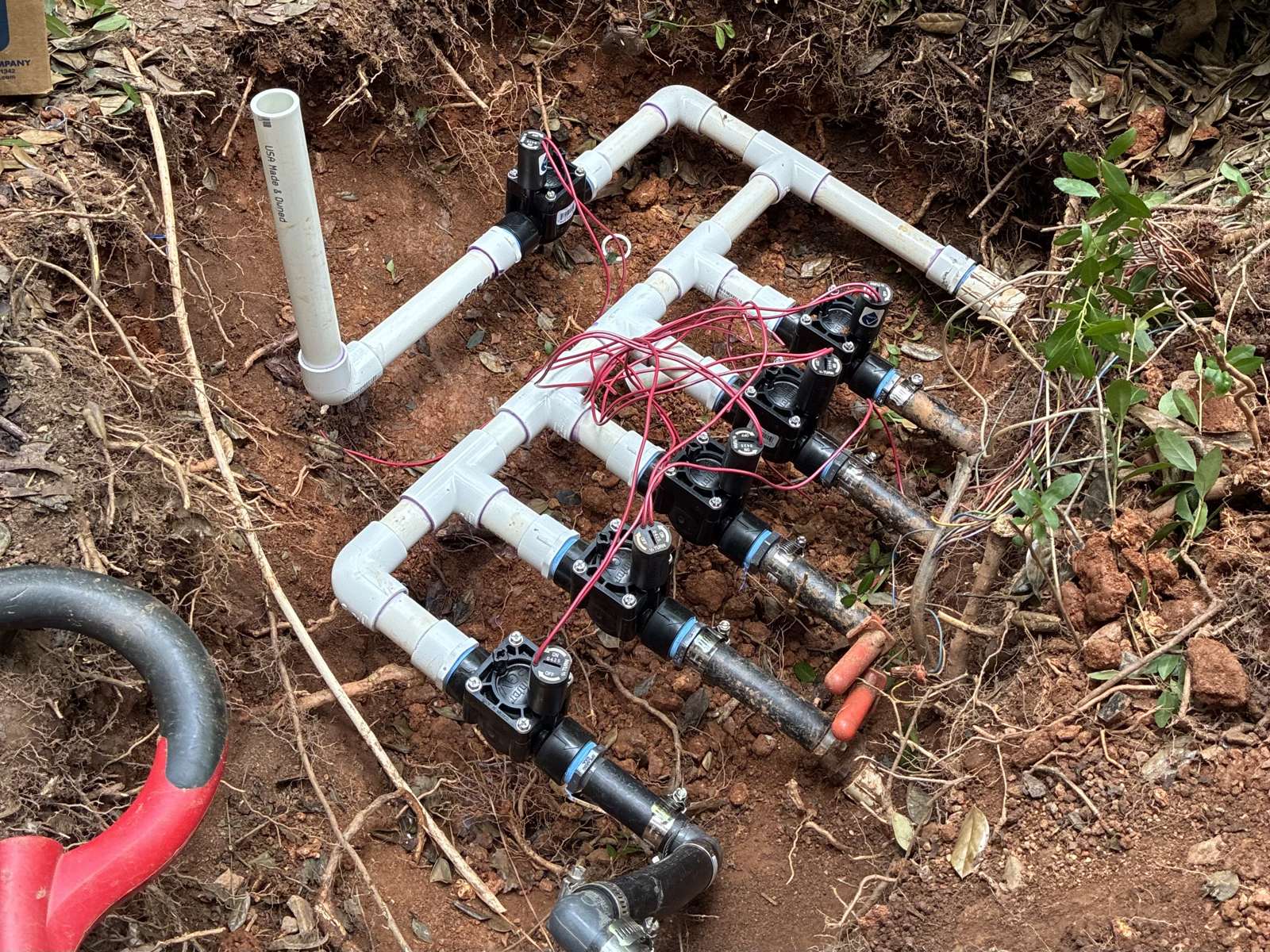
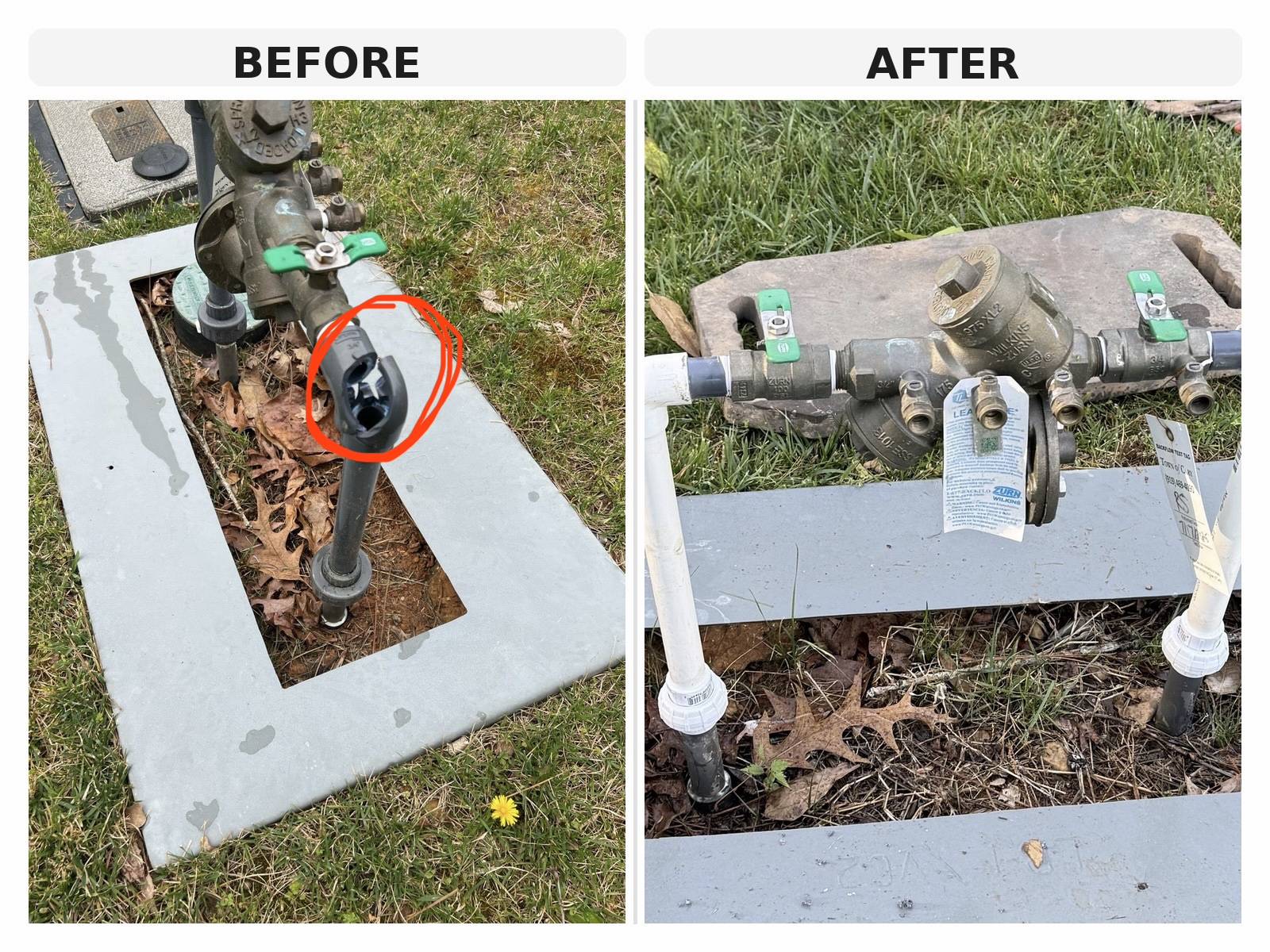
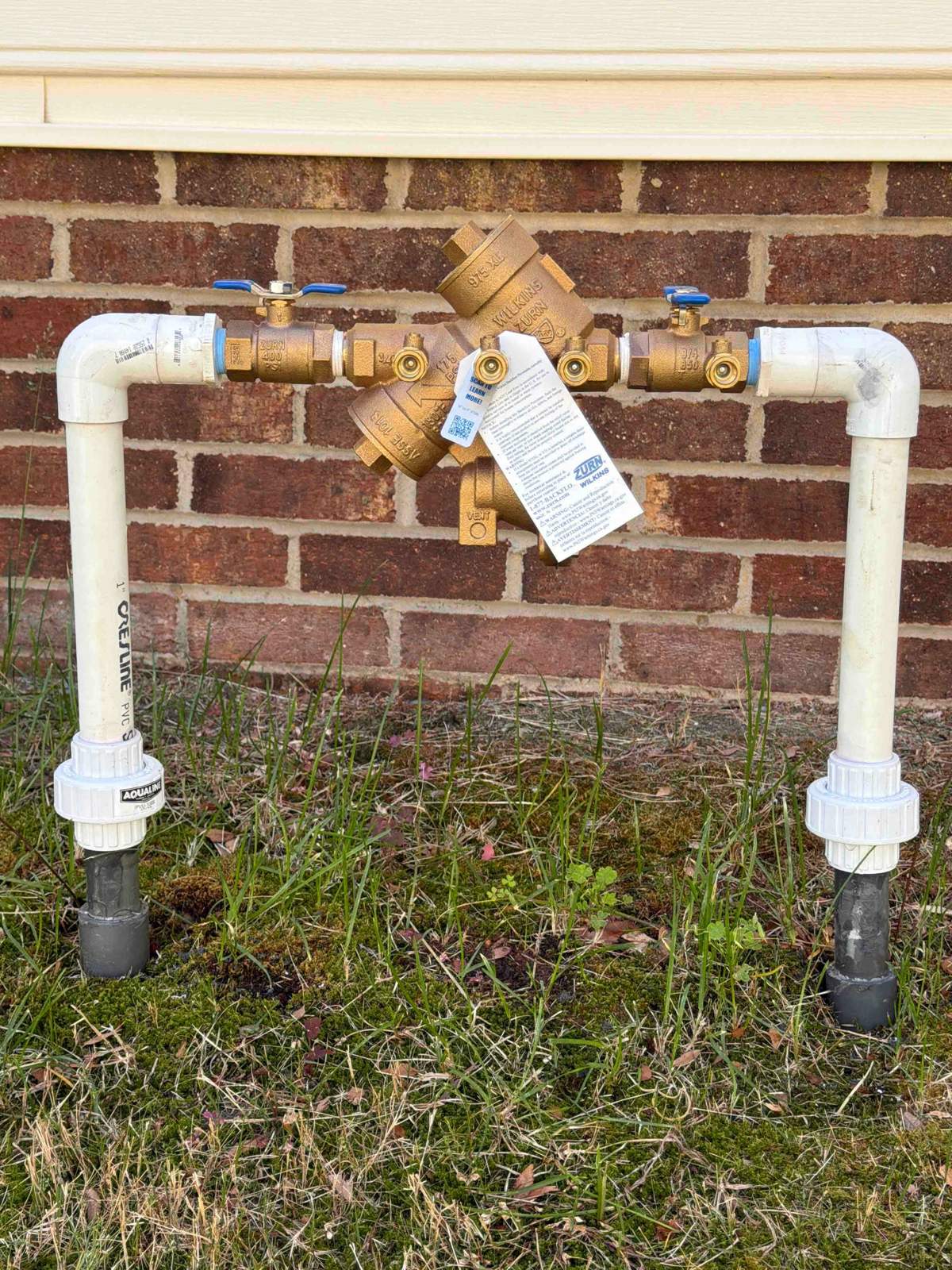
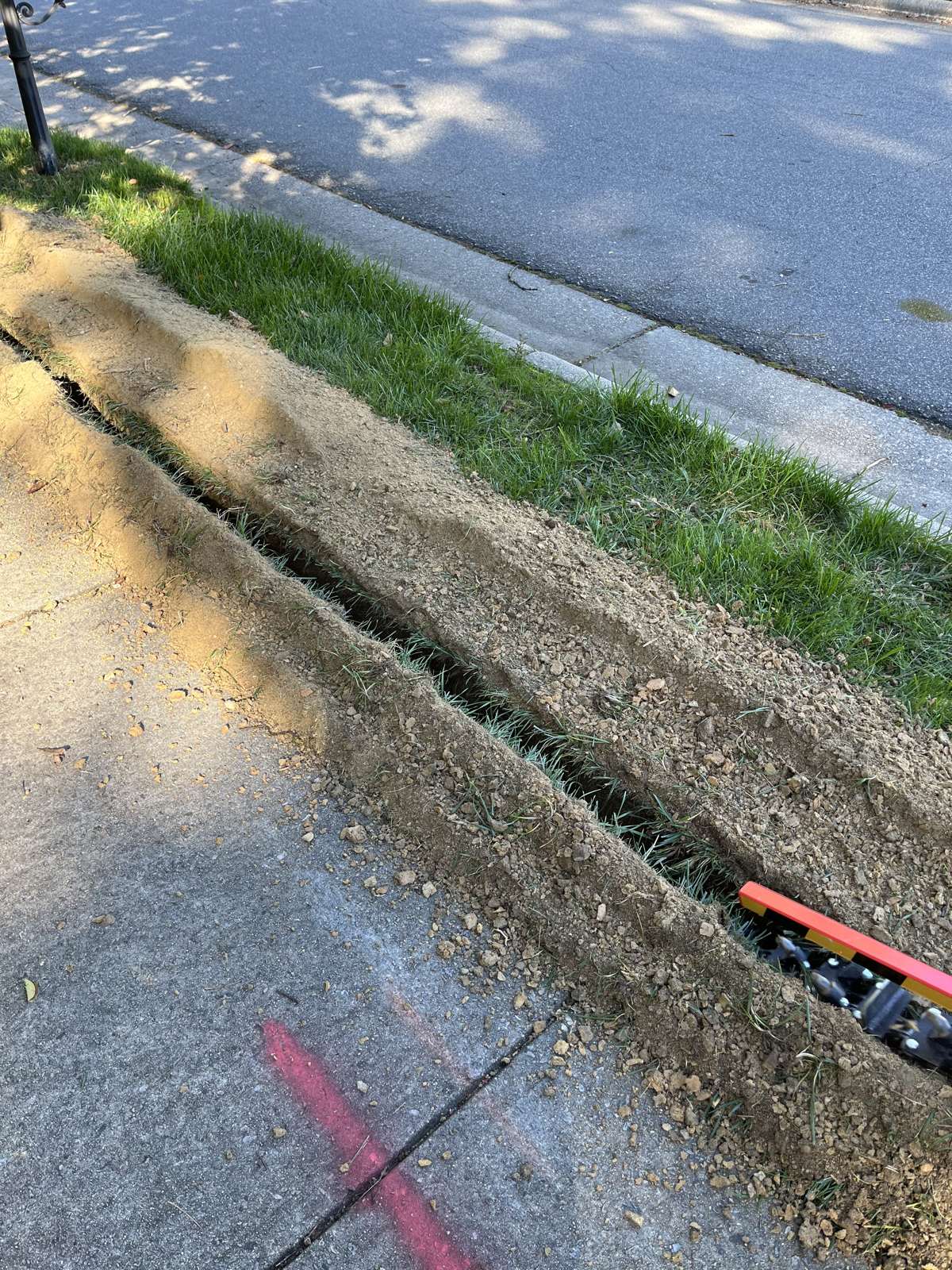
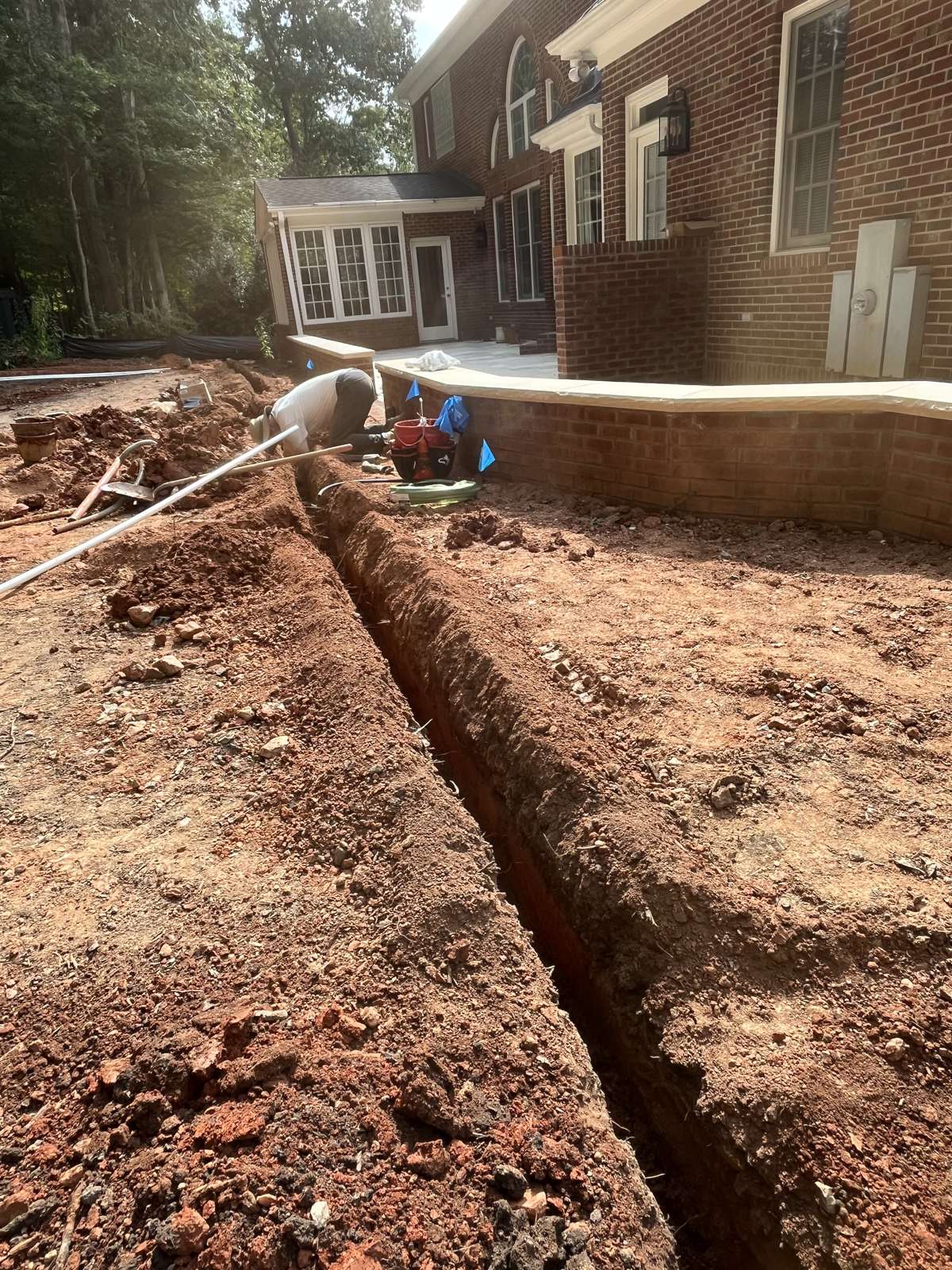
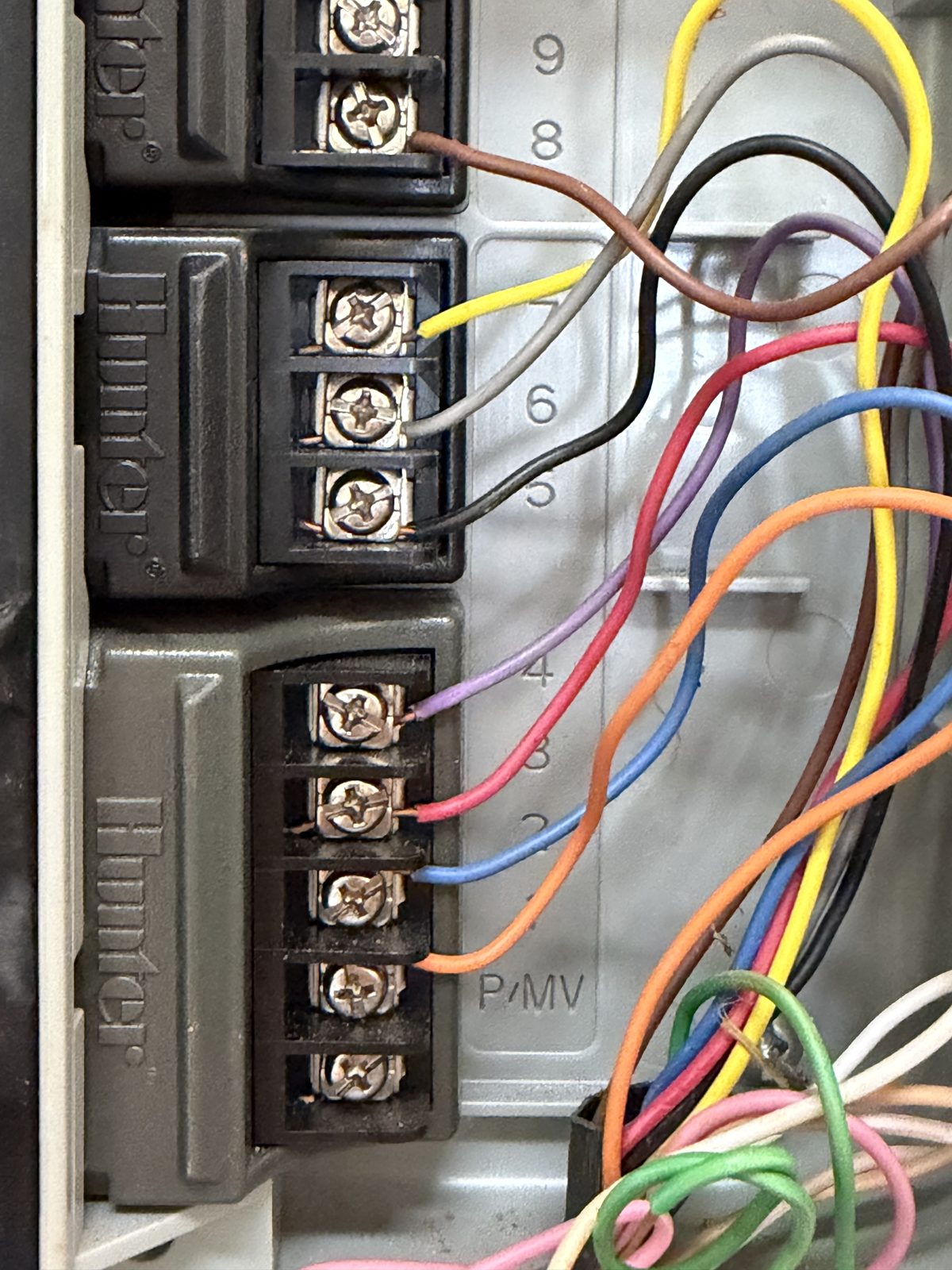
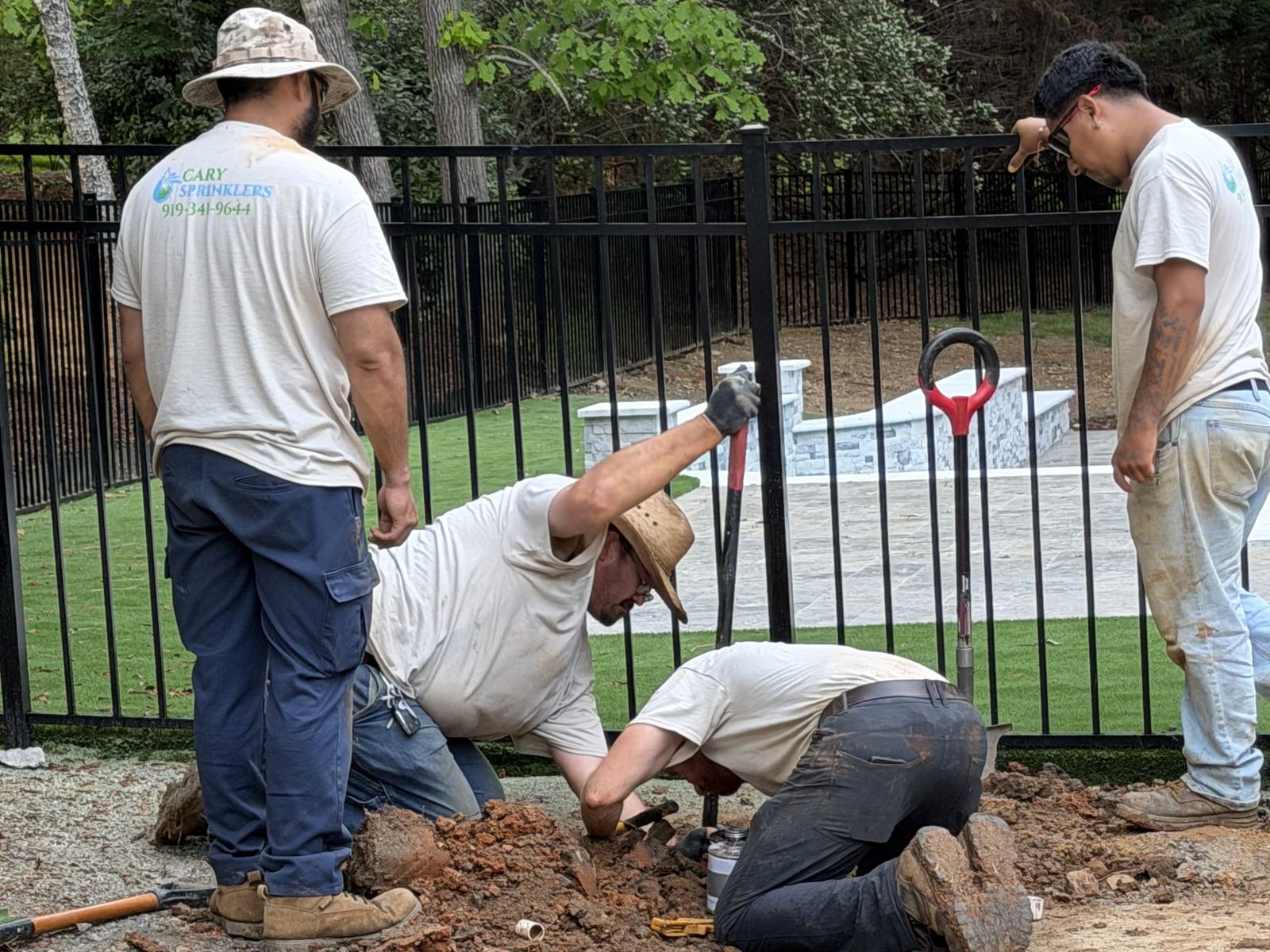
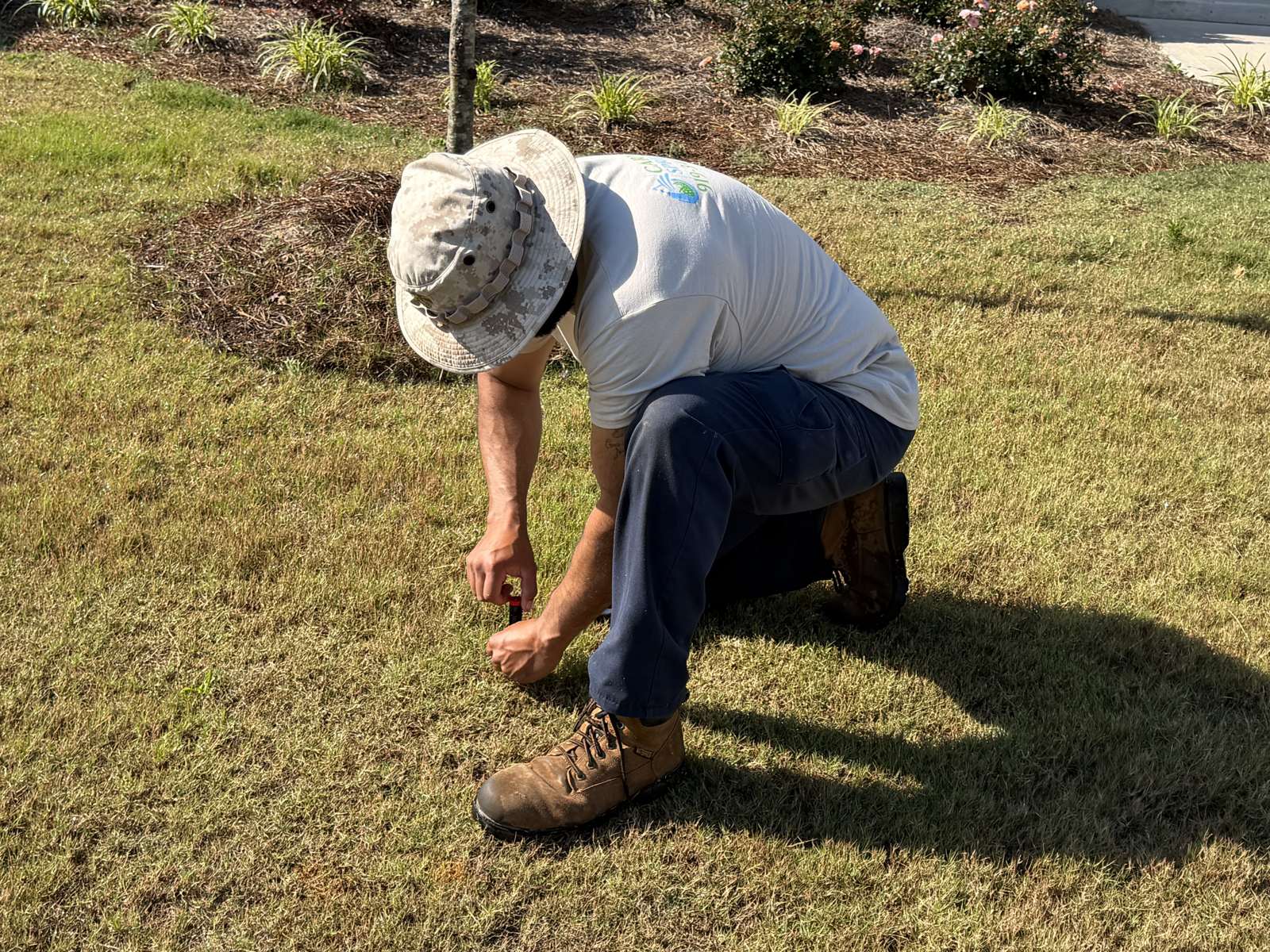
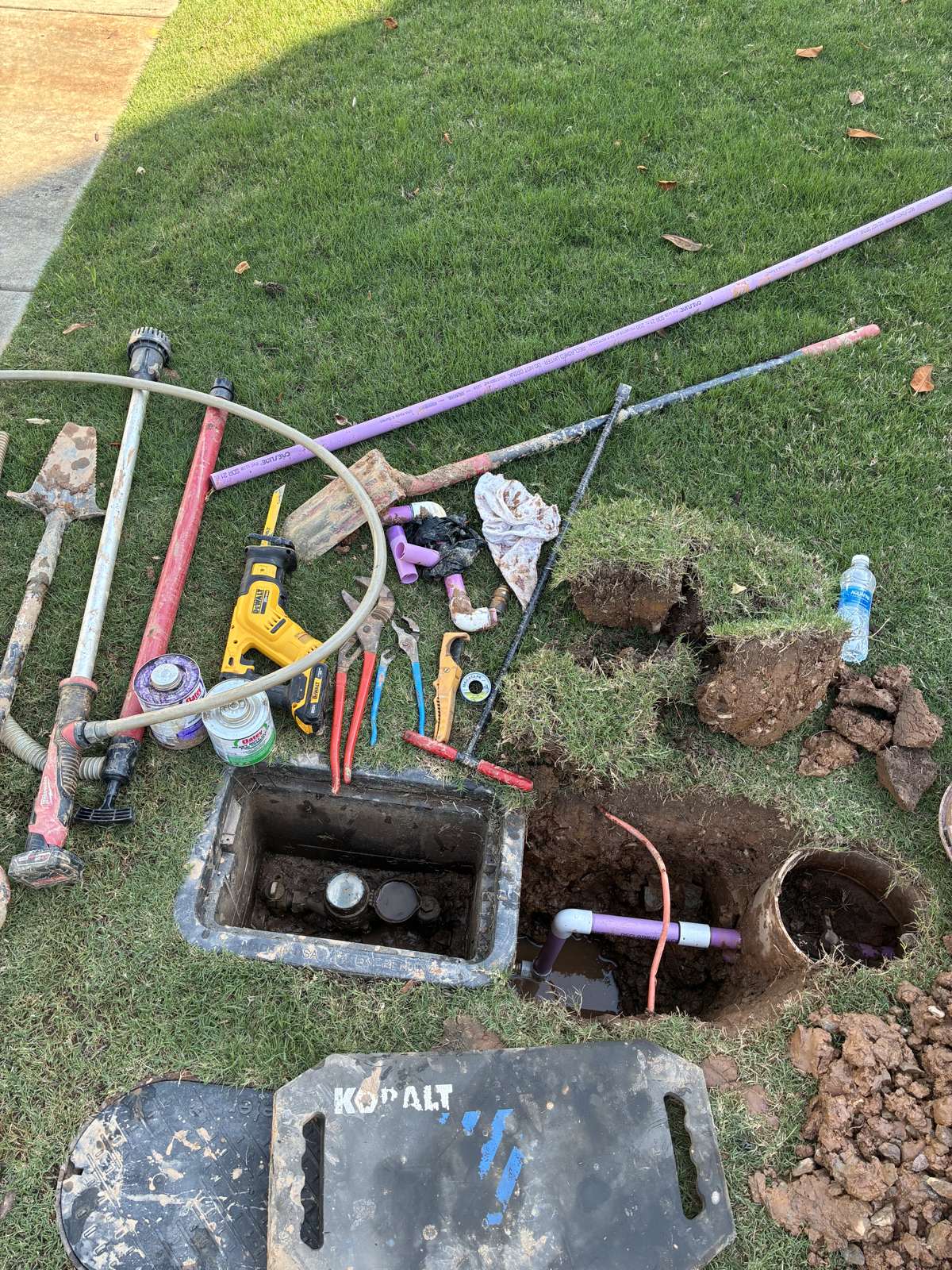
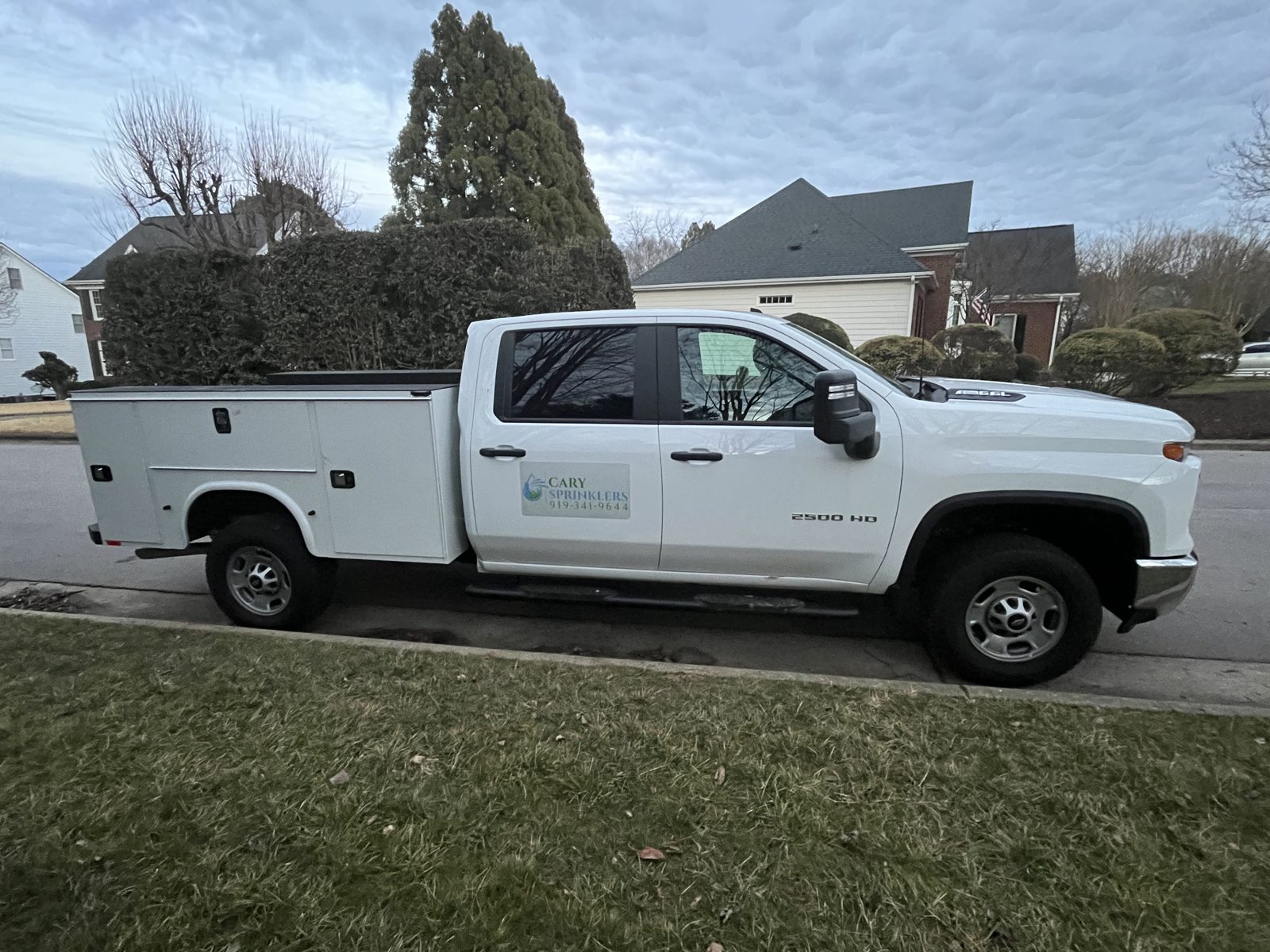
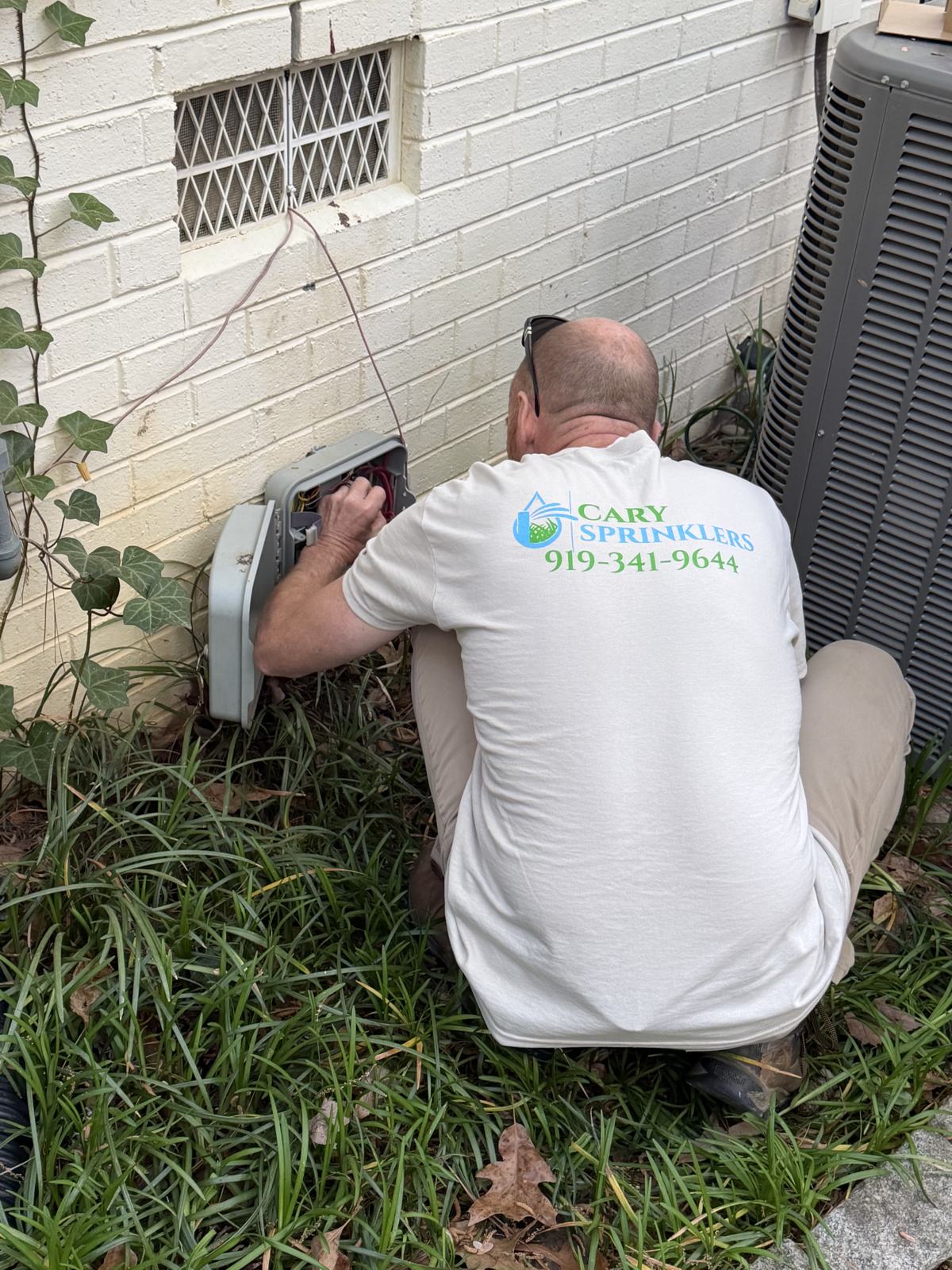
What our Triangle neighbors say




Why Raleigh chooses Cary Sprinklers
Raleigh has plenty of big-box service outfits. We compete by being the opposite: owner-led, local, licensed and insured, with a 100% satisfaction guarantee and 12-month workmanship warranty on every job. Call or text 919-341-9644 and talk to someone who has worked in your neighborhood.
Raleigh through the year
The date that structures the year in Raleigh is the backflow deadline. Residential devices are tested every three years by July 1, commercial ones annually, and because the residential cycle is three years long it is the compliance job people most reliably forget. If you cannot remember your last test, that is itself the answer — we can check the record before scheduling anything.
Spring startup carries more weight in Raleigh than in the newer towns because of what the systems are made of. Inside the Beltline, one yard commonly holds original poly, additions from the nineties, and whatever stock the previous contractor happened to be carrying. Bring all of it up to pressure for the first time in spring and the weakest of the three makes itself known. Finding it in April costs a repair; finding it in July costs a lawn as well.
Midsummer is when clay stops forgiving scheduling mistakes. Raleigh ground sheds water faster than it absorbs it, so a system running one long cycle sends most of it to the street. We reprogram to shorter cycles with soak time between them, which puts the same volume into the root zone instead of the gutter.
Summer is also when restrictions arrive, and they arrive on the city’s timetable rather than yours. Stage decisions track Falls Lake levels and the calendar, which in practice means spring is when a stage gets declared and late summer is when it lifts. The homeowners who get caught are rarely the ones ignoring the rules — they are the ones whose controller quietly kept its old schedule. Worth a look at the clock in April rather than a letter in July.
One more thing peculiar to Raleigh: the city’s leak adjustment policy will not cover irrigation. Sod watering, garden watering and outdoor use are excluded by name, so a mainline that lets go under the lawn produces a bill nobody is going to credit back. That is the strongest argument there is for a proper winterisation and for chasing a pressure drop the week it appears.
Autumn is for the work that needs ground opened, and winterization closes the year. On older systems the blow-out matters more, not less — there is more shallow pipe, more of it in unknown positions, and more that a hard freeze can find.
Working with us in Raleigh
Raleigh takes us longer than anywhere else we work, and that is deliberate. A yard where three decades of parts have accumulated cannot be diagnosed by looking at the symptom, because the symptom is usually downstream of a fault somewhere else entirely. We run every zone, meter the electrical side, and find the cause before quoting anything.
It makes for a slower first visit and a quicker one every time after. It also means the figure you are quoted addresses the real fault instead of a believable-looking one — the distinction between a repair that lasts and a yard quietly accumulating several contractors’ guesses below ground.
We work the whole city rather than a corner of it — Five Points, Hayes Barton and the streets around North Hills, the North Raleigh subdivisions, and the newer construction pushing toward Wake Forest. A city lot and a half-acre need different equipment and the same process.
If what we find turns out not to be irrigation at all — a grading fault, a plumbing issue upstream of the backflow — you get told, and looking costs you nothing. Sell irrigation work to cure what is really a drainage fault and the homeowner pays twice over for half a solution.
Raleigh sprinkler & irrigation FAQ
Do you handle Raleigh Water’s backflow requirements?
Yes — RPZ installs, three-year residential testing by the July 1 deadline, repairs, and the record-keeping Raleigh expects.
Can you work on very old Raleigh systems?
That is some of our favorite work. Inside-the-Beltline systems with decades of patches respond well to careful diagnosis.
Do you serve all of Raleigh?
We serve Raleigh inside I-540 and the surrounding neighborhoods heavily; call and we will confirm your address.
What does a typical Raleigh repair cost?
It depends on the fix — we diagnose first, then quote a clear upfront price before any work begins.
Can you add drainage to an existing irrigated yard?
Yes — we design French drains and surface drainage around existing irrigation lines so one system does not wreck the other.
Get your free quote in Raleigh
Tell us what is going on with your Raleigh yard and we will get right back to you, usually the same day.
- Local, licensed & insured
- Upfront pricing — no surprises
- 100% guarantee + 12-month workmanship warranty
Need sprinkler, irrigation, or drainage help in Raleigh?
Local, licensed and insured, backed by a 100% satisfaction guarantee and a 12-month workmanship warranty.