Sprinkler System Installation in Cary, Raleigh & the Triangle
New in-ground irrigation designed for your yard — plus zone additions and full system upgrades. Permitted, efficient, and built to last.
A system designed for your yard, not a template
A good irrigation system is designed around your yard: its soil, slope, sun, plantings, and your town’s water supply and watering rules. We lay out zones that match how your landscape actually drinks — turf, beds, and shade on their own schedules — using efficient heads and nozzles so you’re not paying to water the driveway.
Adding onto an existing system or reviving an old one is just as much of our work: new zones for an addition or new beds, and full upgrades that swap tired parts and dated controllers for modern, water-saving equipment. Everything goes in permitted to Town spec with the required backflow.
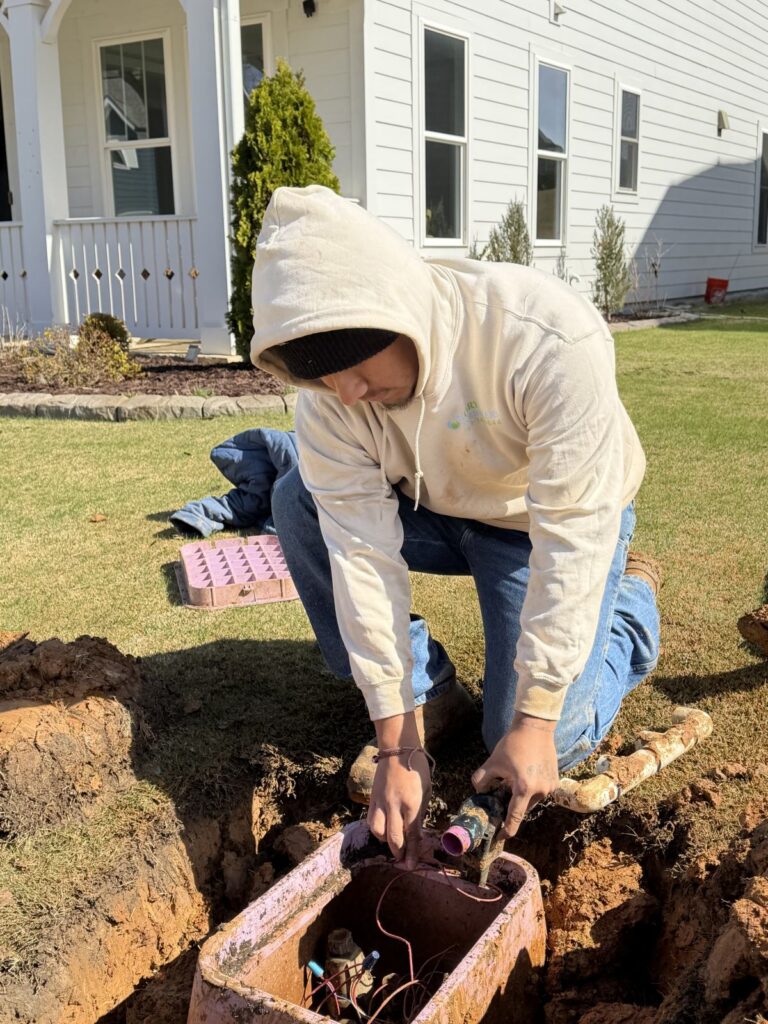
Installation & upgrade services
New systems, additions, and revamps — done to code.
New in-ground irrigation
A full system designed to your yard and water supply, zoned for efficient, even coverage.
Zone additions & reconfiguration
New zones for an addition, pool, or new beds — or re-zoning a system that never covered right.
System upgrade & old-system revamp
Swap tired heads, valves, and dated controllers for modern, water-saving equipment.
Drip irrigation for beds
Efficient drip lines for beds and borders that deliver water to the roots and cut waste.
Permitting & backflow
Installed to Town design standards with the required backflow, so your system is compliant from day one.
Smart controller included
Set up with a WiFi/weather-based controller programmed to your town’s schedule.
Upgrades, revamps & zone changes
When the yard changes — a pool, new landscaping, an addition — the system has to change with it. Each of these has its own page.
Choose your town
Every town has its own page, written for local water rules and conditions. All six core towns are live.
Cary, NC
Raleigh, NC
Apex, NC
Morrisville, NC
Holly Springs, NC
Fuquay-Varina, NC
Why our installs last
Designed, not templated
We design zones around your soil, sun, and water supply — so coverage is even and efficient.
Quality parts
Hunter, Rain Bird, and Toro throughout — the brands built to last.
Permitted & compliant
Installed to Town spec with the required backflow, done right from the start.
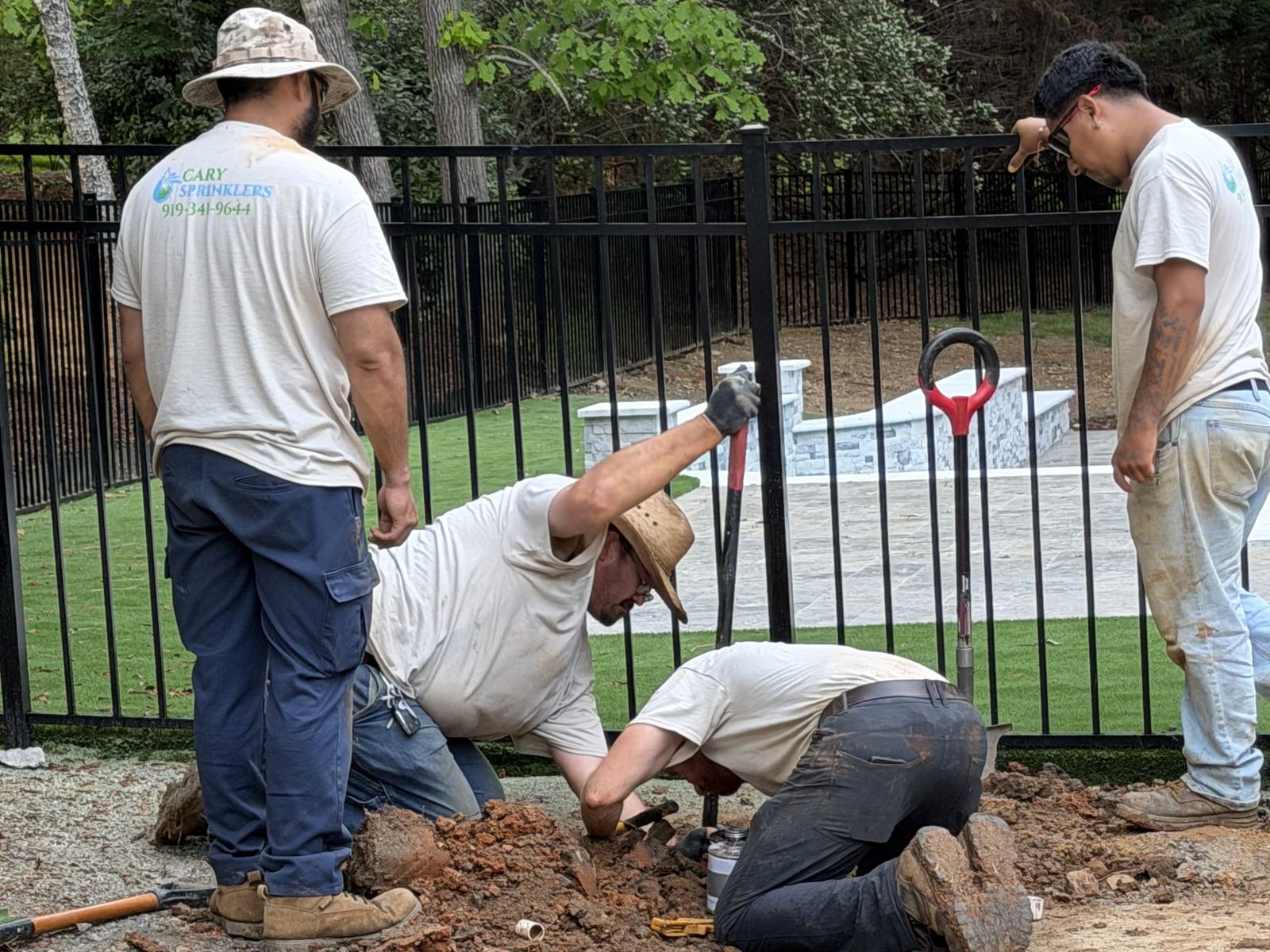
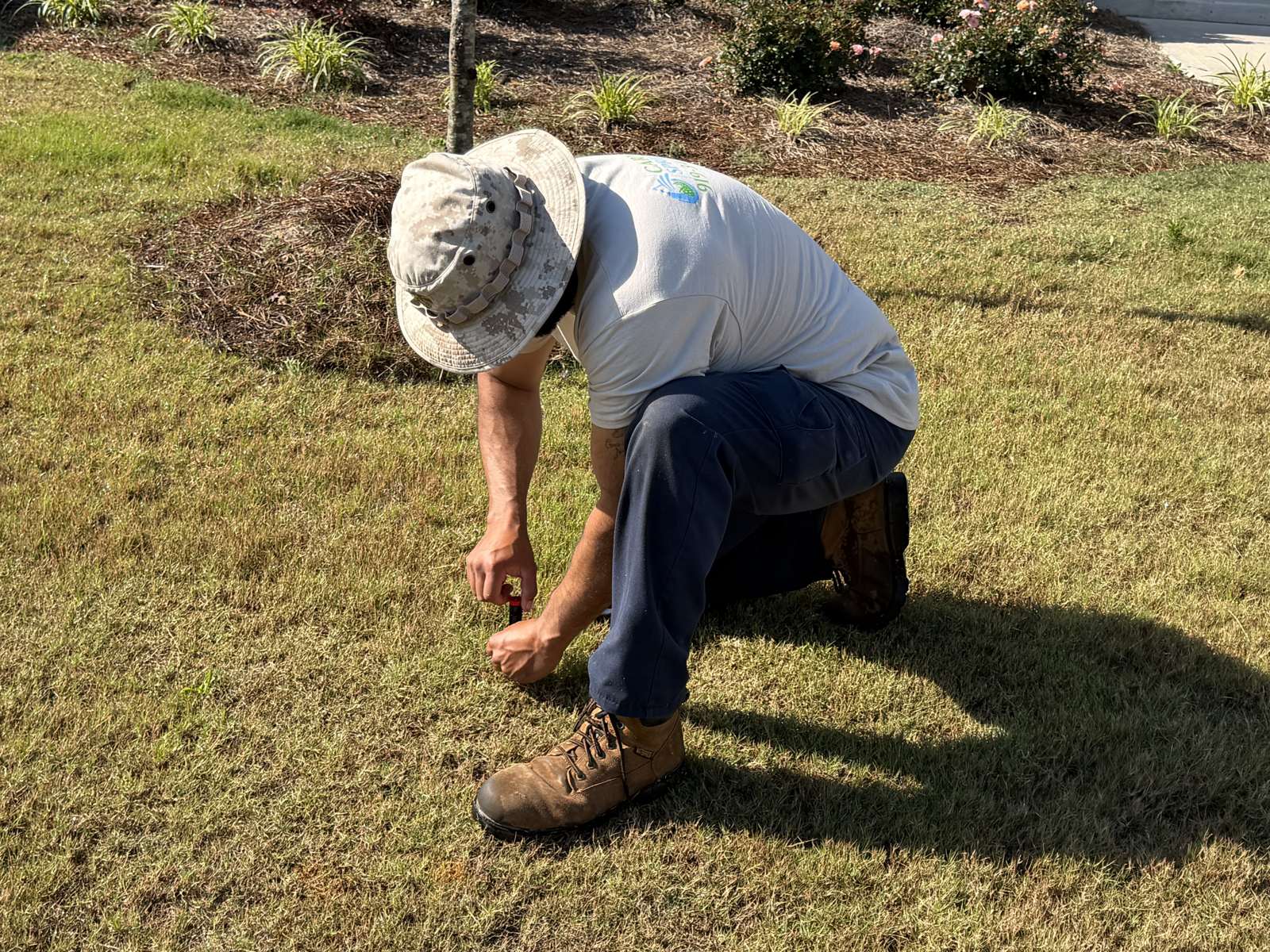
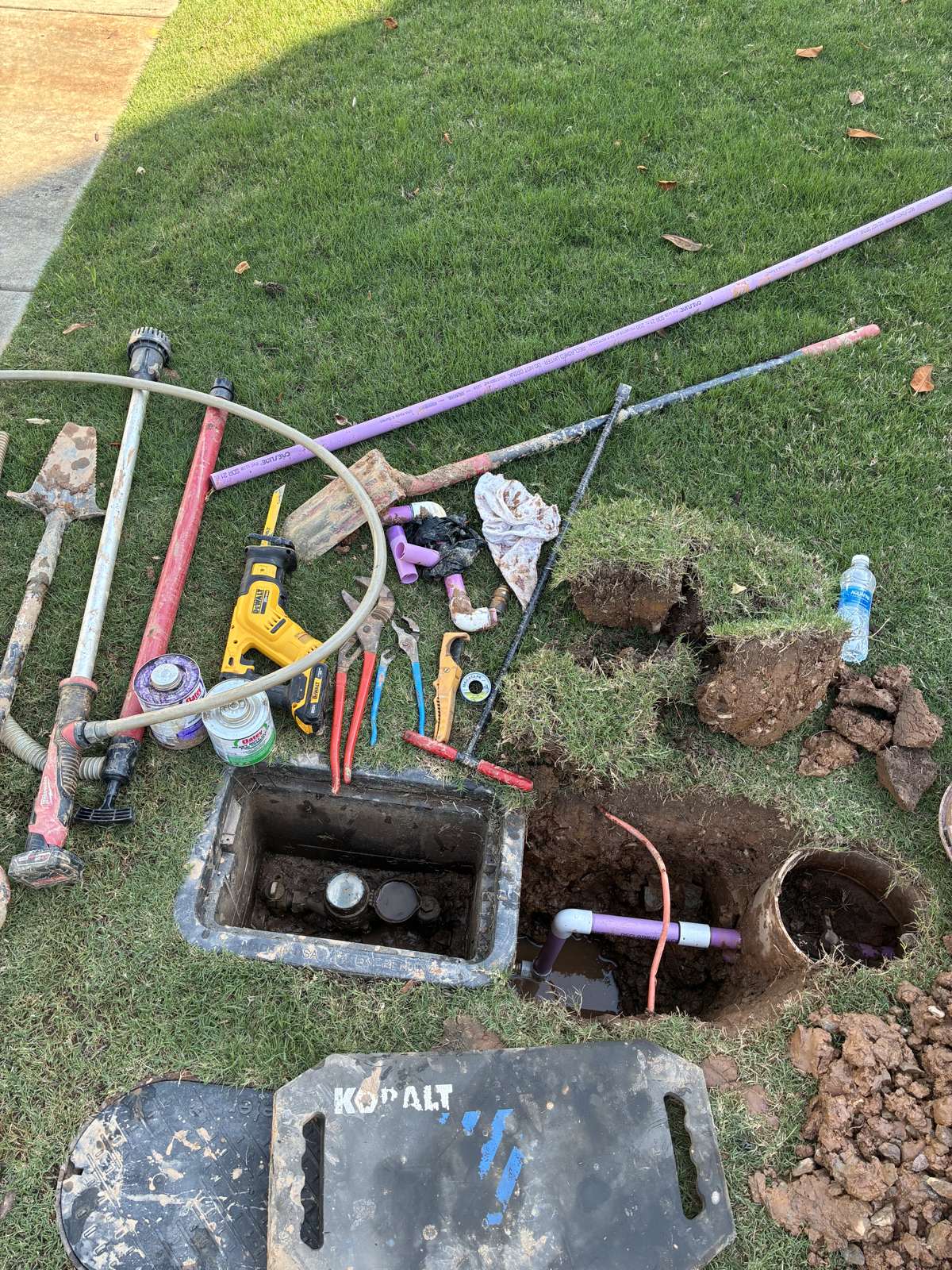
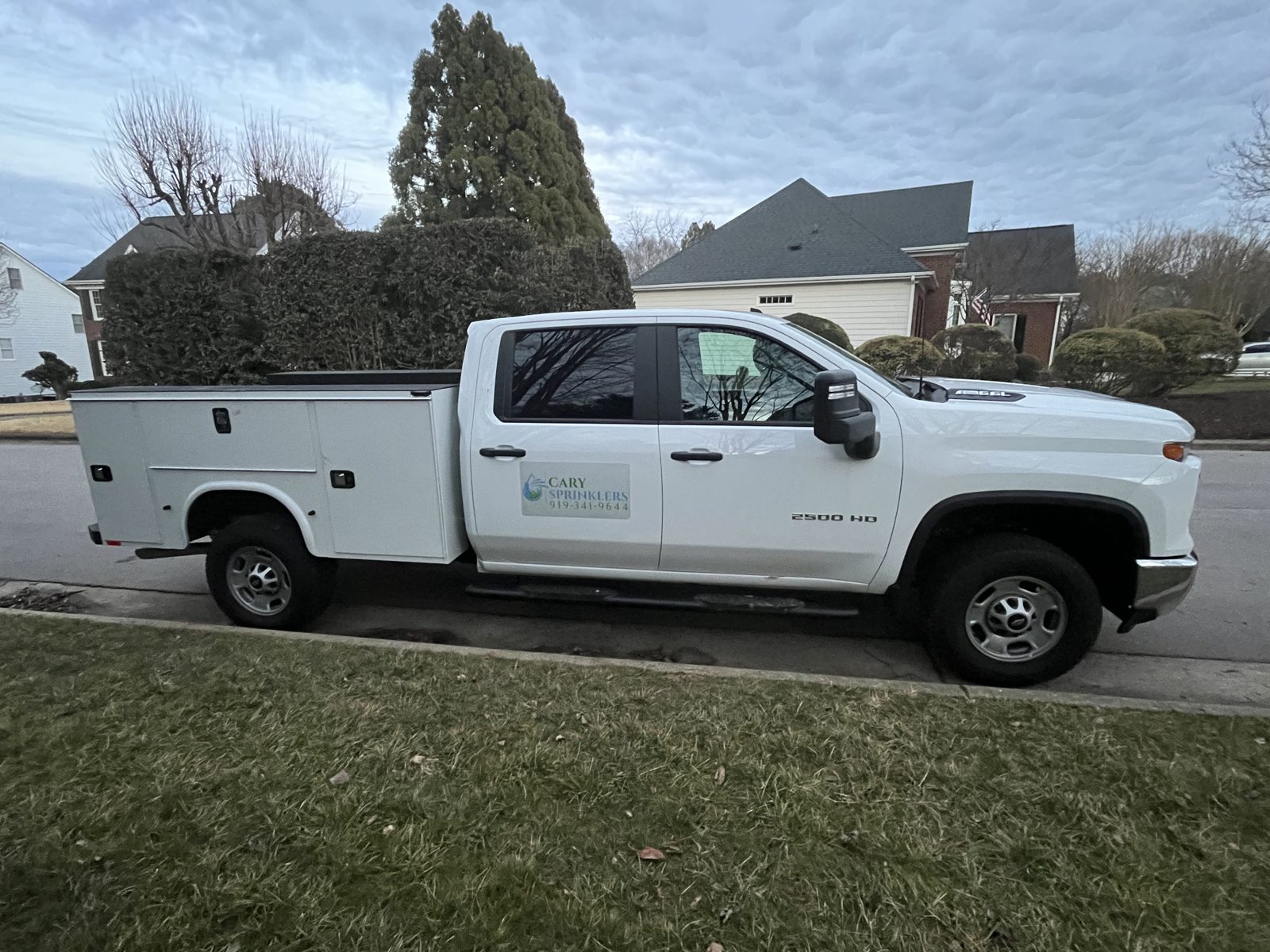
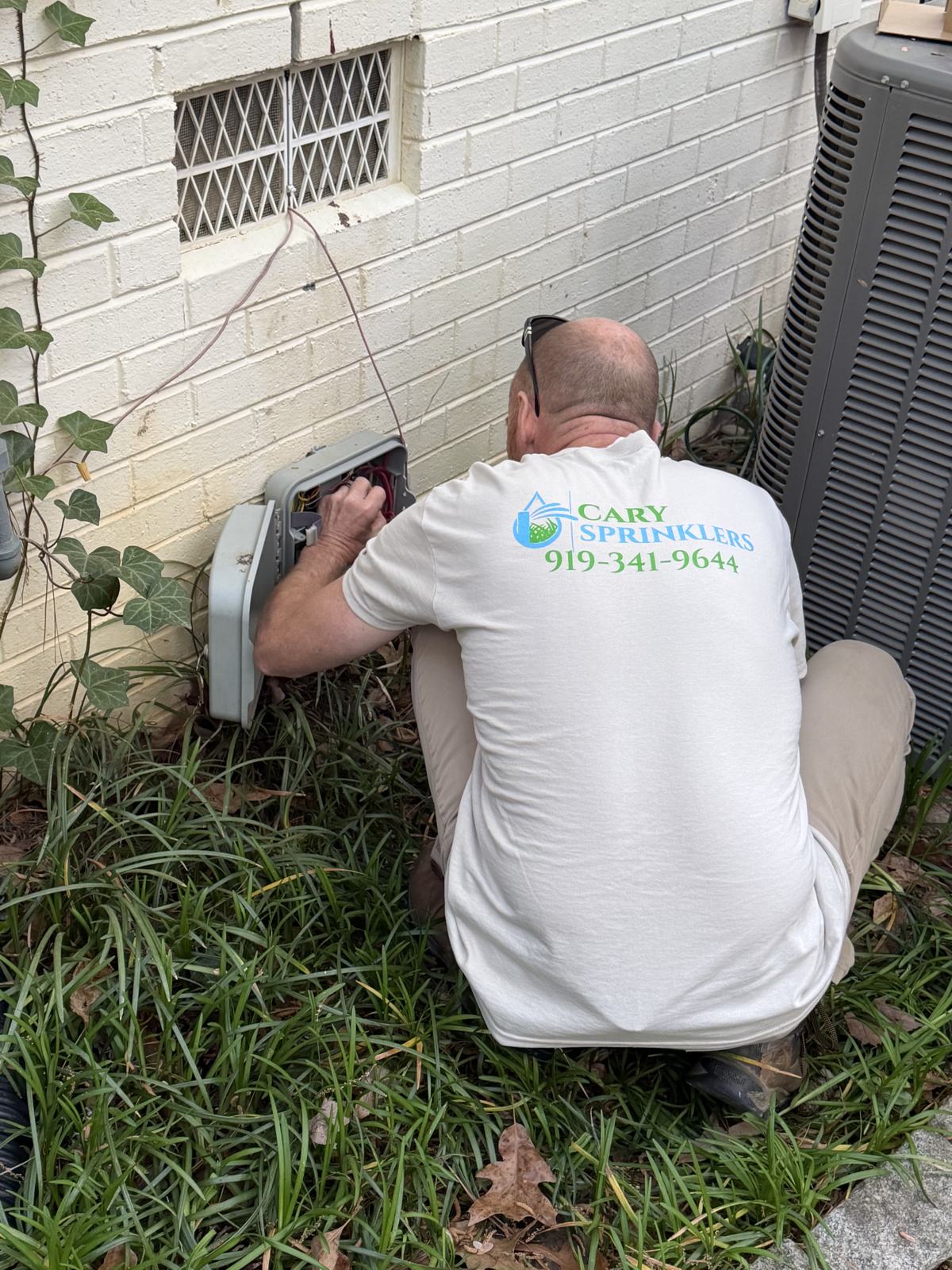
Recent work around the Triangle
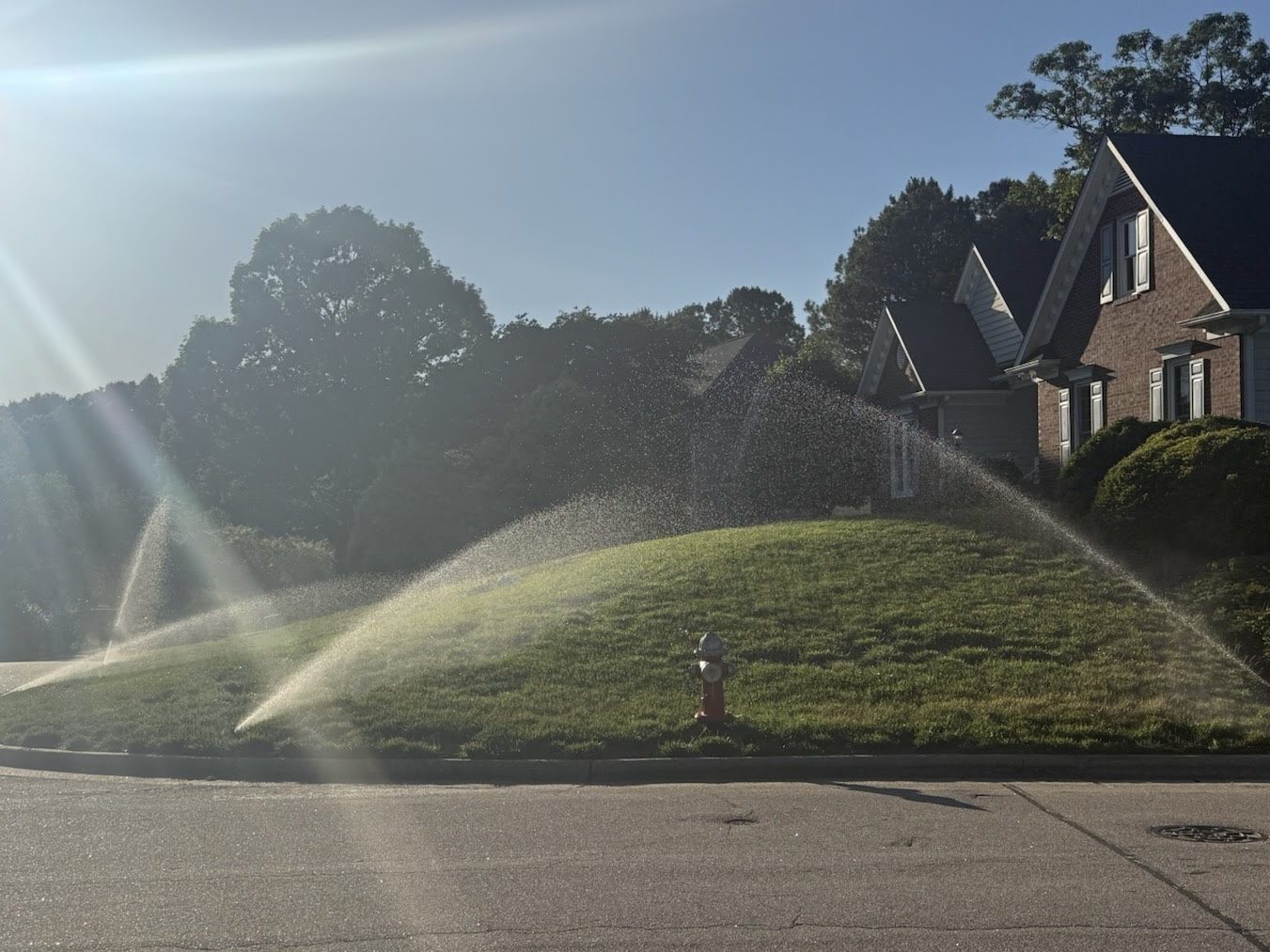
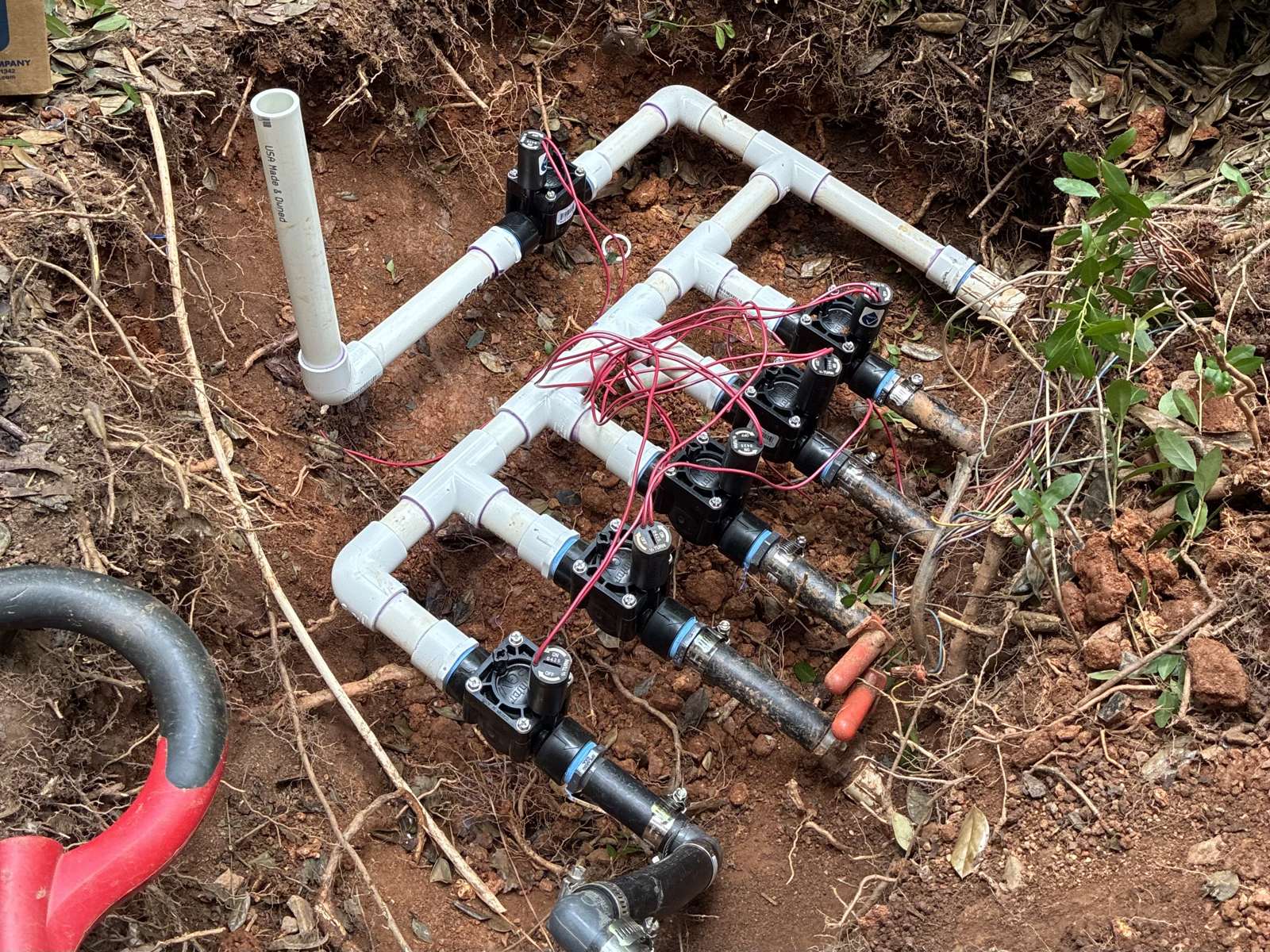
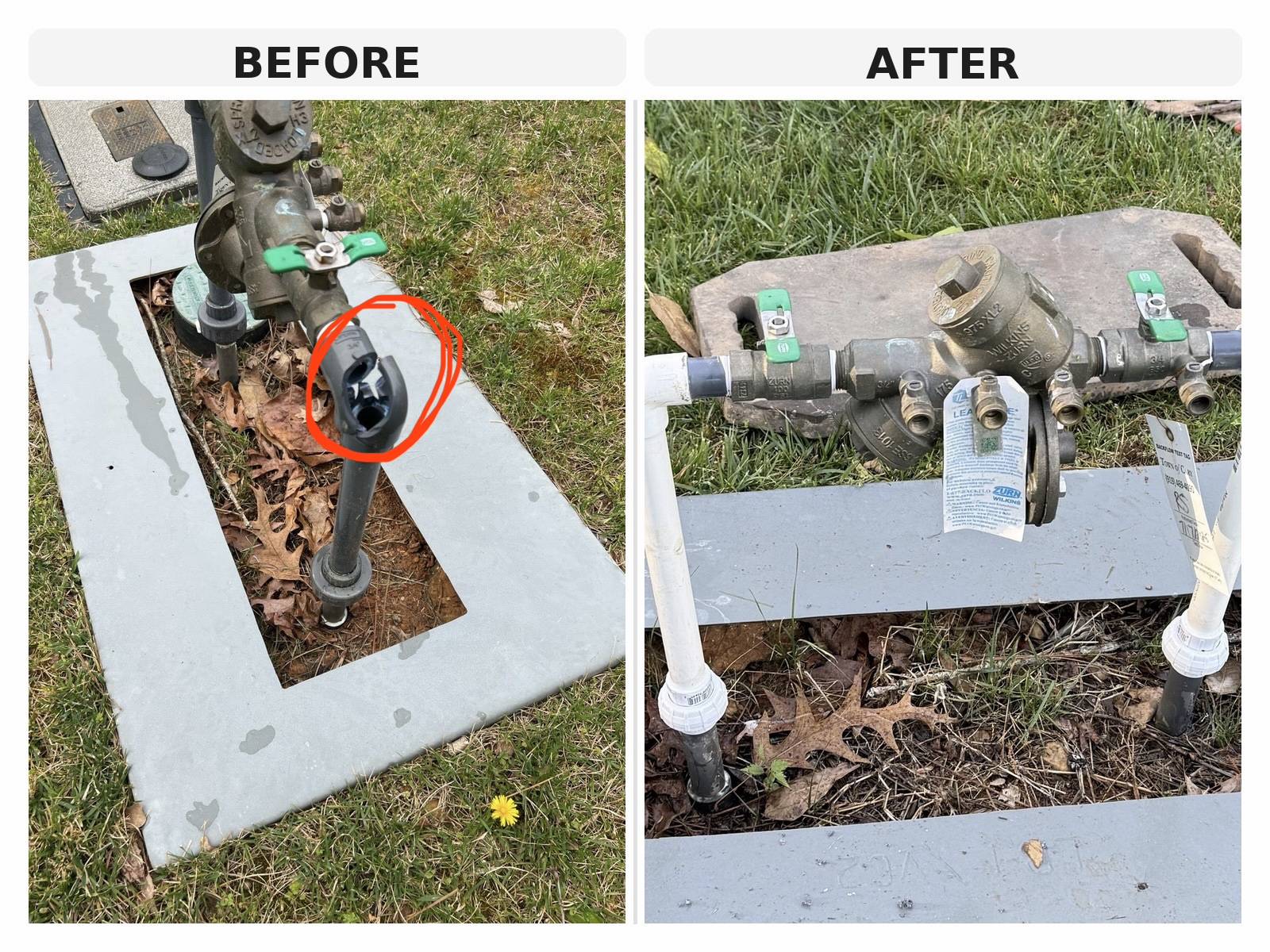
What our Triangle neighbors say




Design starts with a gauge and a bucket
Two numbers come before any drawing: static pressure and available flow. Pressure reads off a gauge threaded onto an outside spigot. Flow gets timed — how many seconds to fill a container of known volume, converted to gallons per minute. Together they put a hard ceiling on the design, because they decide how many heads a single zone can support and whether rotors, sprays, or both belong on the property at all. Skip that step and you get zones that mist, throw short, and never quite meet in the middle.
Zoning follows how the ground actually dries. Full-sun turf runs alone, shaded and north-facing turf runs separately, beds come off on drip. Exposure drives water demand harder than square footage does. Heads then get spaced head to head — each one throwing far enough to reach its neighbors — because output falls off sharply at the edge of any pattern. Within a zone, nozzles are matched so every head lays water down at the same rate; our clay takes water in slowly, and a mismatched zone drowns one corner while the far end stays thirsty. We leave pressure headroom and spare wire, too, for the zones you’ll want three years from now.
What the permit and backflow requirement means on the ground
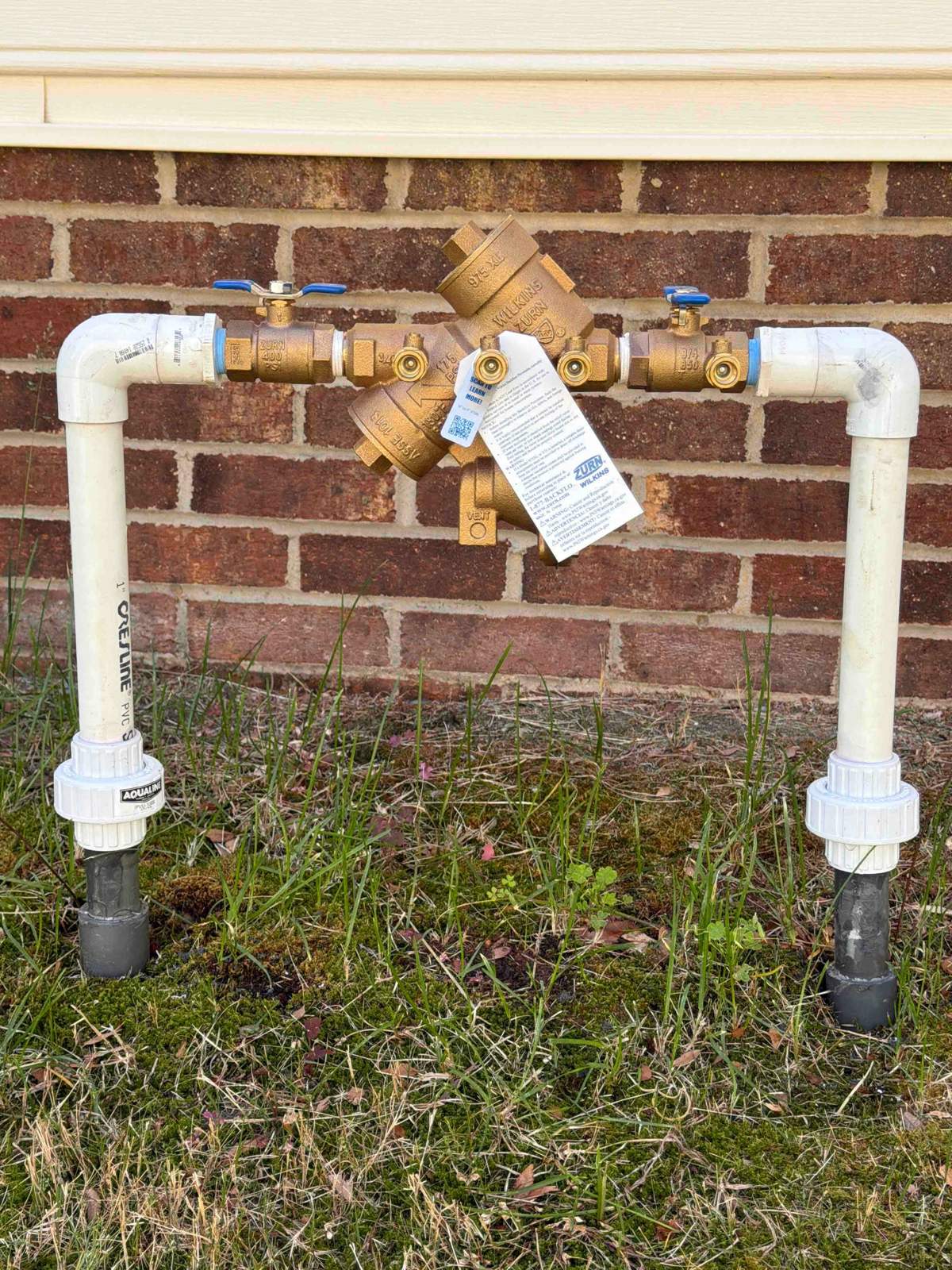
In most towns here a new system is a permitted job, and the permit isn’t a formality — it binds the install to published design standards and to an inspection. Cary permits irrigation to Town design standards and requires the preventer, which starts your residential testing cycle the day the system exists. Apex requires both an irrigation permit and a backflow preventer. Morrisville is served by Cary’s water system, which means Cary’s standards are the ones an installer works to there. Raleigh Water wants an RPZ that a City-certified tester can sign off on. Fuquay-Varina puts you into annual testing tracked through BSI Online from your first test forward. Holly Springs runs its own backflow program and offers something worth settling before we trench: a separate irrigation-only meter, which keeps sewer charges off every gallon you use outdoors.
On the ground it comes down to three things. The paperwork gets pulled before anyone digs. The assembly goes in at the right height with enough clearance around it that a tester can reach the cocks. And the first test gets filed, so your account opens in good standing rather than playing catch-up in year two.
Install day, start to finish, and how the yard comes back
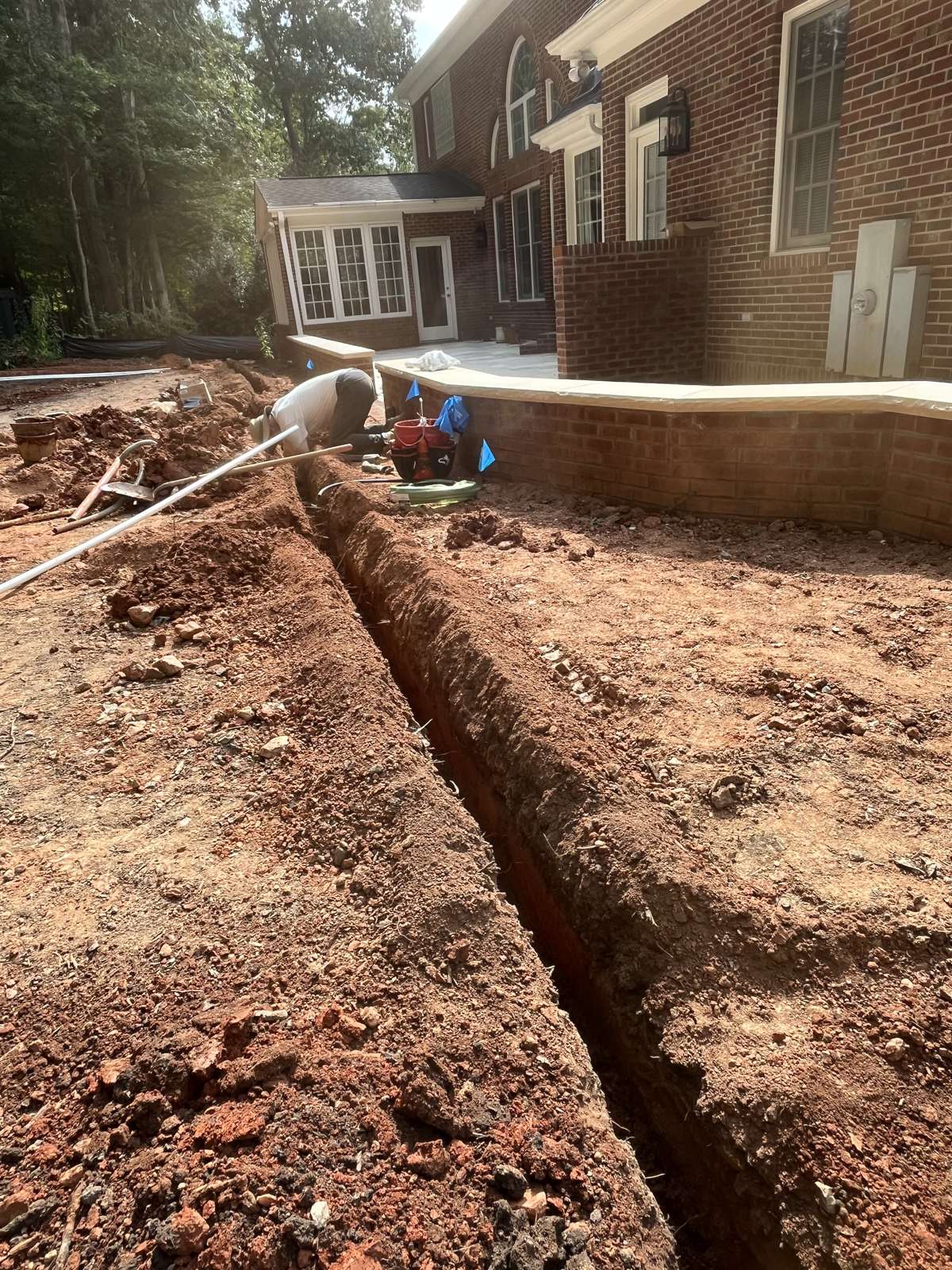
Utility locates get called in days ahead, not the morning of. When we arrive, head positions and valve boxes go down in flags first, so you can see the layout in your own yard and move something while moving it is still free.
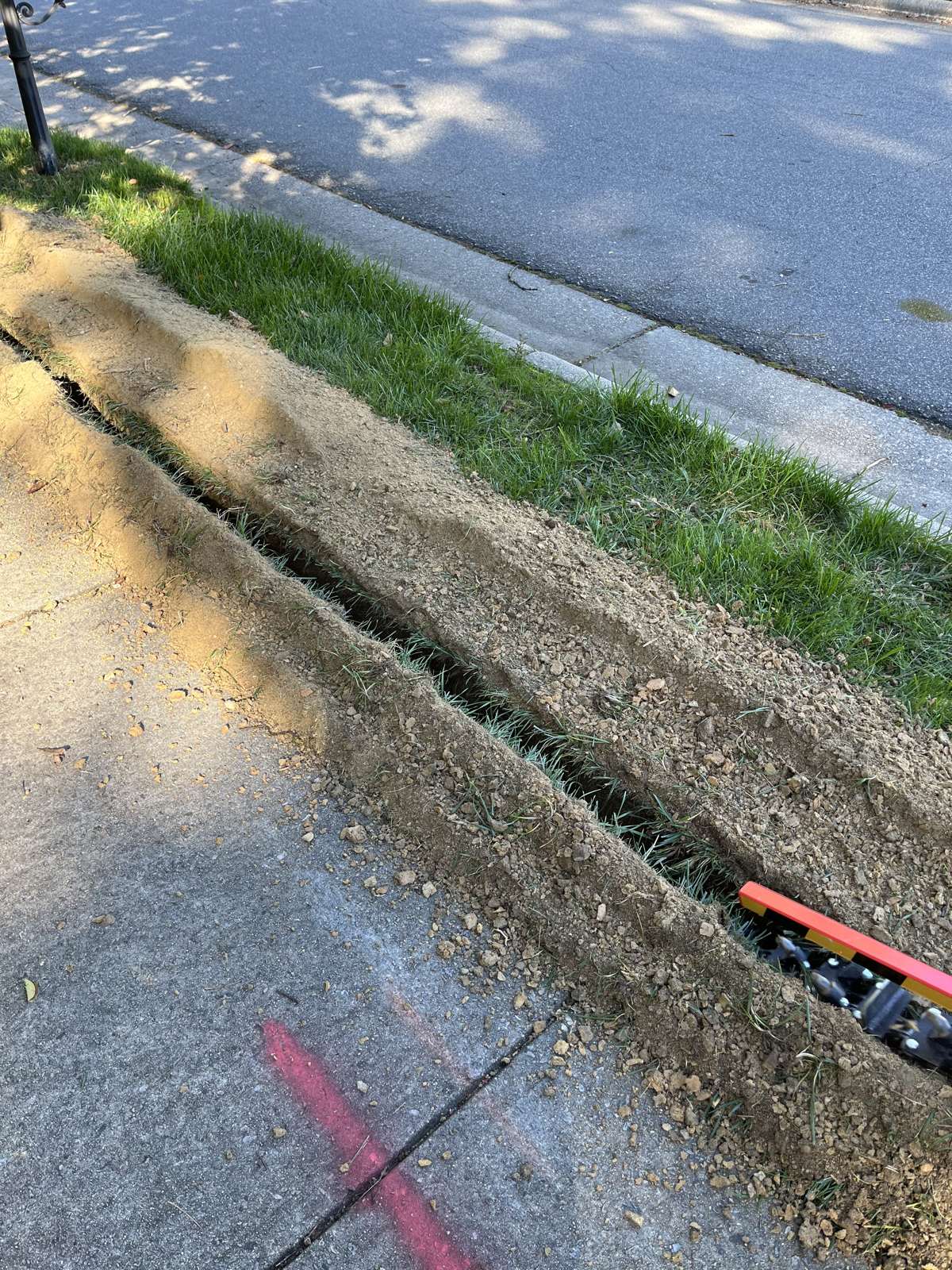
Pipe goes in behind a vibratory plow where the ground allows — it slices a slit and pulls the line through instead of opening a trench — and behind a trencher where depth, rock, or roots rule that out. Sleeves get run under any drive or walkway a line has to cross. The tie-in at the water service and the backflow assembly is usually the slowest hour. Most single-family properties are a one-day install; large lots, long mainlines, or an awkward point of connection push into two.
We put the yard back as part of the install. Slit lines get closed and rolled flat. Trench spoil goes in by layers rather than in one heap, so it doesn’t slump into a gully after the first real rain. Sod that got lifted goes back down and is watered in, and hard surfaces get blown clean before we leave. Lines stay visible a few weeks, then knit shut.
Commissioning and the walkthrough you should insist on
A system isn’t finished when the last head is glued in. Every zone gets run with somebody standing in the yard watching it: arcs adjusted so water lands on turf instead of siding, fence, or street; rotors checked for rotation in both directions; nozzles swapped where a pattern doesn’t suit the shape it has to cover; flow control at the valve throttled down where a zone comes in over-pressured and fogs instead of throwing.
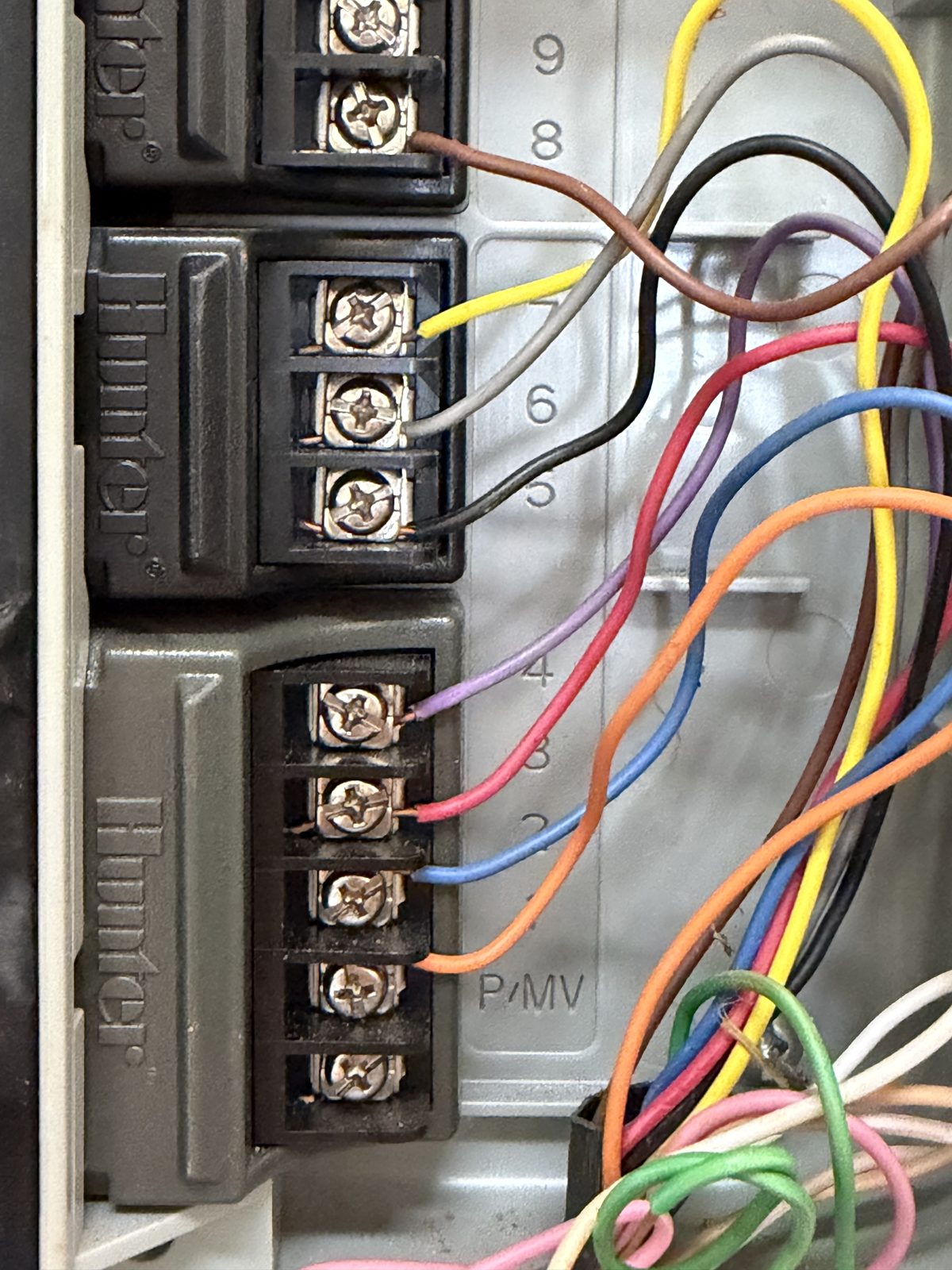
Then the controller gets programmed against your town’s watering rules and your actual zones. Runtimes are set one at a time, never a single figure copied across the board, because a shaded bed on drip and a full-sun rotor zone have almost nothing in common.
The walkthrough is the part people wave off and shouldn’t. We’ll show you the main shutoff and how to kill the system in a hurry, which box holds which valves, how to fire one zone by hand when you want to check something, and how to shift the schedule as the season turns. If you’ve gone with app-based control, smart controller installation covers how that side gets set up.
Installation FAQ
How much does a new sprinkler system cost?
It depends on yard size, zones, and water supply, so we quote after walking the property. Estimates are free and pricing is upfront before any work begins.
Can you add a zone to my existing system?
Yes — new zones for an addition, pool, or new beds, or re-zoning a system that never covered properly.
Do I need a permit for irrigation in my town?
Most Triangle towns require an irrigation permit and a backflow preventer. We handle the install to Town spec and the required backflow.
Which brands do you install?
Hunter, Rain Bird, and Toro, with a Rachio or Hunter Hydrawise smart controller — the equipment the trade trusts.
Planning a new system or an upgrade?
A local team designs it around your yard and installs it to code. Free estimate.
Get your free sprinkler installation quote
Tell us what’s going on and we’ll get right back to you — usually the same day. Prefer to talk? Call or text 919-341-9644.
- Local, licensed & insured
- Upfront pricing — no surprises
- 100% guarantee + 12-month workmanship warranty