Smart Controller Installation in Cary, Raleigh & the Triangle
WiFi and weather-based controllers that water smarter, cut your bill, and keep you on your town’s schedule — installed and programmed right.
Water on the weather, not a guess
An old dial timer waters the same amount whether it’s a heat wave or the day after a storm. A smart controller pulls local weather and soil data and adjusts automatically — skipping cycles when it rains, easing off in cool weather, and running full in the heat. That’s where a big chunk of the ~$500/yr in water savings comes from.
We install and program Rachio, Hunter Hydrawise, and Rain Bird controllers, wire in rain and freeze sensors, and set the schedule to your town’s watering rules — odd/even, alternate-day, or reclaimed exemptions. You control it from your phone; it does the thinking for you.
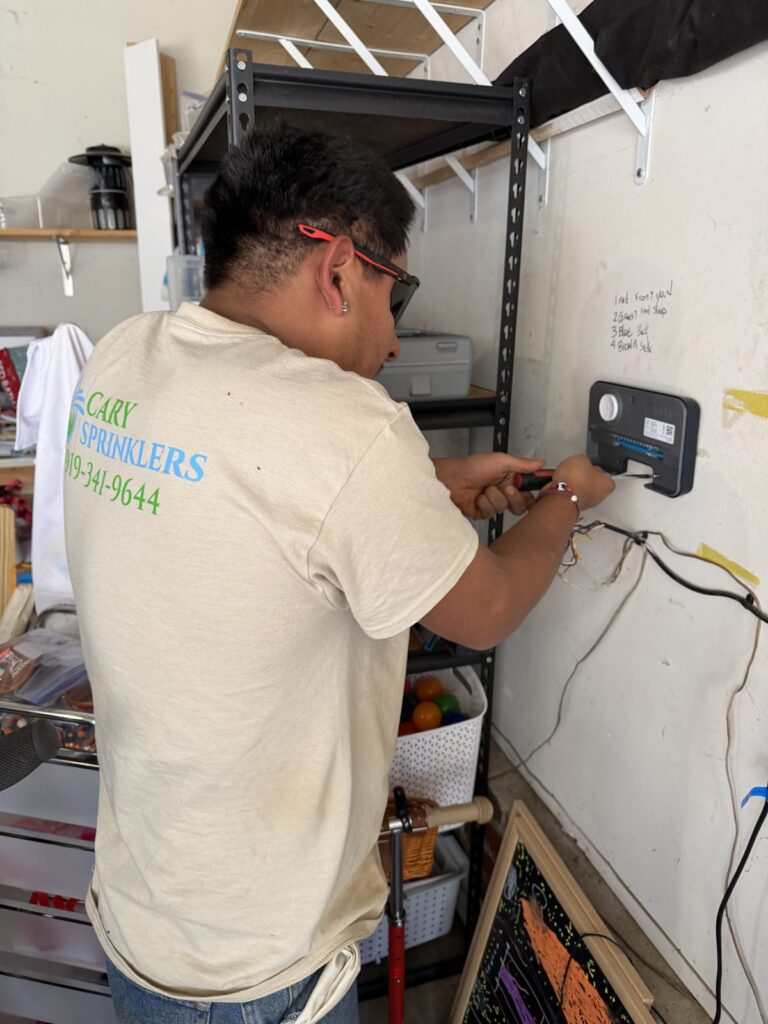
Smart controller services
Installed, wired, and programmed to your yard and town.
WiFi / smart controller install
Rachio, Hunter Hydrawise, or Rain Bird — installed and connected to your WiFi.
Weather & soil-based scheduling →
The controller adjusts to local weather and soil so you water only what the lawn needs.
Rain & freeze sensors →
Sensors that skip a cycle after rain and protect the system in a freeze.
Repair or retrofit old timers →
Fix a failed controller, or swap a dated dial timer for a smart one without redoing the system.
Programmed to town rules →
Set to your town’s odd/even or alternate-day schedule, including reclaimed-water exemptions.
Water-savings setup
Zones, run times, and cycle-and-soak dialed in so clay soaks it up instead of running off.
Choose your town
Every town has its own page, written for local water rules and conditions. All six core towns are live.
Cary, NC
Raleigh, NC
Apex, NC
Morrisville, NC
Holly Springs, NC
Fuquay-Varina, NC
Why upgrade the controller
Lower bills
Weather-based watering is one of the biggest, easiest water-savings wins.
Set-and-forget
Programmed to your town’s rules and your yard — it manages itself.
Phone control
Check, tweak, or pause your system from anywhere.
What the controller is actually calculating
Underneath the app, a weather-based controller keeps a simple ledger for every zone. On one side it credits rainfall. On the other it debits evapotranspiration — ET — the water lost to evaporation from the soil plus what the grass or shrubs actually drink, derived from temperature, humidity, solar radiation, and wind. When the running deficit reaches the threshold set for that zone, the zone runs long enough to replace what left, then stops. That’s why a zone runs a fraction as long in May as it does in August, and why it sits idle for several days after a storm.
Where those numbers come from is worth asking about. Some pull the nearest airport station, some read a neighbor’s personal weather station, some use a gridded forecast tied to your address, and some rely on an on-site rain or soil sensor. It matters, because summer storms here are narrow. A station six miles up the road can log nothing while your yard takes an inch, and the controller will cheerfully skip a cycle you needed. Part of our setup is confirming which source it’s reading and whether it’s close enough to trust.
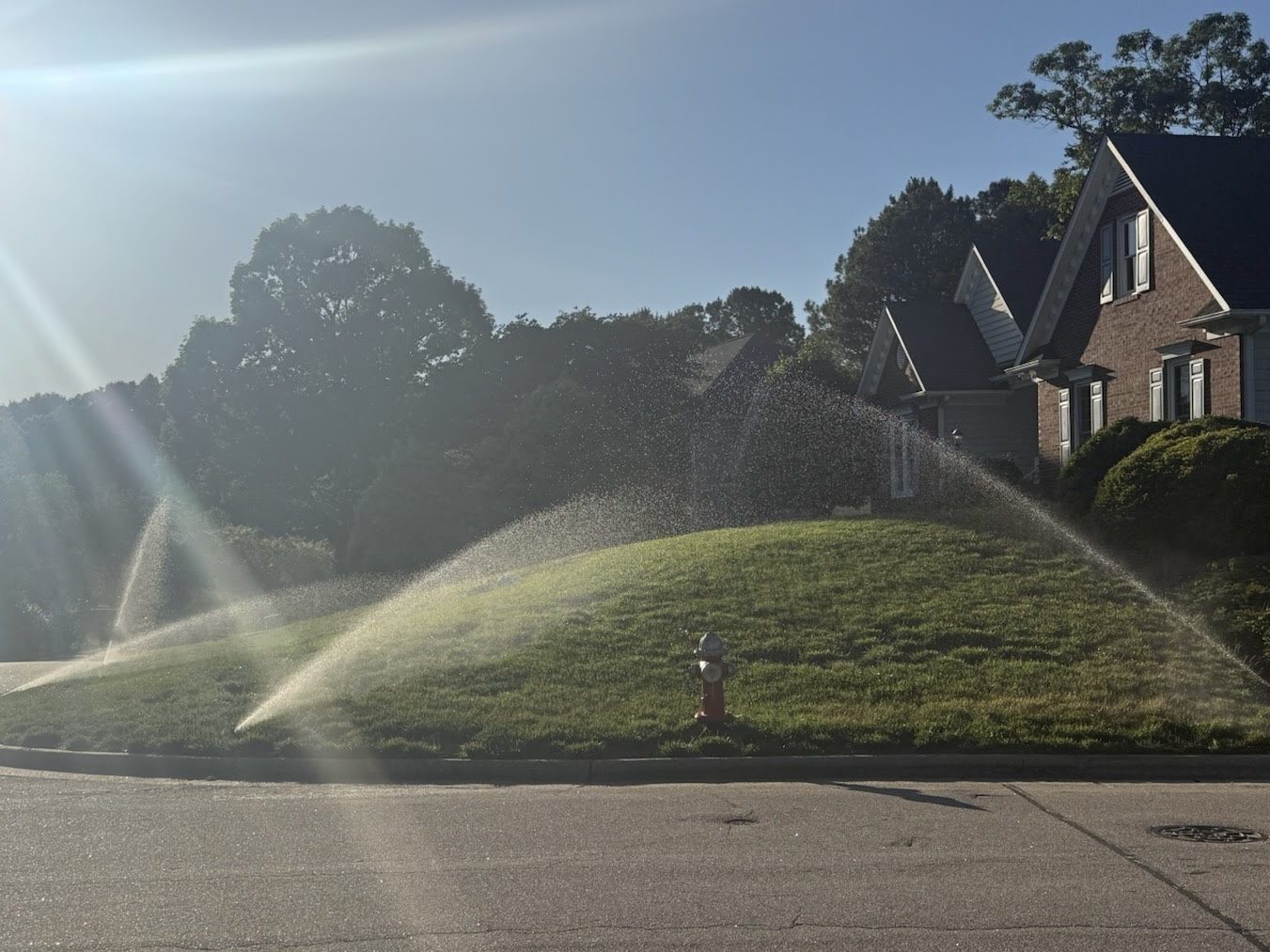
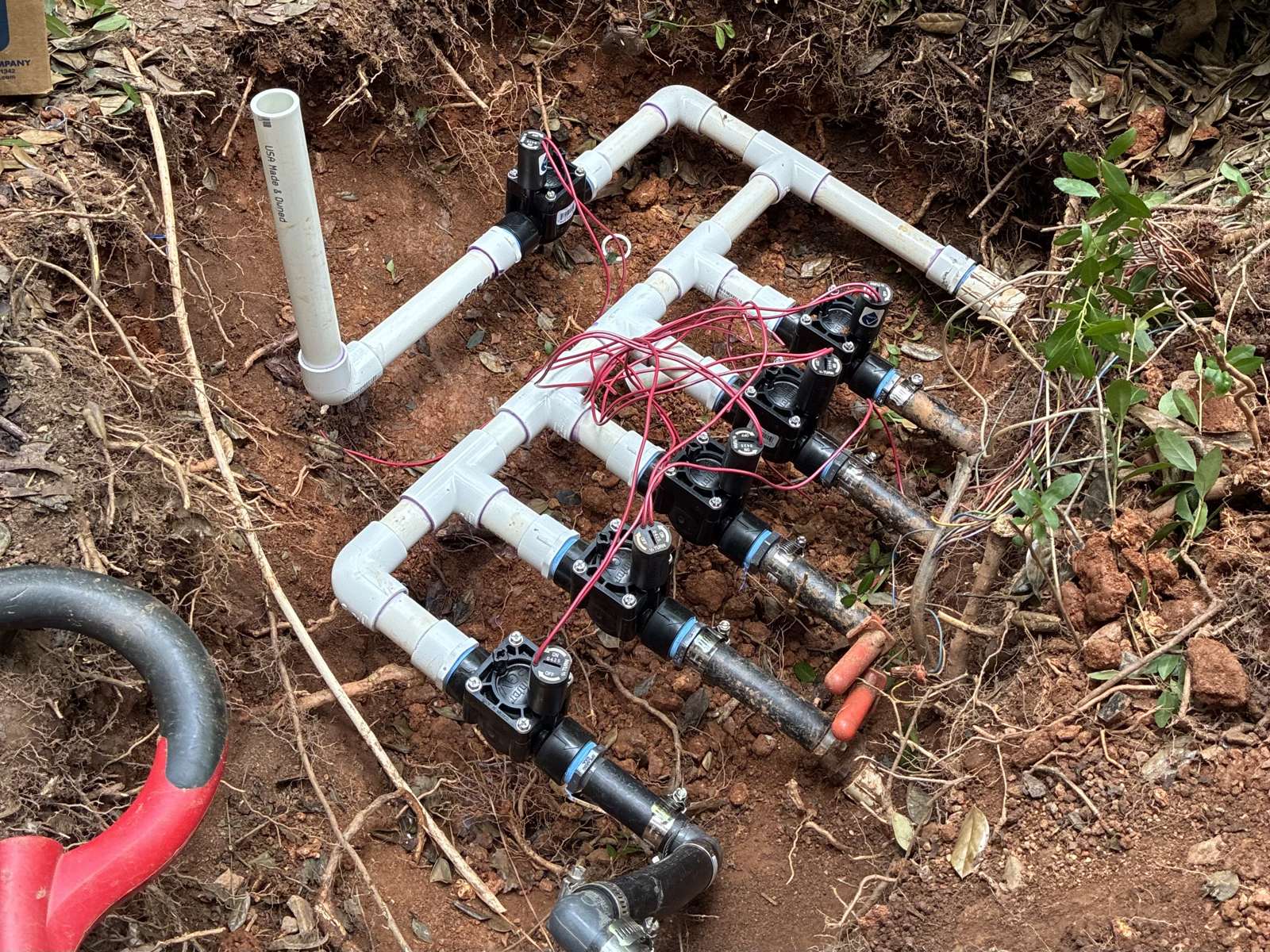
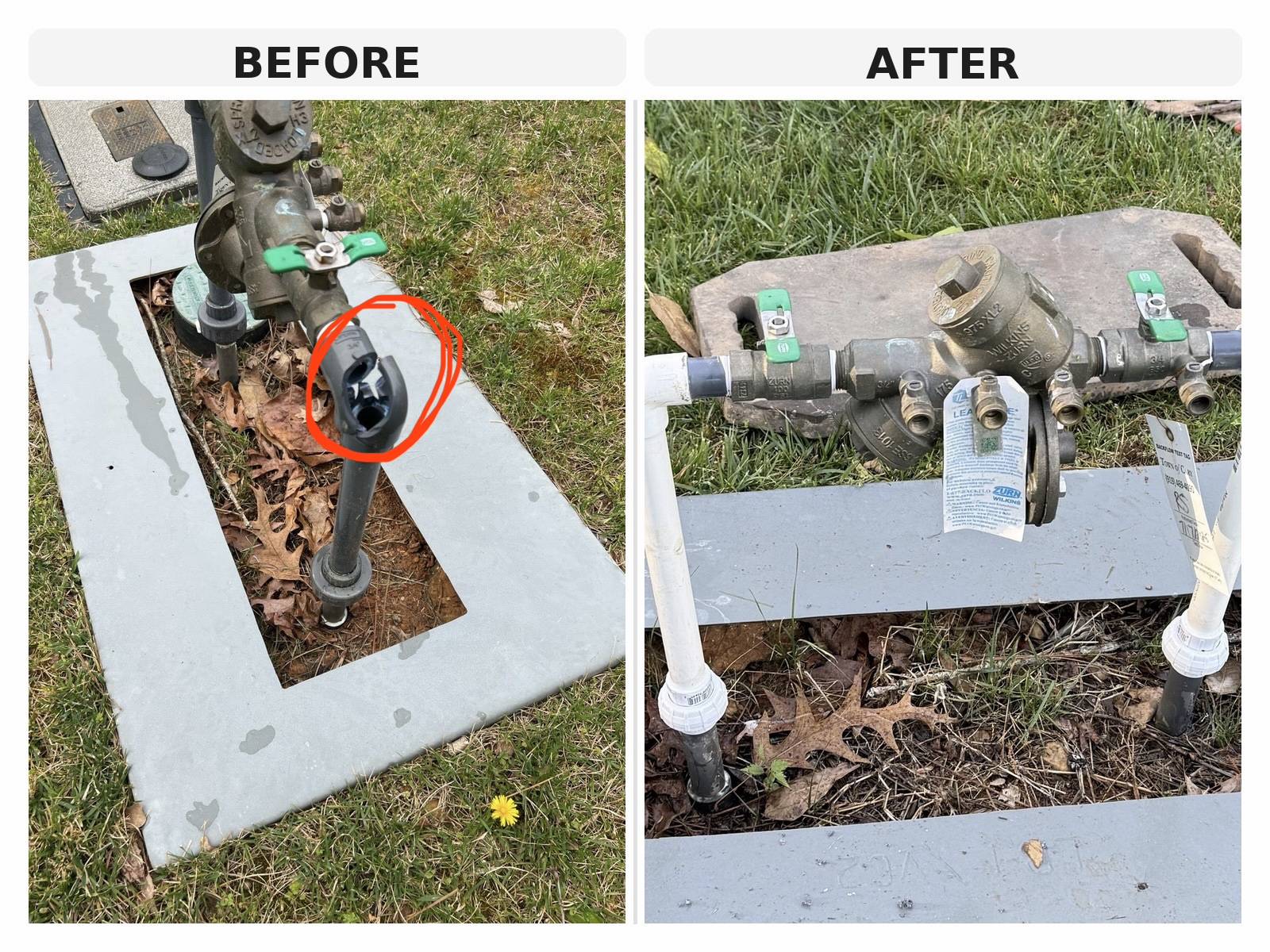
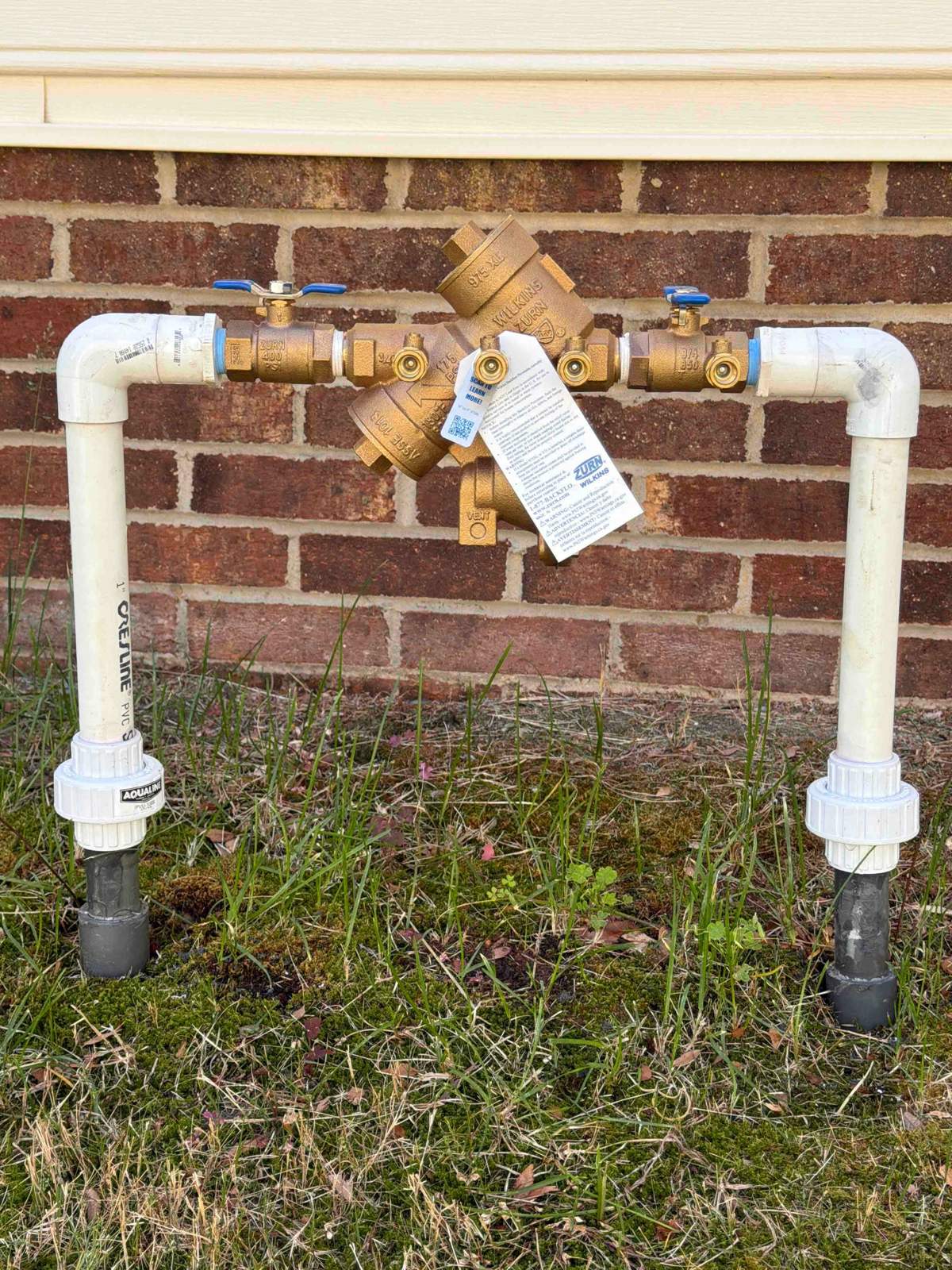
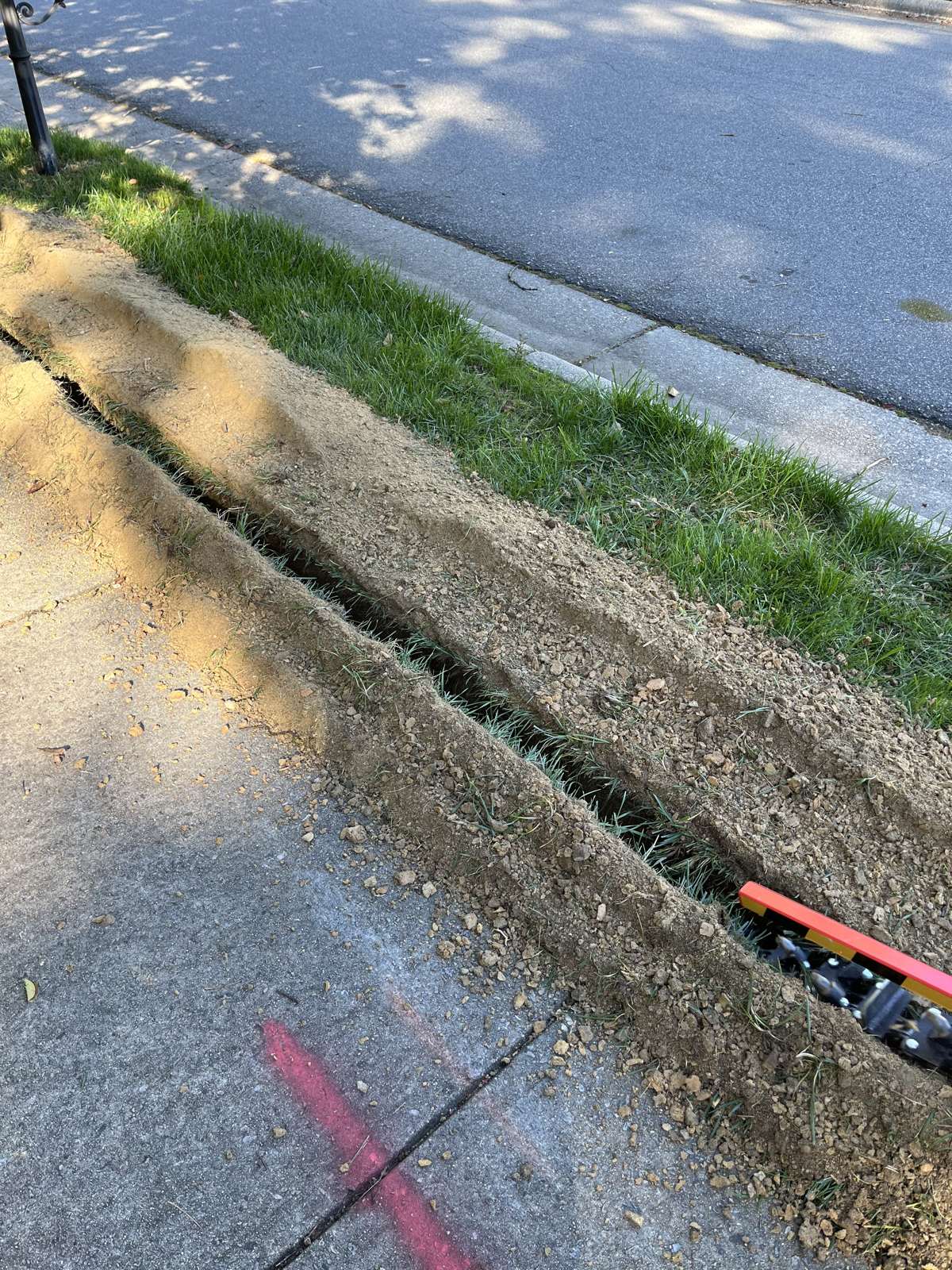
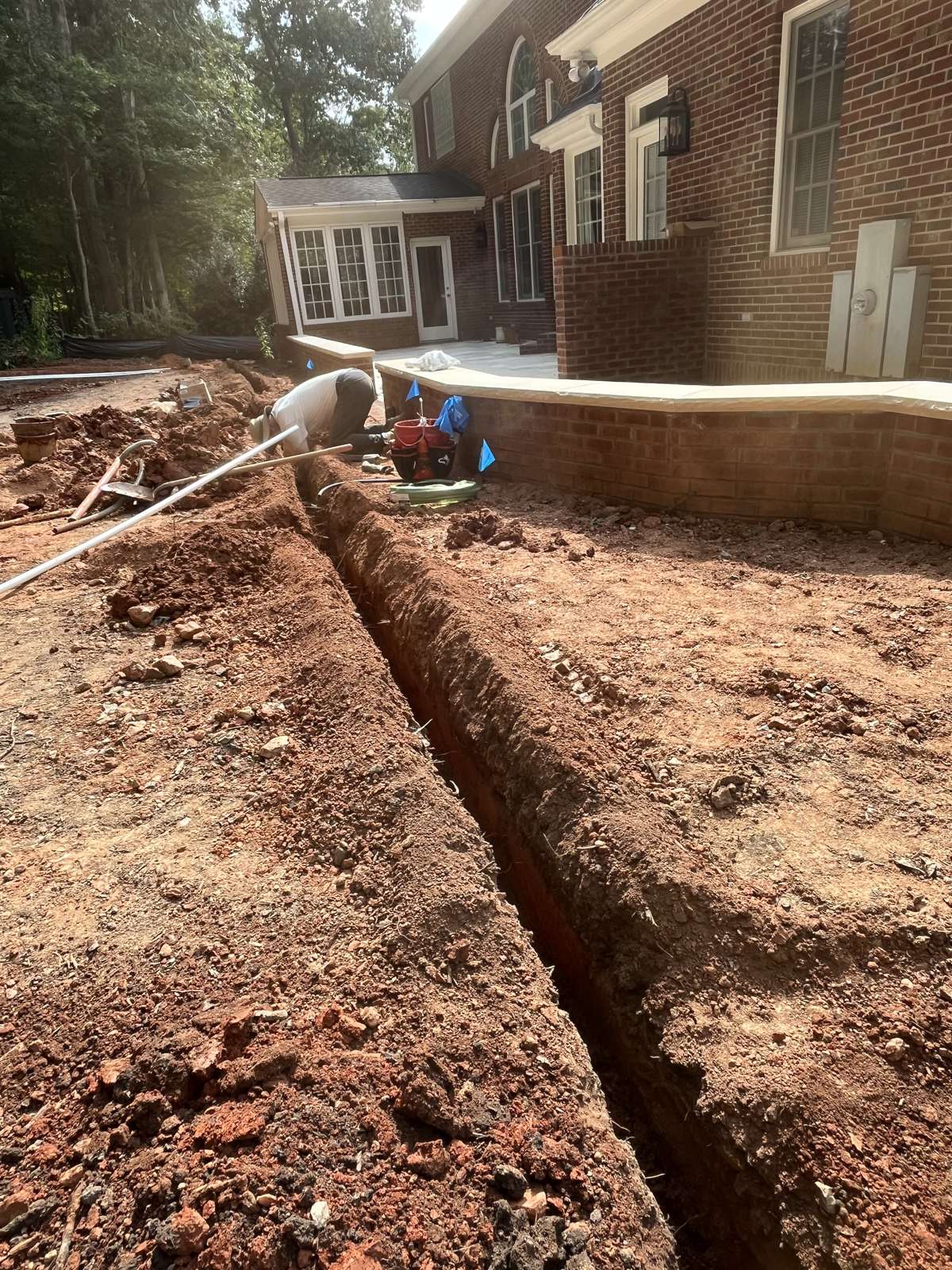
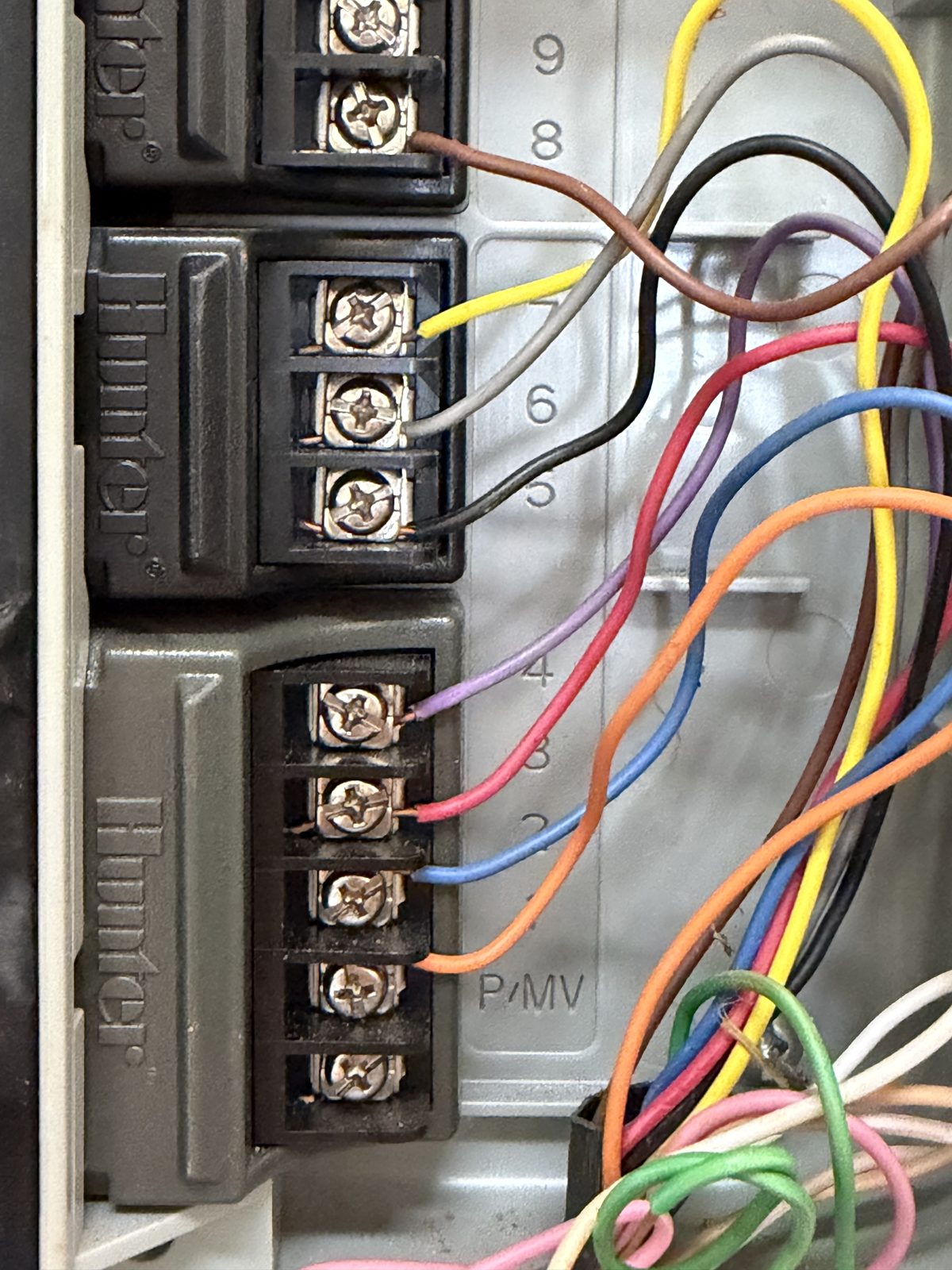
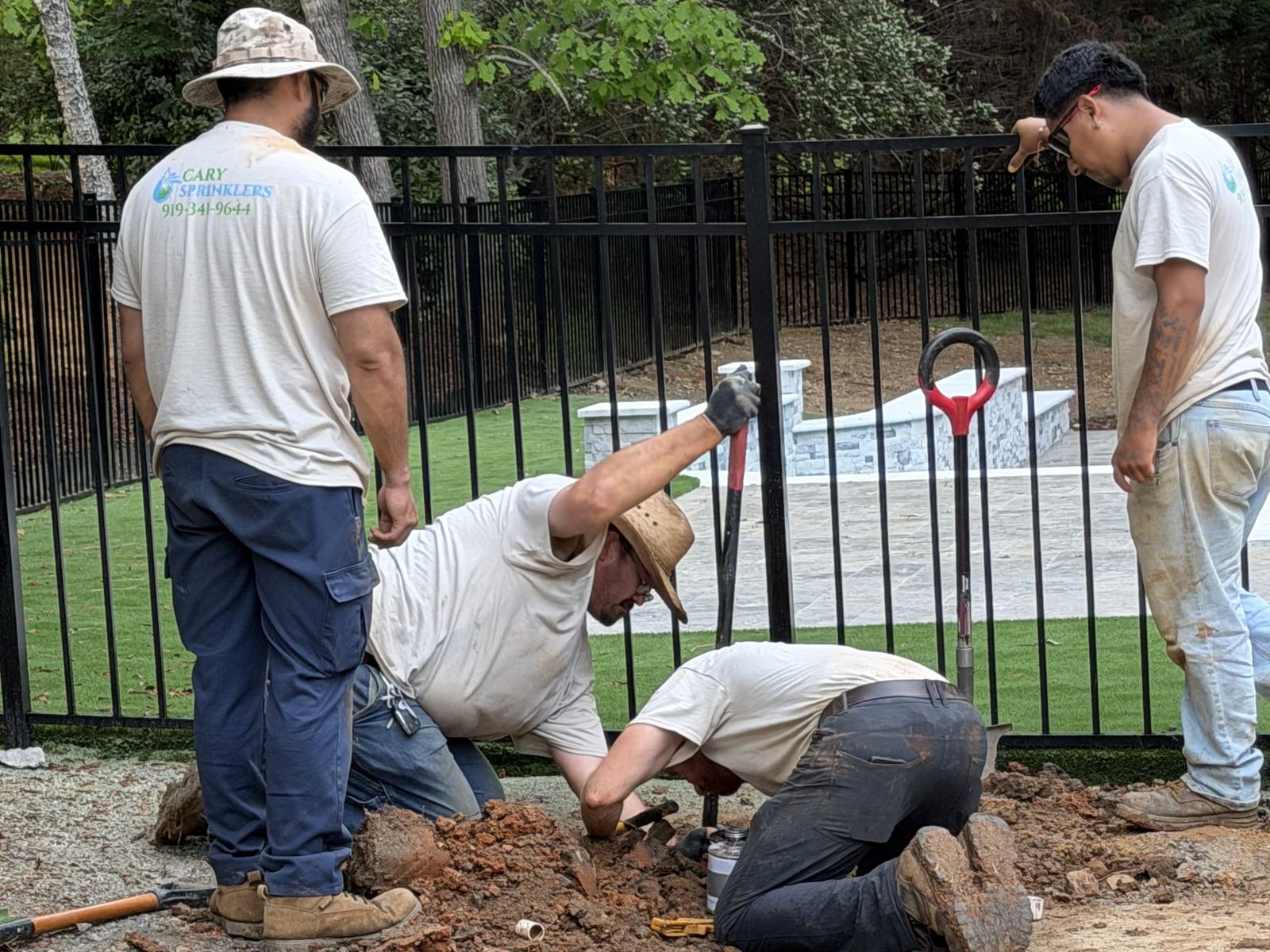
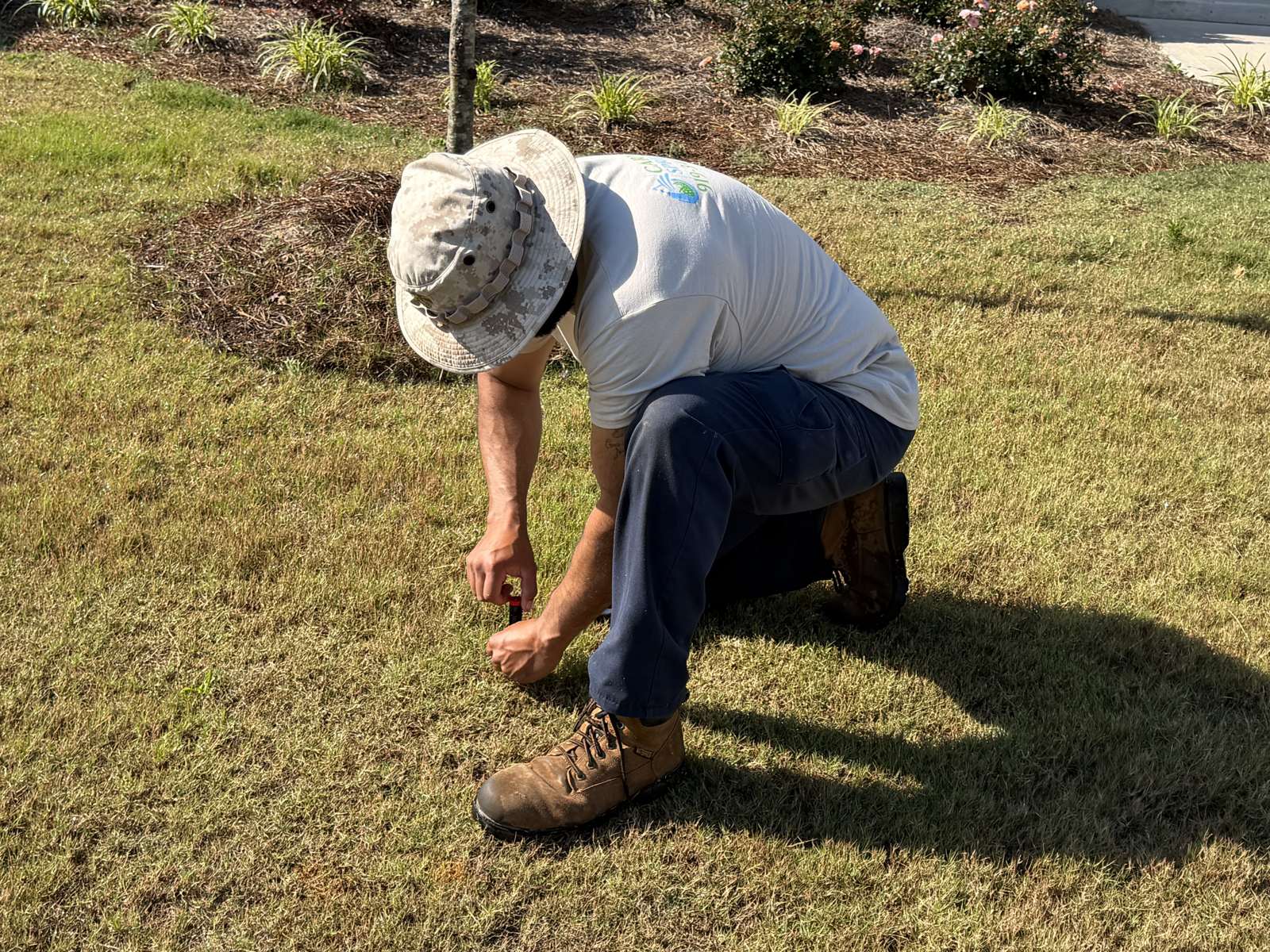
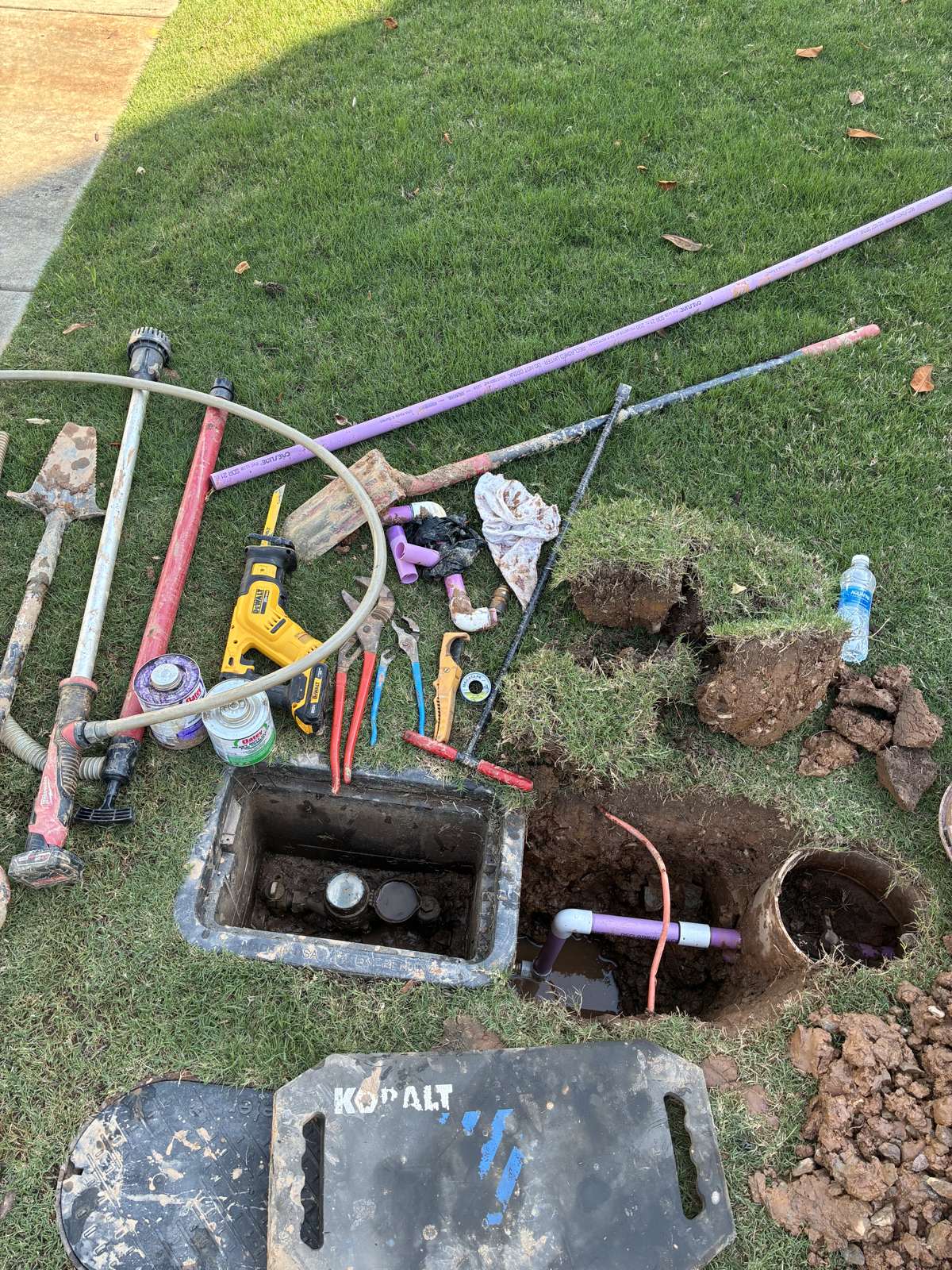
Recent work around the Triangle
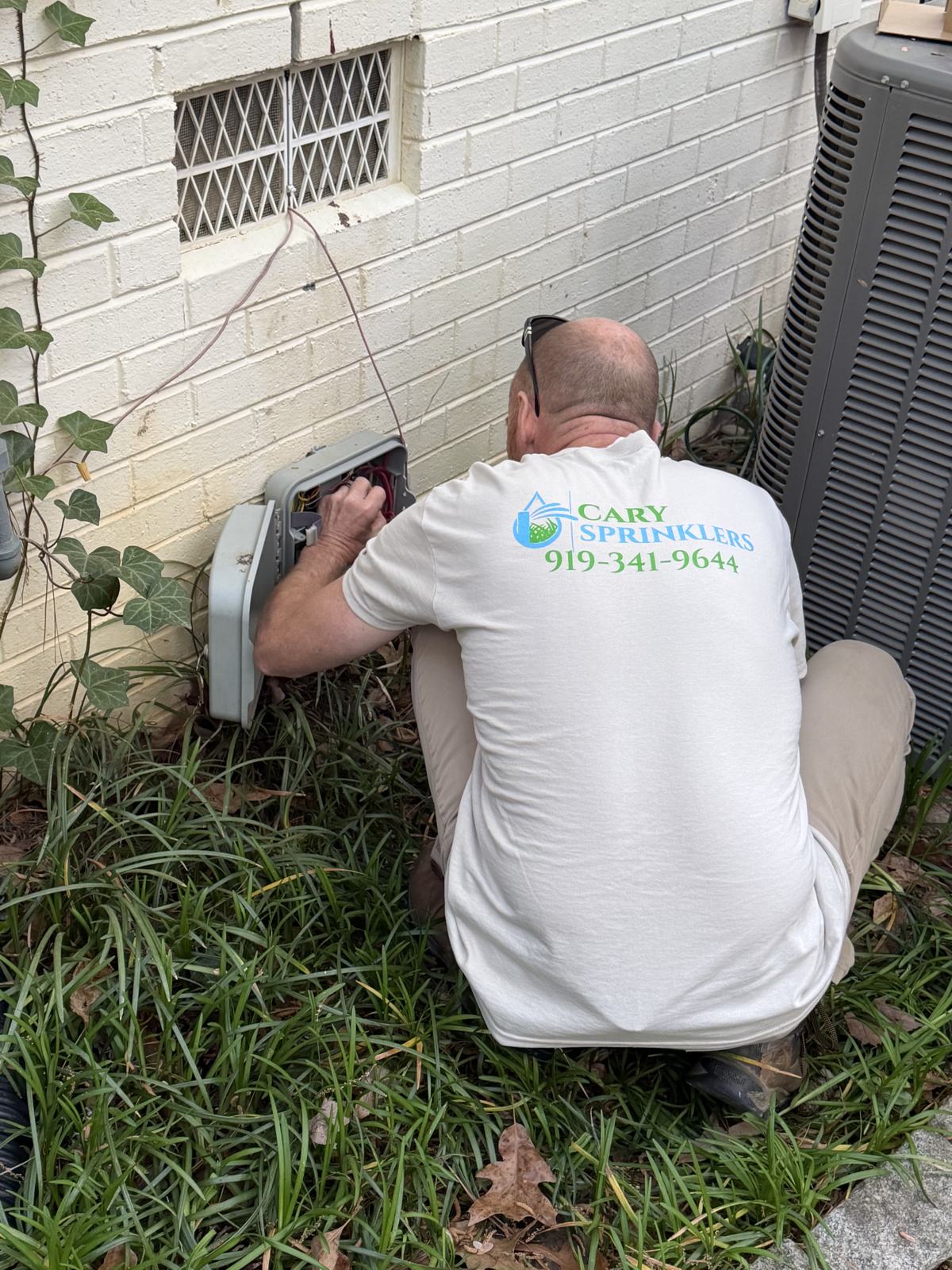
What our Triangle neighbors say




The setup screen that decides whether any of it works
Every zone has a configuration page, and the entries on it are what the whole schedule gets built from. Soil type sets how fast water can enter the ground before it starts moving sideways. Slope tells the controller how much less than that it can get away with. Nozzle type — rotor, fixed spray, rotating nozzle, or drip — sets the precipitation rate, since a spray head lays water down two to three times faster than a rotor covering the same ground. Plant type and root depth set how much reserve the soil holds before the zone needs to run again: turf-type tall fescue draws from deeper than a bed of annuals and can wait longer between cycles. Sun and shade shift the picture again.
Out of the box those fields carry defaults — usually loam, flat, spray head, full sun — and around here at least two of the four are wrong on most zones. A controller left sitting on defaults isn’t doing much a dial timer wasn’t already doing. Walking the property, identifying what’s in each zone, and entering it correctly is most of the value in the install.
Cycle-and-soak isn’t the same as watering less
Red Wake County clay accepts water slowly — far slower than a spray zone delivers it. Within eight or ten minutes the surface is saturated, and every minute after that heads downhill toward the curb. The instinctive fix is to cut the run time, but that leaves you watering only the top inch and growing a shallow root system that wilts in the first hot week of July.
Cycle-and-soak solves it differently. The zone’s total run gets divided into two or three short cycles with a soak interval between them, long enough for what’s sitting on the surface to move down. The same total volume goes into the ground and almost none of it leaves the property. Every smart controller can do this, and on plenty of systems we service it was never switched on.
Restricted watering days make the sequencing tighter. Under Cary’s year-round alternate-day rule on potable water, the permitted nights are fixed, and three cycles plus two soaks across eight zones is a long window. We set the start early enough that the final soak finishes before the window closes, and stagger zones so none overlap and drop pressure.
What a controller can’t fix, and the sensor that helps
A controller opens valves for a set number of minutes. That is the extent of its authority. It can’t straighten a head knocked off its arc, clear a plugged nozzle, or fix a zone where three nozzle sizes have been mixed and half the lawn gets double the water. Layer good weather logic over uneven coverage and all you’ve done is deliver the wrong amount more precisely. We check coverage first and handle whatever sprinkler repair the zones need before tuning schedules.
One add-on extends what the controller can perceive. A flow sensor on the mainline reads gallons per minute, learns what each zone normally draws, and flags anything outside that range — a spike when a head snaps off, a trickle when a valve refuses to open. Paired with a master valve it can shut the water down by itself instead of running until the bill shows up.
As for the app, the genuinely useful parts are unglamorous: killing a cycle from your phone when the mowing crew pulls in, running one zone while you stand at the head watching it, and a log that answers why a zone didn’t water Tuesday.
Smart controller FAQ
Which smart controller is best?
We install Rachio, Hunter Hydrawise, and Rain Bird — all excellent. The right one depends on your zones and WiFi; we’ll recommend and set it up.
Will a smart controller really lower my bill?
Weather-based watering skips unnecessary cycles and right-sizes run times, which is where a lot of the ~$500/yr savings comes from.
Can you just swap my old timer?
Yes — a retrofit swaps your dial timer for a smart controller without redoing the system.
Does it handle Cary’s reclaimed water or odd/even rules?
Yes. We program it to your town’s schedule, including reclaimed exemptions and odd/even or alternate-day rules.
Water smarter, spend less
Have a smart controller installed and dialed in by a local team. Upfront pricing.
Get your free smart controller installation quote
Tell us what’s going on and we’ll get right back to you — usually the same day. Prefer to talk? Call or text 919-341-9644.
- Local, licensed & insured
- Upfront pricing — no surprises
- 100% guarantee + 12-month workmanship warranty