Irrigation Repair in Cary, Raleigh & the Triangle
Dead zones, valves stuck open, a controller on the fritz after a storm, a failed backflow — the repairs that live below the surface. We diagnose the whole system, not just the heads.
System-level problems need a system-level look
A broken head is a five-minute fix. Irrigation repair is the other kind of call — where the symptom shows on the surface but the cause is buried, wired, or hidden in the controller. A dead zone can trace to a corroded solenoid, a nicked wire, a failed valve diaphragm, or a break in the mainline. Guessing gets expensive, so we isolate the real fault before anyone digs.
Most system calls fall into a few buckets: valves that won’t open or won’t shut off, controllers that skip zones or run at odd hours after a power blip, yard-wide low pressure, and mystery leaks that soften a patch of lawn or spike a water bill. If a “near me” search has already turned up a full-system-replacement quote, get a second opinion — more often than not it’s a single failed part.
Pick your town for the local specifics — Cary’s reclaimed-water plumbing and backflow rules, Raleigh Water’s RPZ requirements and older Inside-the-Beltline systems.
The irrigation faults we track down
Below-ground and behind-the-panel repairs a head swap won’t touch.
Valves & solenoids
A zone stuck off, stuck on, or weeping is usually the valve. We rebuild the diaphragm or swap the solenoid instead of the whole manifold.
Mainline & lateral breaks
A break upstream of the valves runs constantly and soaks the yard. We locate it, cut in a clean repair, and pressure-test.
Controllers & timers
Skipped zones, odd run times, a dead display after a storm — we test the controller and outputs and repair or replace what failed.
Field wiring & shorts
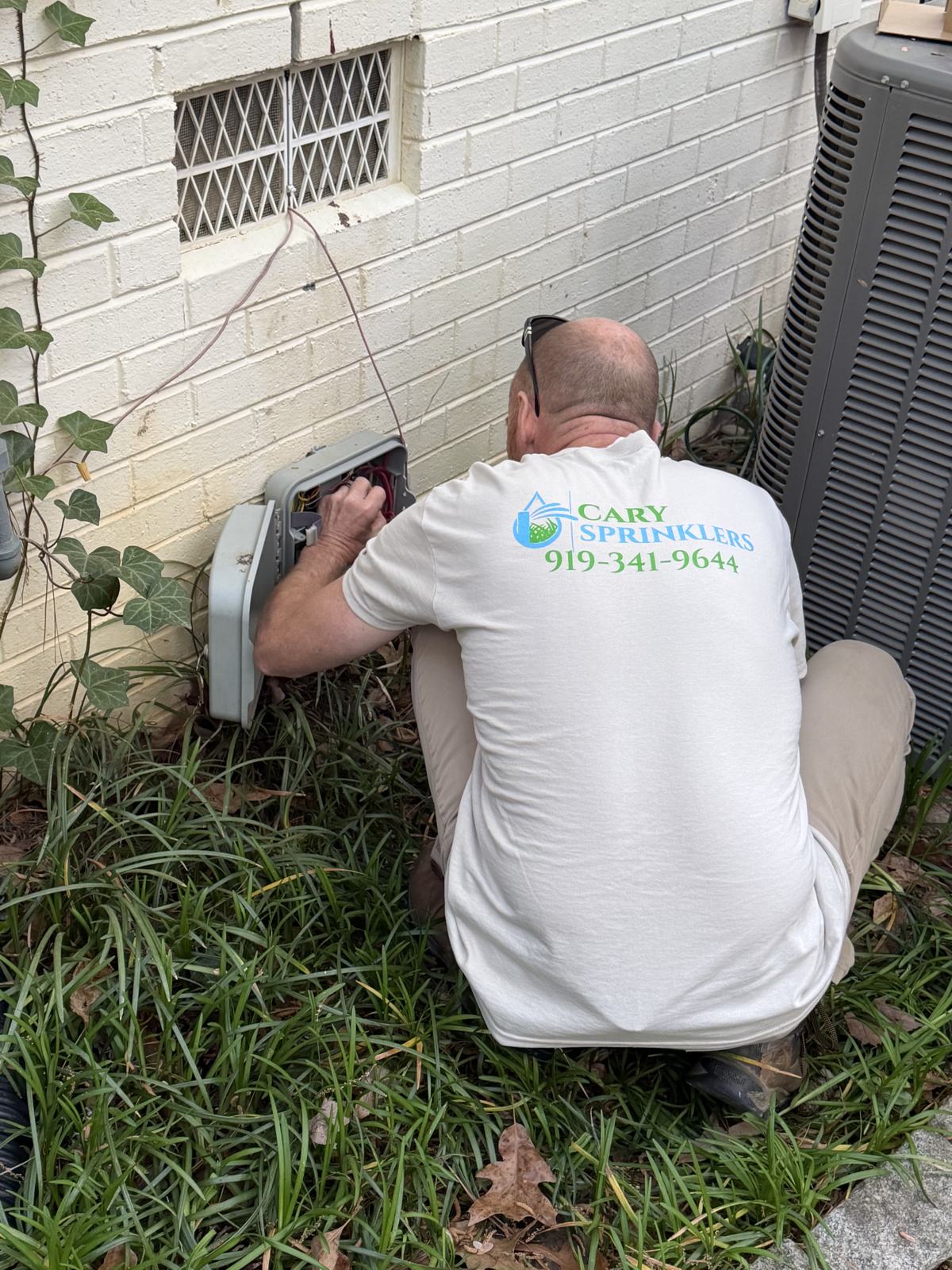
Nicked wires, bad splices, and lightning hits take zones offline. We meter the wiring, find the fault, and re-splice waterproof.
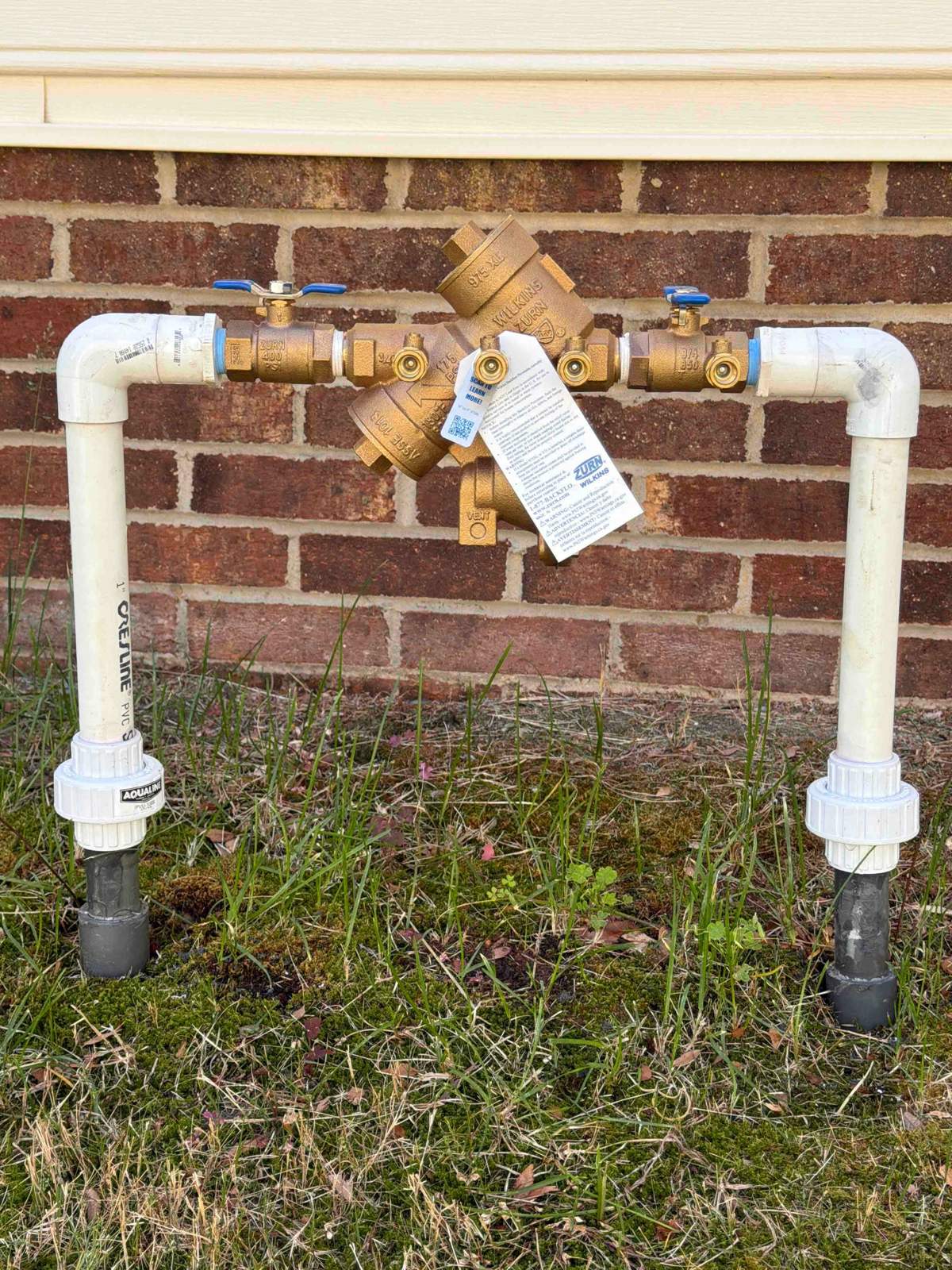
Backflow & RPZ
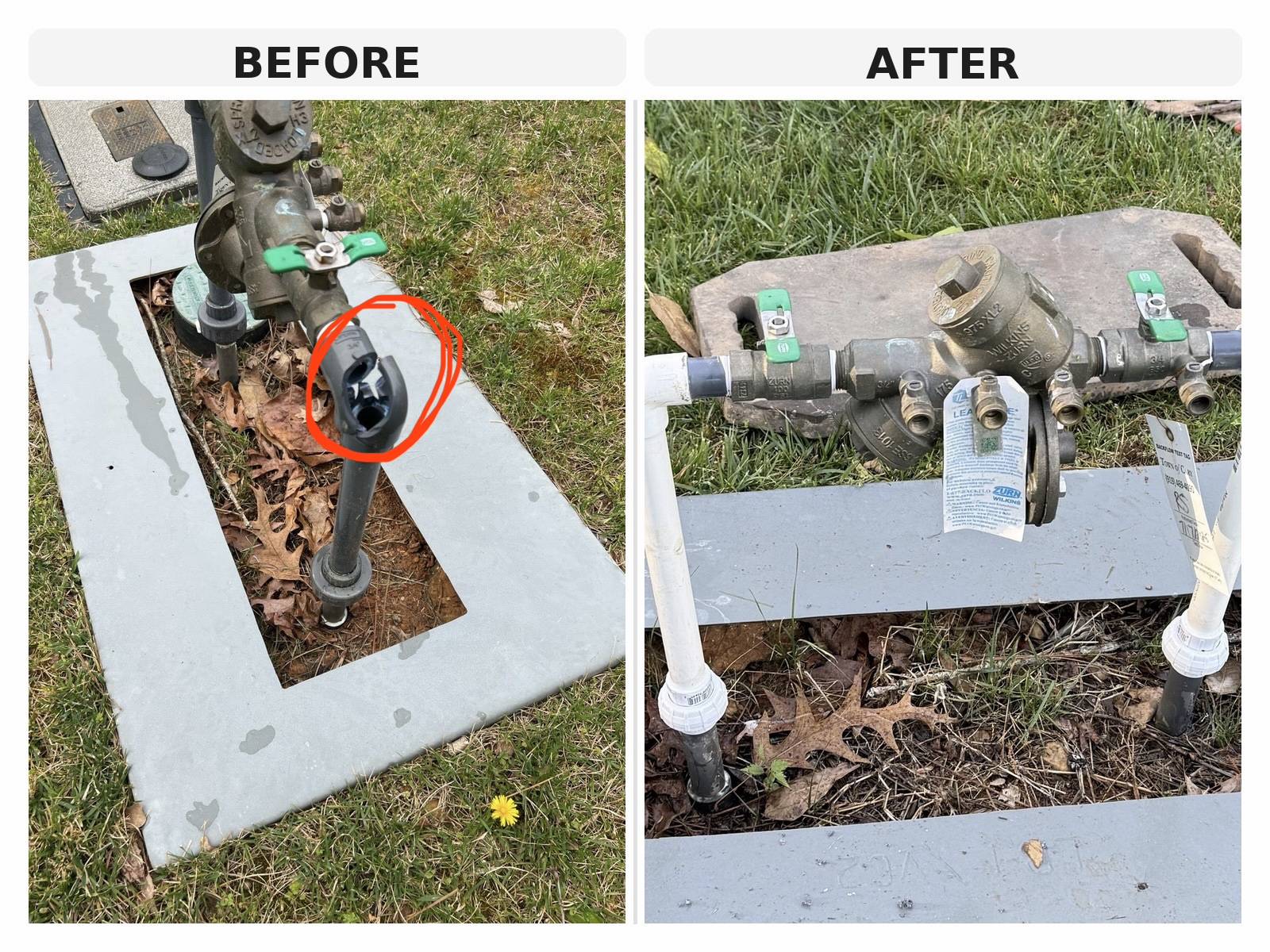
Freeze-cracked or failed assemblies rebuilt or replaced to code, then set up for the required test.
Pressure & hydraulics
Weak throw across every zone points to supply, a master valve, or pressure — not the heads. We find where it’s lost.
Just need a cracked head or a misaimed rotor sorted out? That’s a quicker visit — see sprinkler repair.
Specialized irrigation repairs
These are the system-level jobs we get called for most — each has its own page with the full detail.
Main line break repair →
A split in the pressurized feed leaks around the clock. We locate it, isolate it, and cut in the fix.
Irrigation leak detection →
The bill jumped but the yard looks fine. We find the leak underground before anyone digs.
Low pressure & coverage →
Every zone weak, heads misting — supply, master valve, or a hidden restriction. We trace where it’s lost.
Wiring & electrical →
Solenoids that click and never open, splices gone green, a controller that lost half its zones.
Contractor & utility damage →
A trencher or fence auger found your line. We repair it and document everything for the claim.
Zone not working →
A dead zone is a valve, wiring, or controller question first. We diagnose before we dig.
Sprinkler valve repair →
A zone that will not shut off, or will not open at all. Diaphragm, solenoid, or the valve box itself.
Sprinkler pipe repair →
Cracked lateral lines from freeze, roots, or a shovel. We expose the break and replace the run.
Master valve repair →
Nothing turns on at all. The valve upstream of every zone has failed shut and taken the whole system with it.
Weeping sprinkler head →
Water showing up when the system is off. We time it to tell low-head drainage from a seal that is not sealing.
Shutoff valve repair →
Seized handles, sheared stems, a box that is always wet. The valve that isolates everything, working again.
Irrigation pump repair →
Well, pond and booster pumps that will not prime, short cycle, or run without building pressure.
Valve locating →
Valve box lost under sod or mulch. We find it electronically rather than digging for it.
Choose your town
Every town page is written for that town’s water rules and conditions — not a copy with the name swapped. All six of our core towns are live.
Cary, NC
Raleigh, NC
Apex, NC
Morrisville, NC
Holly Springs, NC
Fuquay-Varina, NC
Why Triangle homeowners trust the tough calls to us
We find the real fault
Finding the fault is the whole game in irrigation repair. We track the fault to its source, so nothing gets misread or handed off.
Repair before replace
We fix the failed part when it can be fixed — especially on older systems — so you’re not sold a system you don’t need.
Compliance-aware
We know Cary and Raleigh backflow rules, so a repair leaves your system working and in good standing.
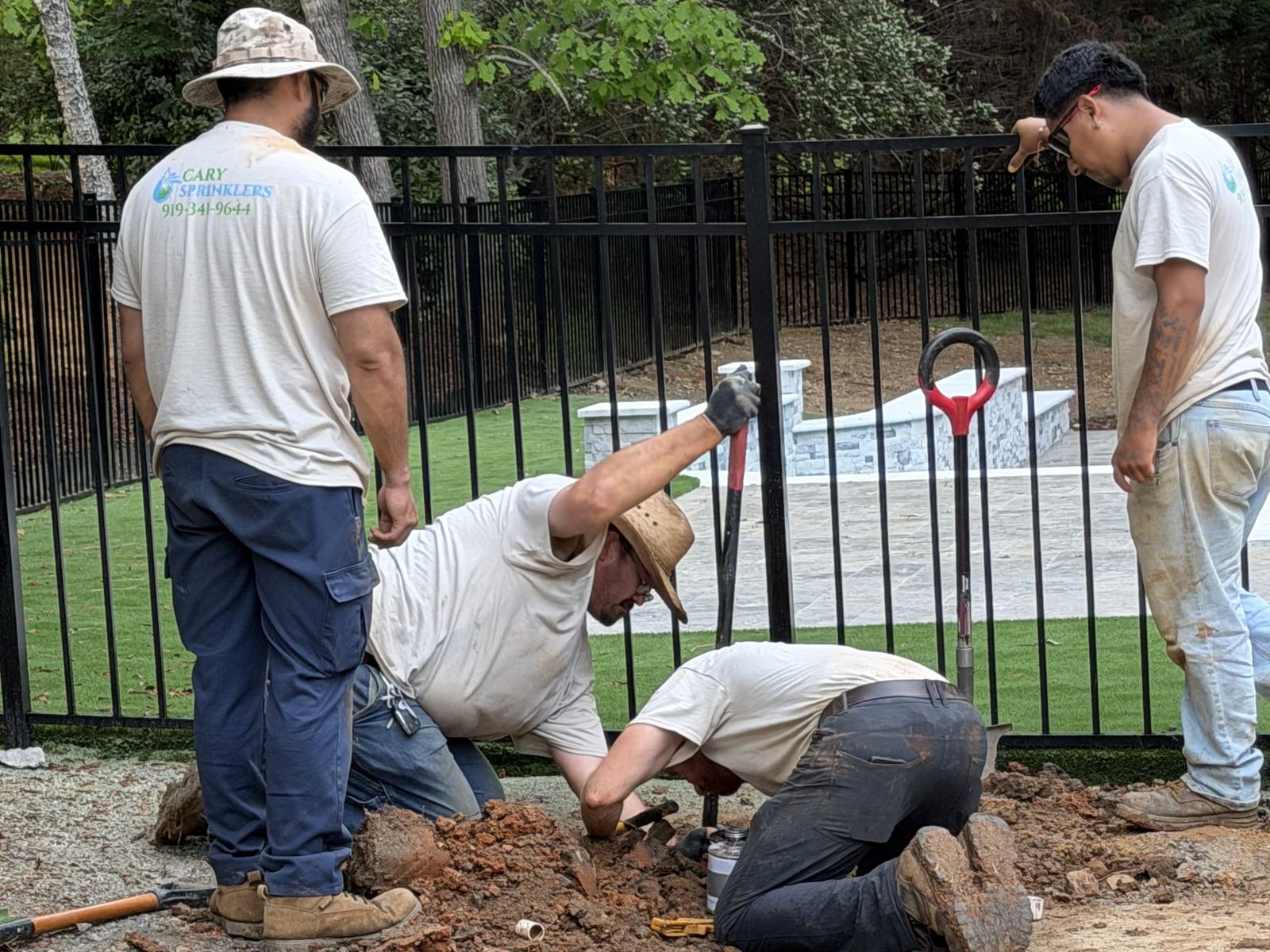
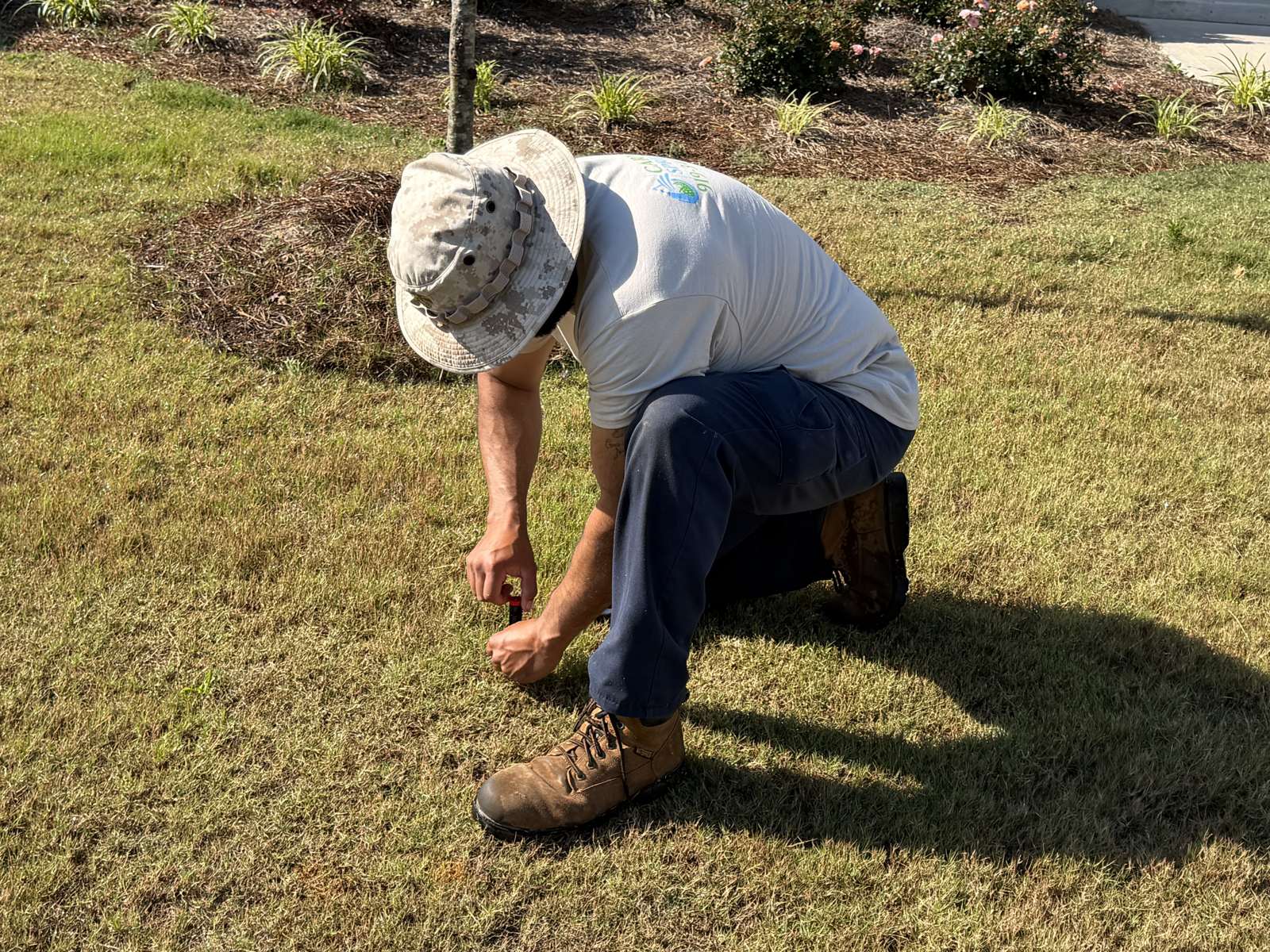
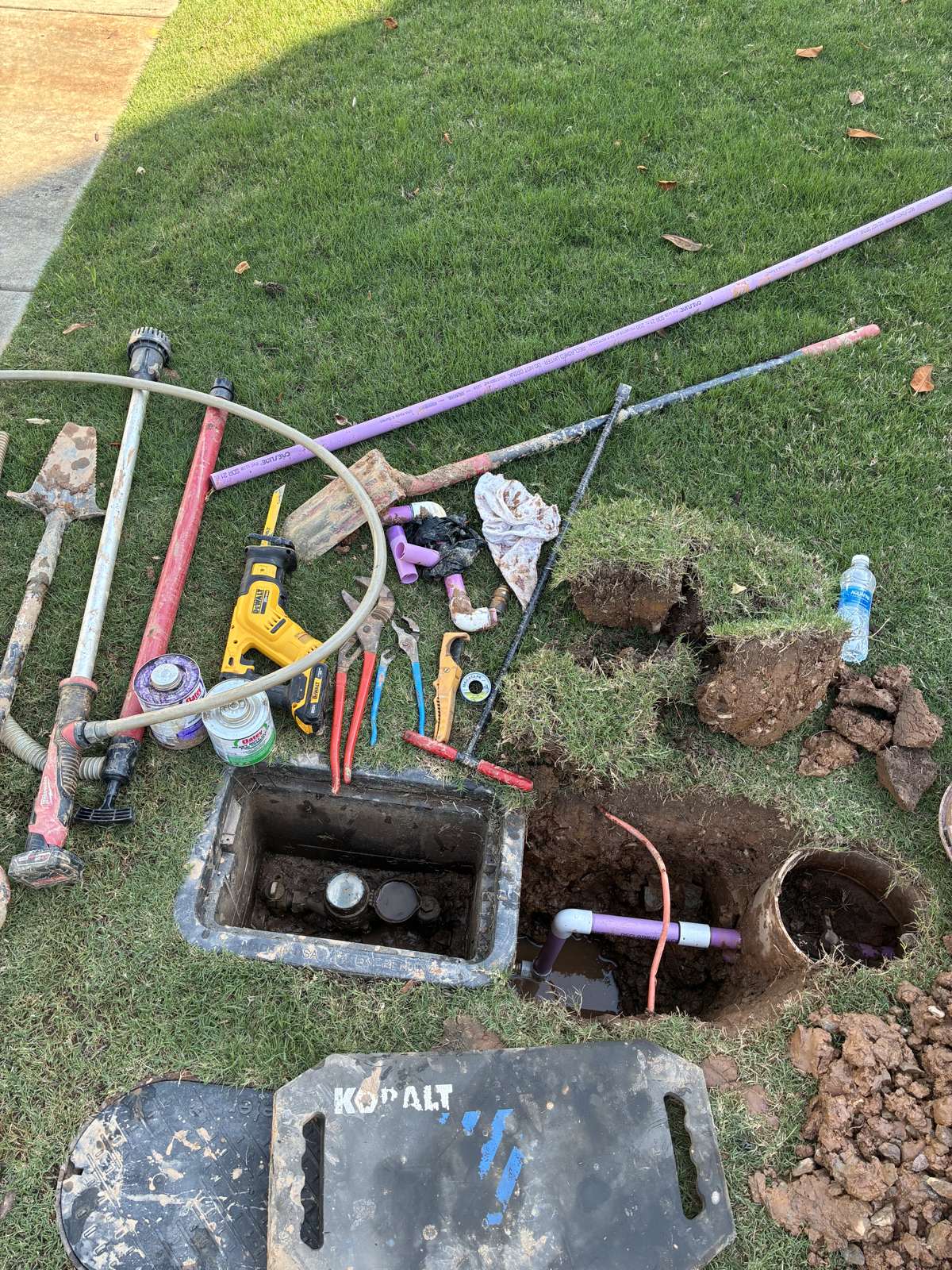
Recent work around the Triangle
What our Triangle neighbors say




Reading an electrical fault: solenoid, splice, common, or controller
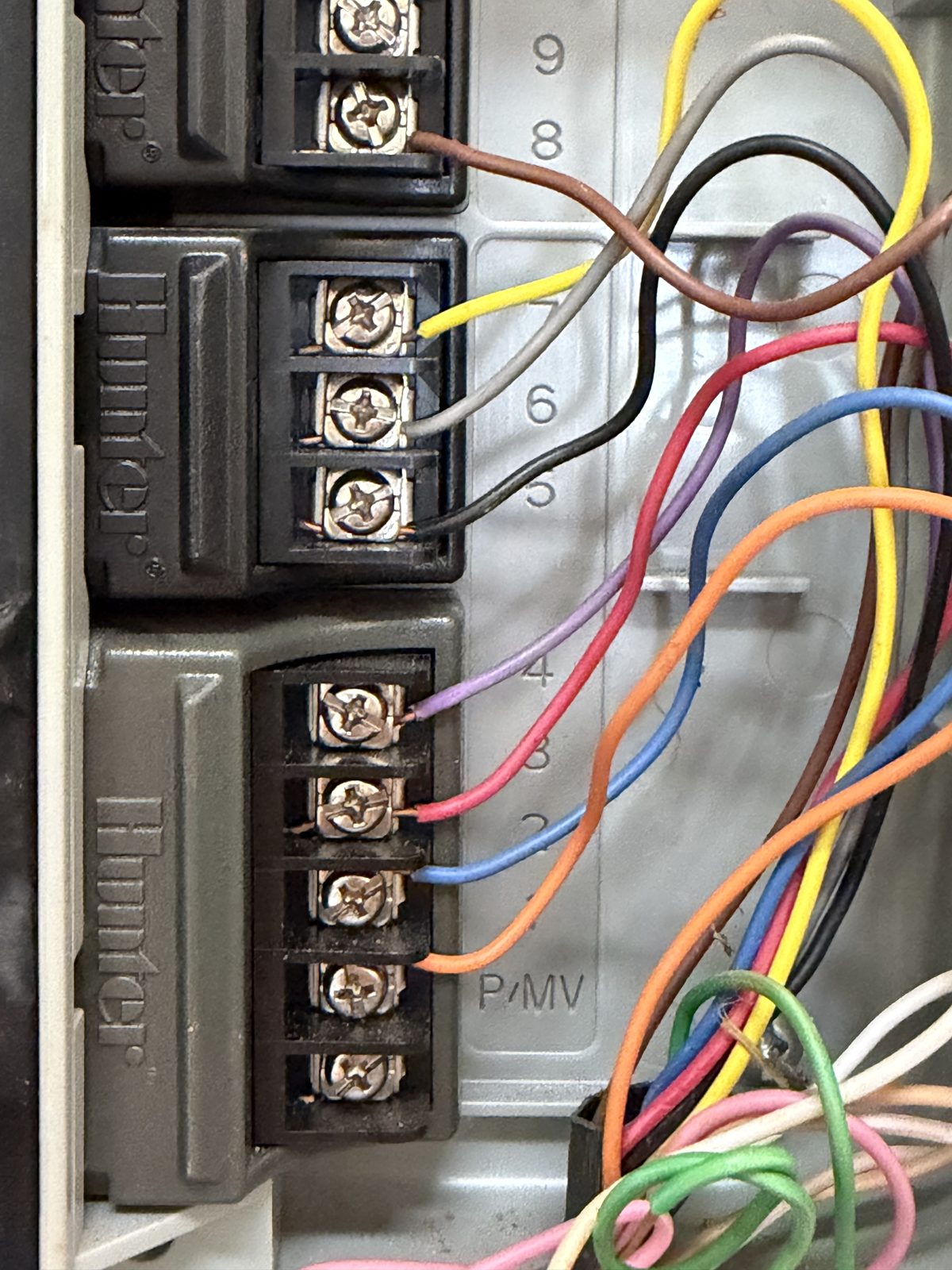
Four things sit in a zone’s circuit, and each one fails with its own signature. We start at the controller with the field wires off, metering each station wire against the common. An open reading — no continuity — means the circuit is broken somewhere: a severed wire, a corroded splice, or a burned-out solenoid coil. A reading down near nothing means a short, bare copper against copper or ground, usually where a shovel or fence post went through.
Then we go to the valve, disconnect the solenoid from the field wiring, and read it on its own. That one step splits the problem in half. Good solenoid with a bad reading at the panel means the wire is at fault. Bad solenoid means we’re done looking.
The common wire announces itself when several zones die together — it’s shared, so one break upstream takes out everything past it while the controller shows nothing wrong. The controller gets tested last: if a station won’t energize a known-good solenoid clipped straight to its terminals, the output is dead and it’s a board problem, not a field problem. The nastiest ones are intermittent — a wire nut sitting in a wet valve box that conducts fine in July and quits after a storm.
Finding a mainline leak that never reaches the surface
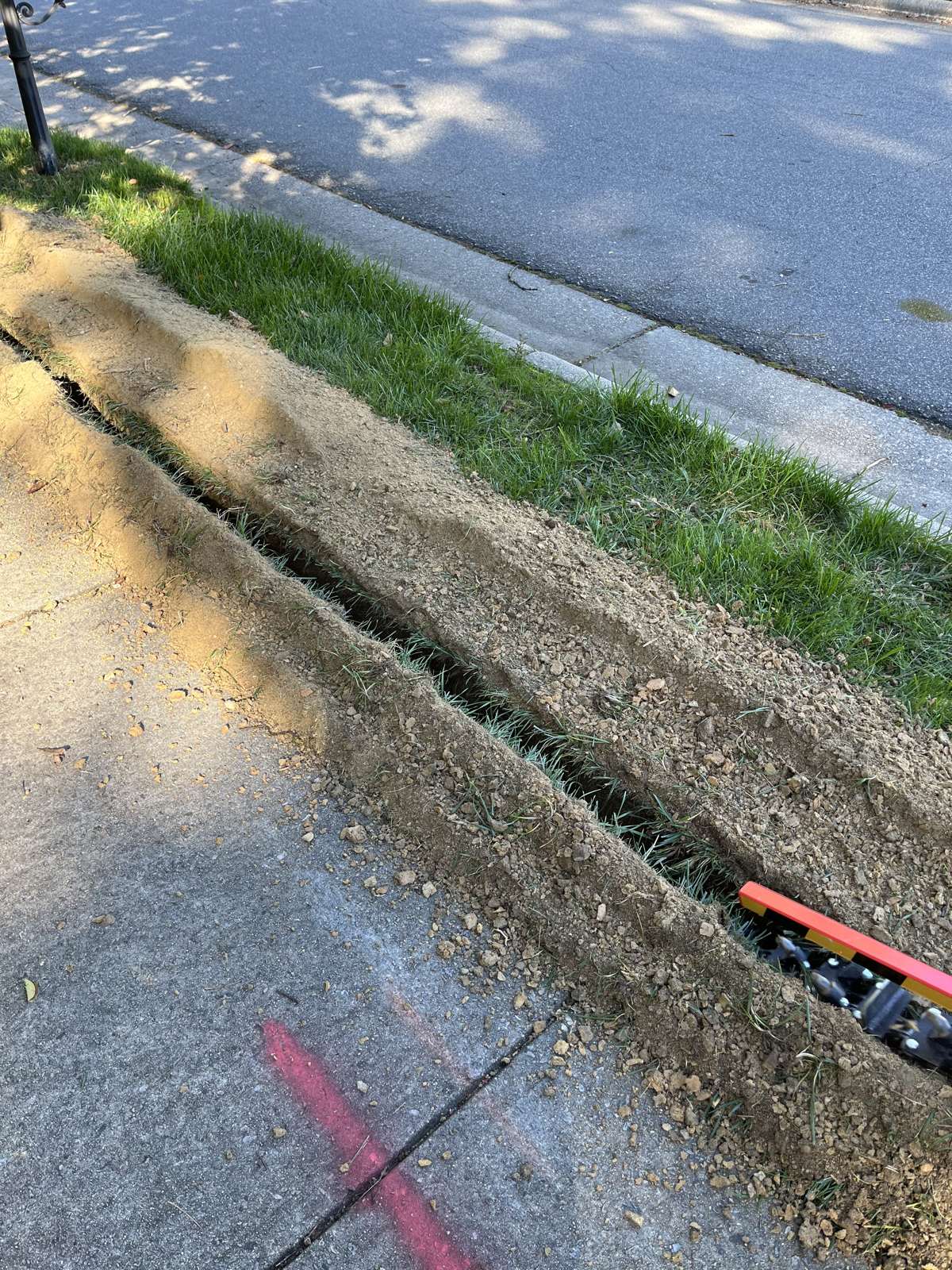
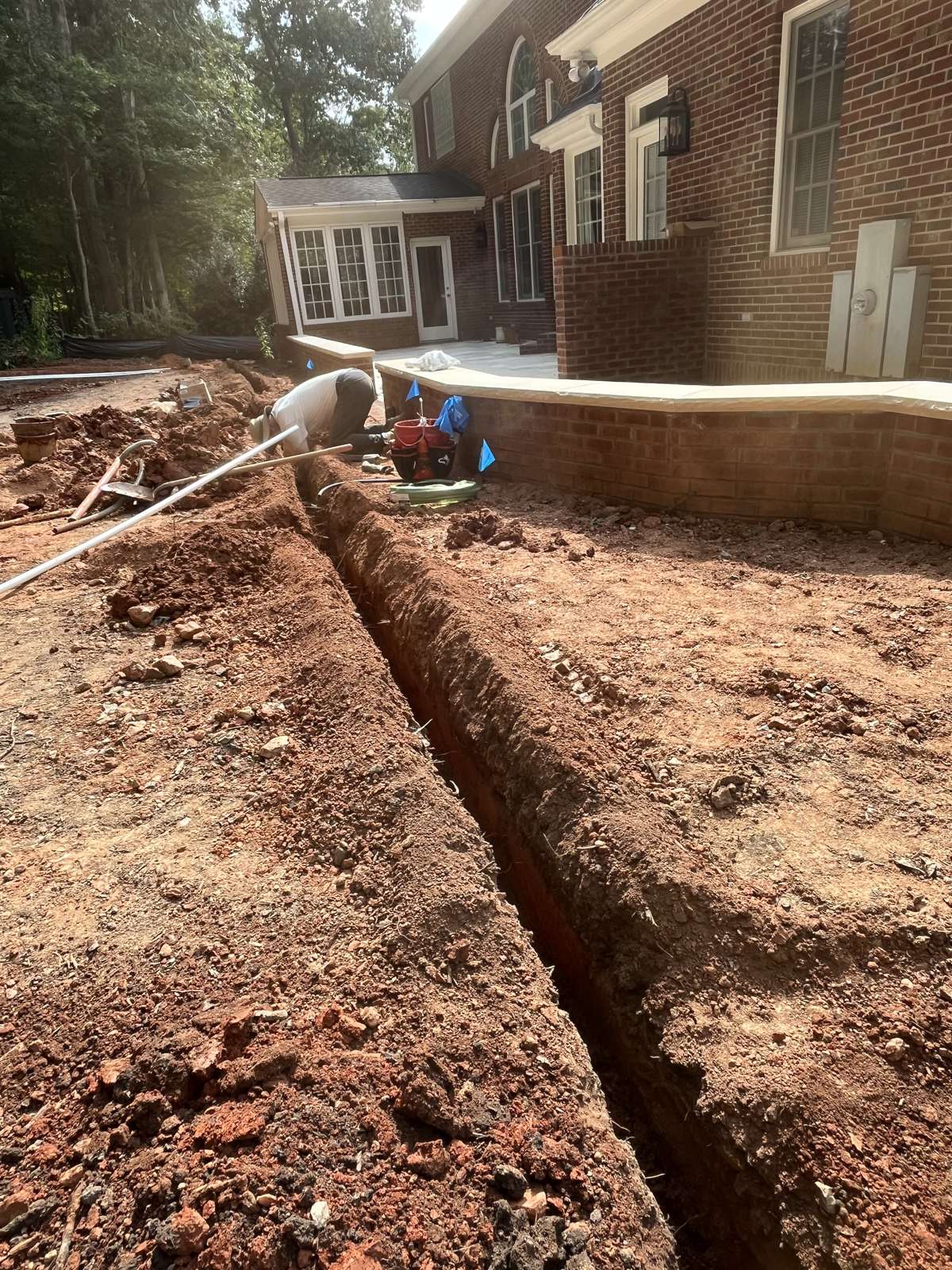
The mainline is pressurized every hour the water is on, not just while a zone runs, so a break there loses water around the clock. Clay hides it. Rather than surfacing, the water follows the loose backfill of the original trench and emerges somewhere else entirely — a low corner of the yard, the base of a slope, a storm structure at the curb, or nowhere visible at all.
The meter comes first. Everything off inside, controller off, then watch the low-flow indicator. If it’s turning, water is leaving. Next we isolate: close the valve downstream of the backflow assembly and watch again, which says whether the loss is on the irrigation side or the house side. Then the mainline gets gauged and the drop timed — a fast fall is a real break, a slow bleed is more often a valve not quite seating.
The physical tells fill in the rest: a stripe of grass darker than everything around it, gravel washed into a valve box, a soft spot that never firms up in a dry week, air spitting from the heads at start-up. That narrows a dig to a few feet. A soggy area that stays wet with the system off for days is a drainage question instead.
What a diaphragm does, and when a valve is worth rebuilding
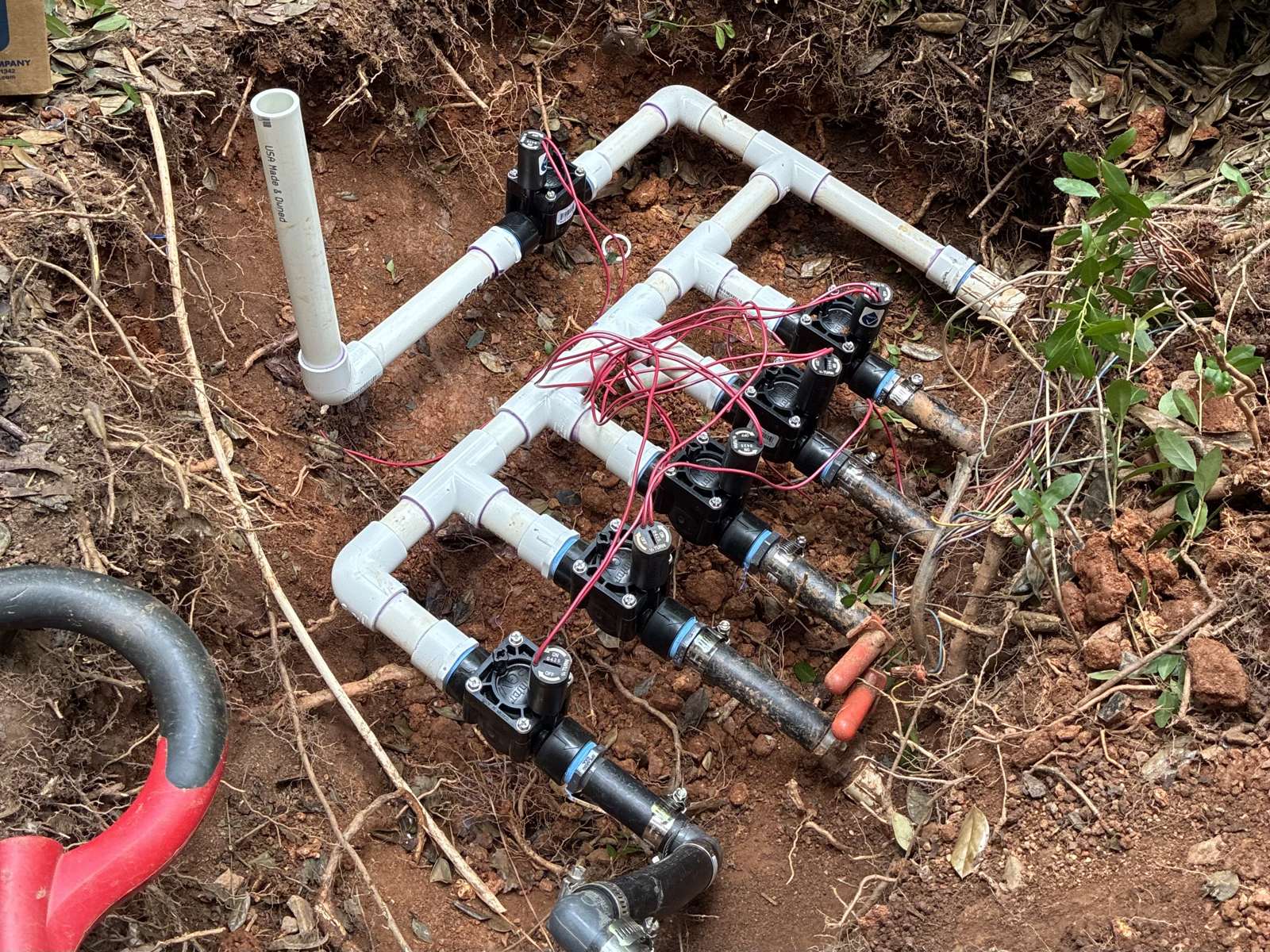
A valve isn’t held shut by its solenoid. It’s held shut by your own water pressure. A small port lets line pressure up into the chamber above a rubber diaphragm, and because that upper surface is larger than the seat below, pressure on top wins and the diaphragm stays pressed down. The solenoid does one small job: it opens an exhaust port, the chamber bleeds off, line pressure lifts the diaphragm, and the zone runs.
That explains the symptoms. Let a grain of grit lodge in the port and the chamber never repressurizes, so the zone won’t shut off. A diaphragm gone hard and cracked with age, or nicked, weeps past the seat — that’s the head dribbling between cycles. A fouled solenoid plunger does much the same. A valve that sat dry all winter often needs the diaphragm worked or swapped before it seats again, which is why it turns up at spring startup.
Rebuild or replace comes down to the body. Sound body and solid glue joints, and a diaphragm and solenoid kit restores it without cutting into the manifold. We replace when the body is cracked, the bonnet screws are seized, or the model is old enough that no kit exists.
Irrigation repair FAQ
A whole zone stopped working — is that a valve?
Often, yes. A dead zone usually points to the valve, its solenoid, or the wiring feeding it rather than the heads. We meter the wire and test the valve to confirm before replacing anything.
My controller runs at random times after a storm — can you fix it?
A power blip can scramble a controller’s clock and schedule, and sometimes damage the board. We test it, restore or reprogram the schedule to your town’s watering rules, and replace the unit only if it’s truly failed.
Can you find a hidden leak raising my water bill?
Yes. A mainline break or a valve stuck barely open can run underground with little showing on top. We pressure-test, isolate the zone, and locate the leak so we dig once, in the right spot.
Do you handle backflow repair and testing?
We repair and replace failed or freeze-damaged backflow assemblies to code and coordinate the required test. Cary and Raleigh both require backflow on irrigation, on their own testing cycles.
Something bigger than a broken head?
Tell us what the system’s doing and we’ll tell you what it usually means. Upfront pricing, local, accountable team.
Get your free irrigation repair quote
Tell us what’s going on and we’ll get right back to you — usually the same day. Prefer to talk? Call or text 919-341-9644.
- Local, licensed & insured
- Upfront pricing — no surprises
- 100% guarantee + 12-month workmanship warranty