Irrigation Maintenance in Cary, Raleigh & the Triangle
Catch the small problems before they waste water or take out a zone. Inspections, audits, leak checks, and tune-ups that keep your system efficient season after season.
A tuned system is a cheaper system
Most irrigation systems don’t fail all at once — they drift. A nozzle clogs, a head sinks, a valve weeps, the schedule stays on summer settings into fall, and the water bill creeps up. A maintenance visit catches all of that before it becomes a repair, and it’s the single easiest way to hit the ~$500 a year our customers save on water.
We check every zone head to head, meter the controller and valves, look for the hidden leaks that spike a bill, and dial the schedule to the season and your town’s watering rules. Selling or buying a home? A real-estate irrigation inspection tells you exactly what you’re dealing with before closing.
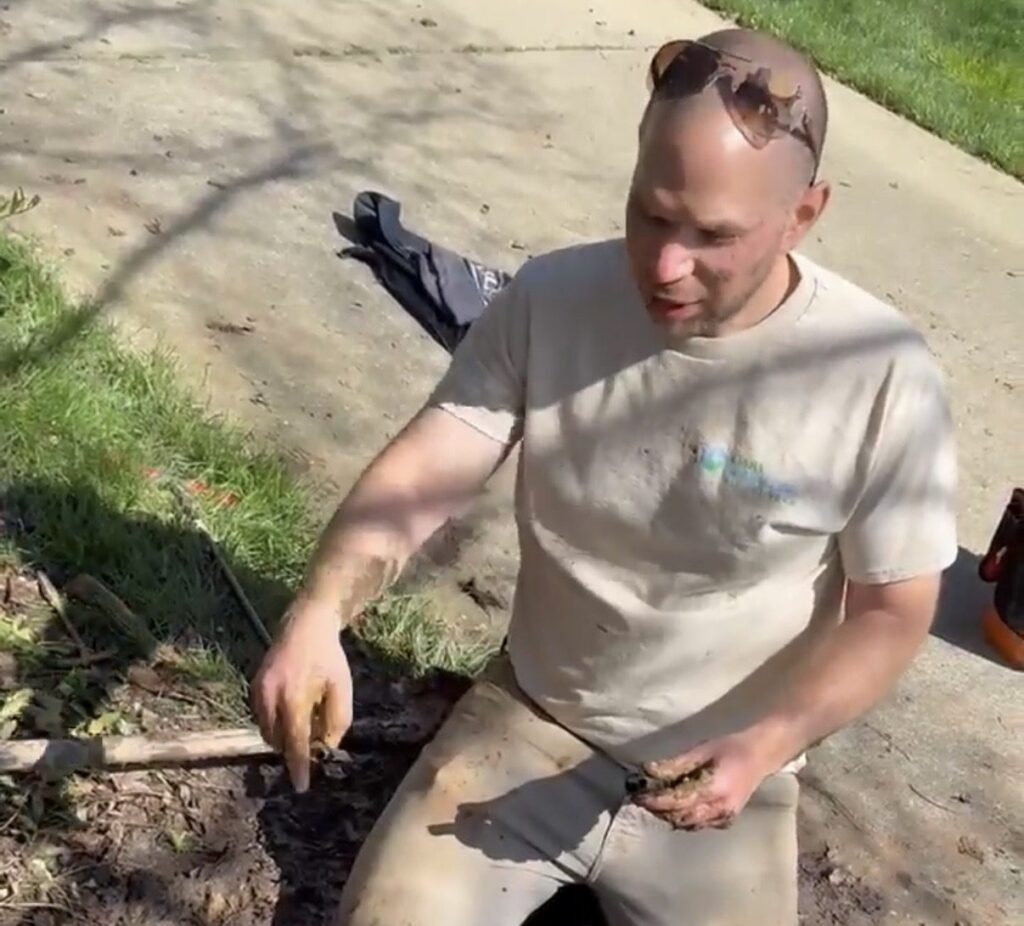
What an irrigation maintenance visit covers
A full once-over, not a quick glance.
Full system inspection & audit
Every zone run and checked head-to-head for coverage, pressure, and leaks, with a clear report of what we find.
High water bill & hidden leak detection
A creeping bill usually means an underground leak or a valve stuck barely open. We pressure-test and track it down.
Real-estate irrigation inspection
Buying or selling? We inspect the whole system and document its condition before closing.
Pressure regulation & water savings
We set correct pressure and matched nozzles so you water evenly and stop wasting water to misting and runoff.
Head & nozzle tune-up
Clean, re-aim, and match heads across each zone so coverage is even and efficient.
Maintenance plans
Scheduled spring/fall visits so nothing gets missed and small issues never become big ones.
Inspections, tune-ups & plans
The proactive side of irrigation — each service has its own page with the full detail.
System inspection & audit →
A top-to-bottom check of pressure, coverage, valves, wiring, and backflow before small issues get expensive.
Real estate inspection →
Buying or selling? We test the system properly before closing — general home inspectors rarely do.
Pressure regulation & savings →
Misting heads and runoff mean wasted water. Pressure-regulated heads and rebalanced zones fix it.
Large estate irrigation →
10–25+ zone systems with long mainlines and complex controllers, managed properly.
Maintenance plans →
Startup, mid-season check, and winterization on a schedule — one predictable cost, priority scheduling.
Choose your town
Every town has its own page, written for local water rules and conditions. All six core towns are live.
Cary, NC
Raleigh, NC
Apex, NC
Morrisville, NC
Holly Springs, NC
Fuquay-Varina, NC
Why maintenance pays for itself
Catch it early
A $20 nozzle fixed on a tune-up beats a dead zone and a soaked yard later.
Real water savings
Even coverage and correct pressure are where the ~$500/yr savings actually come from.
One local team
The same team that maintains your system knows it — so nothing gets re-learned each visit.
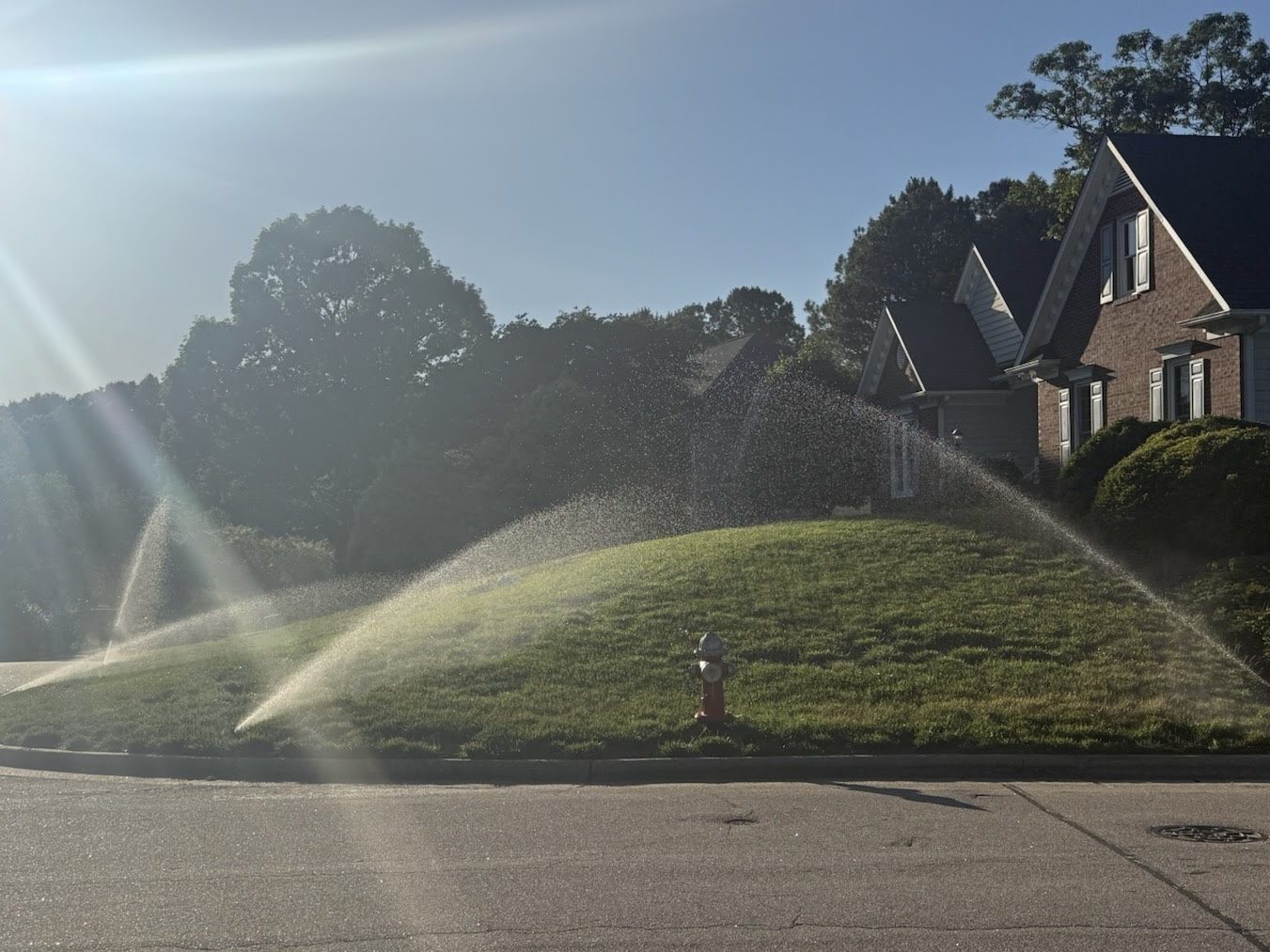
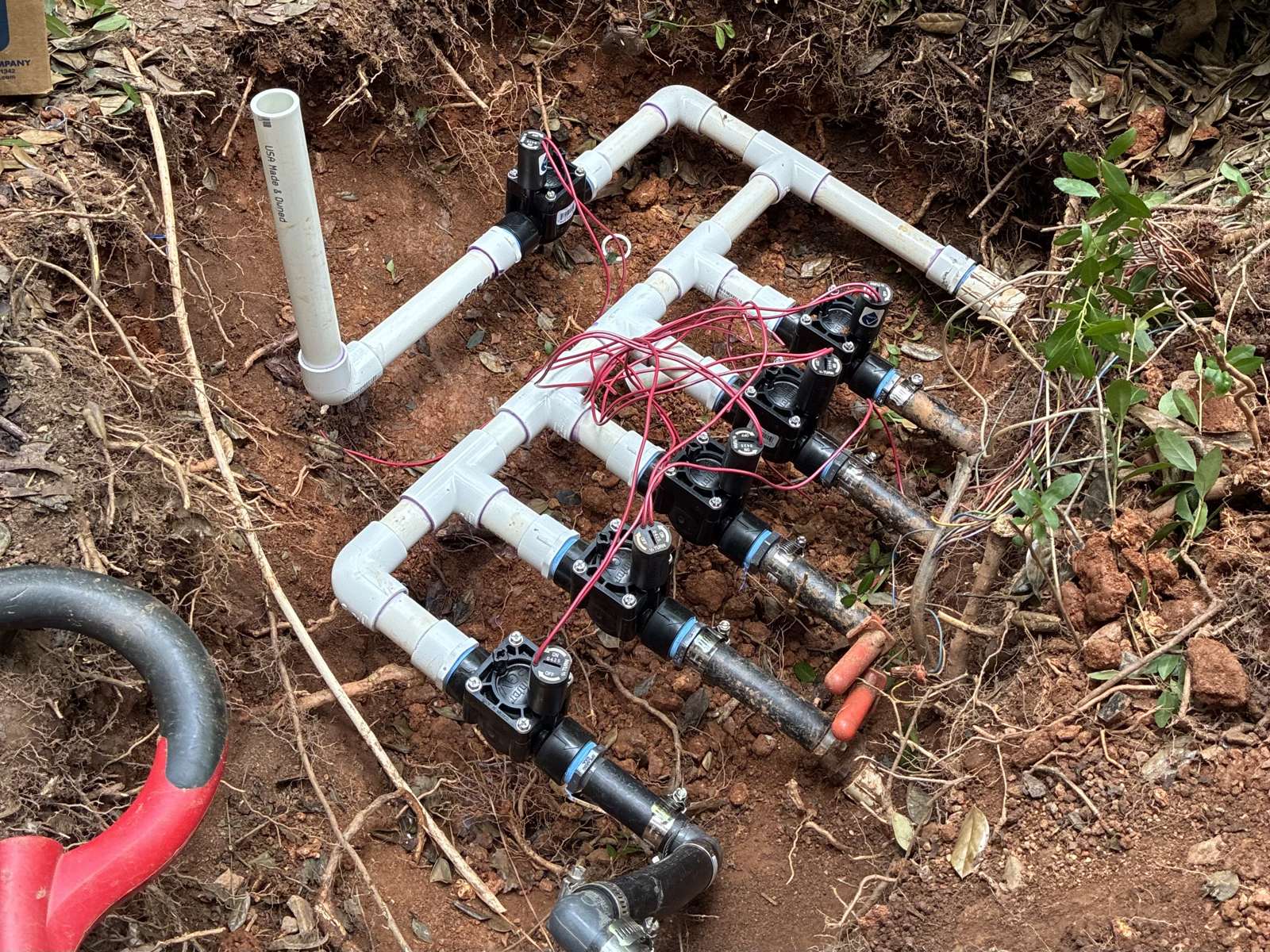
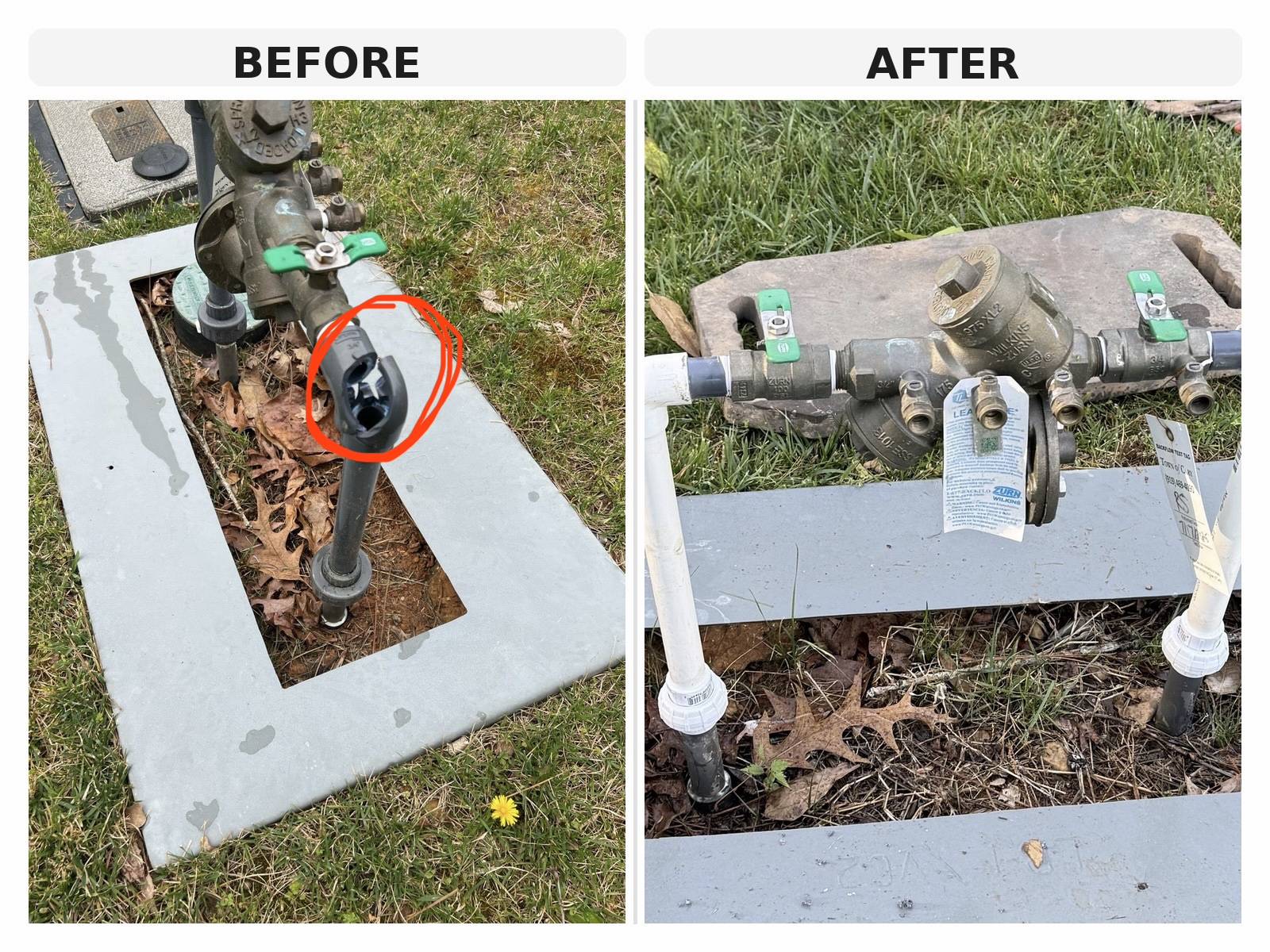
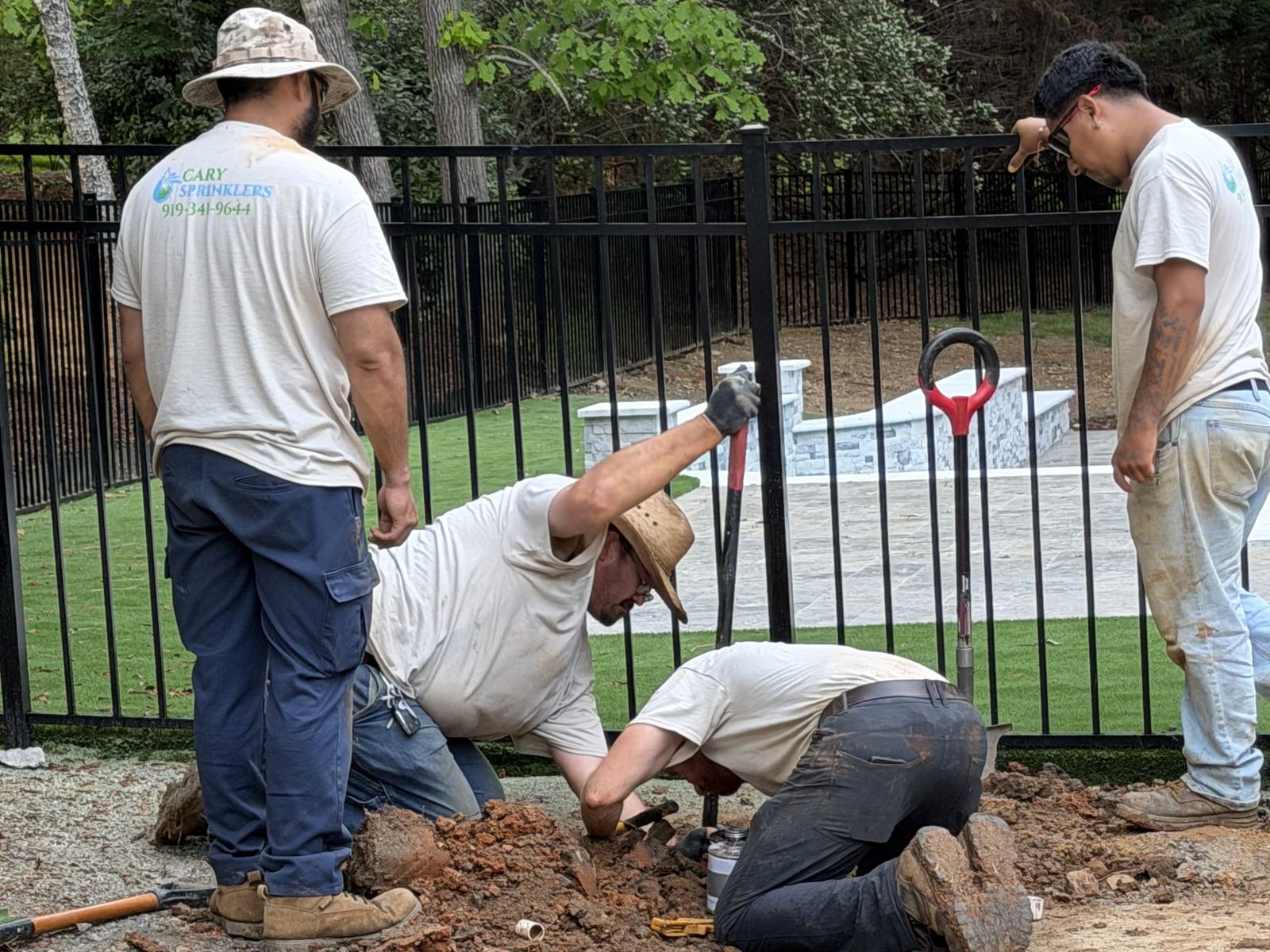
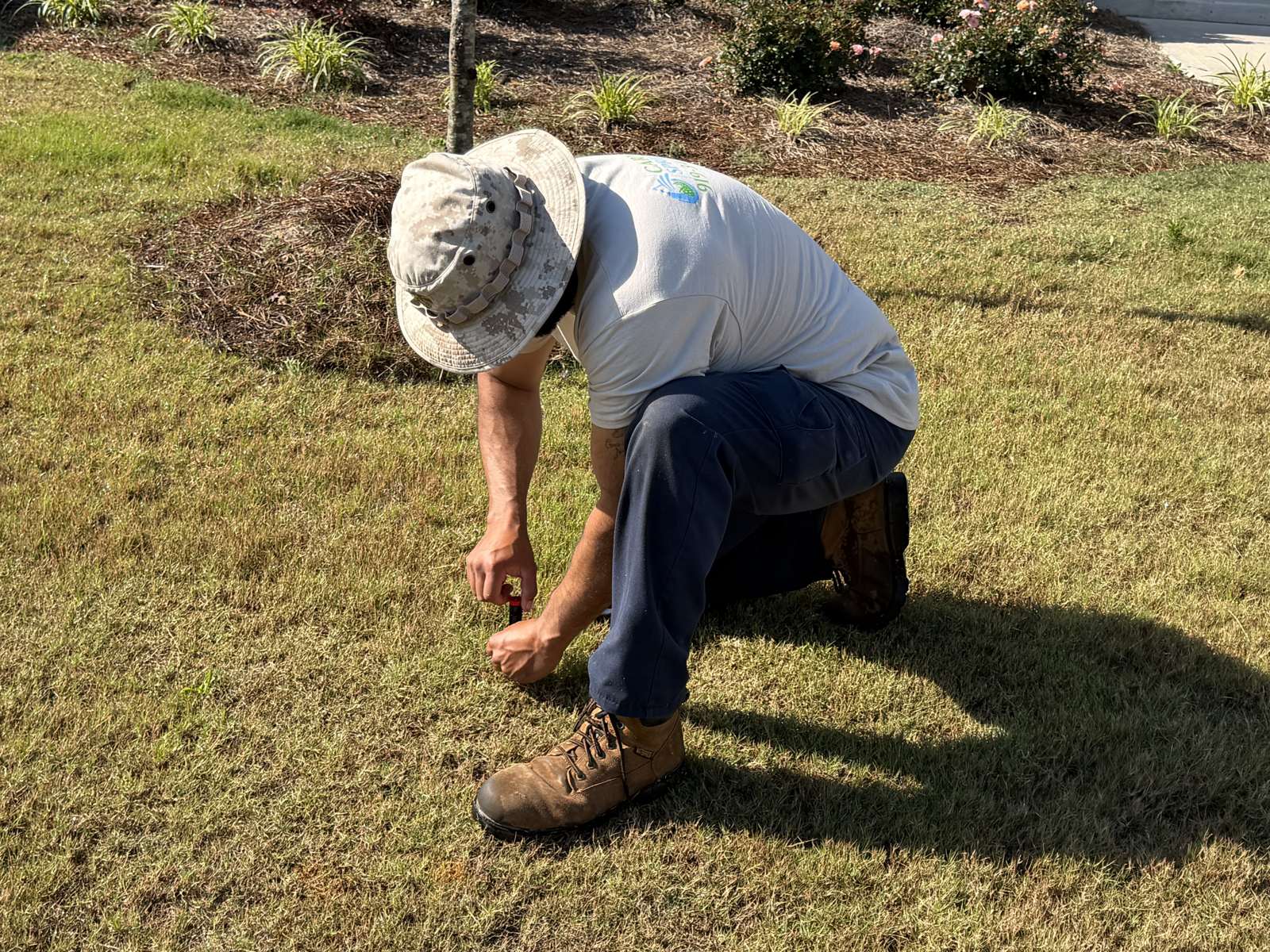
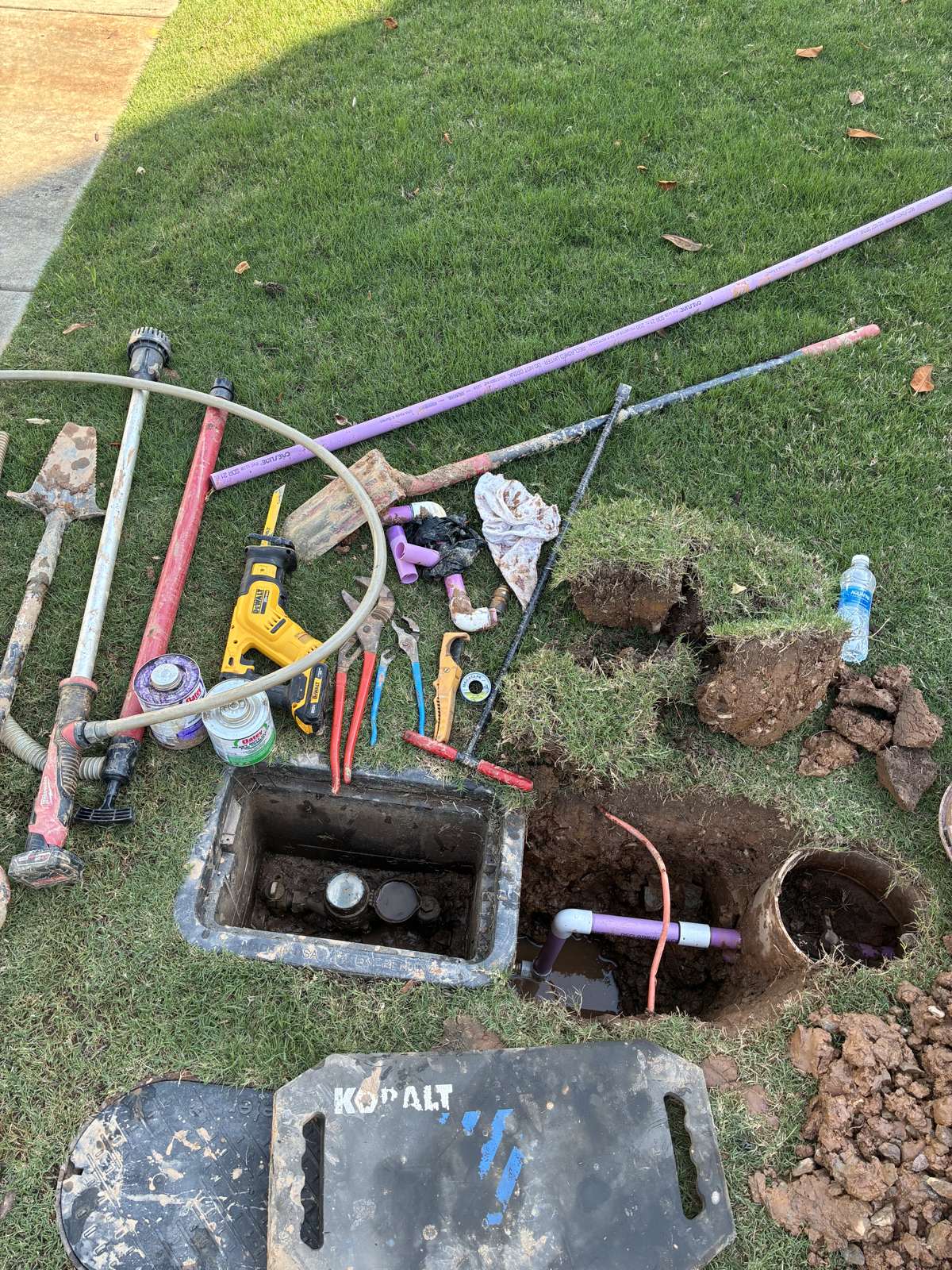
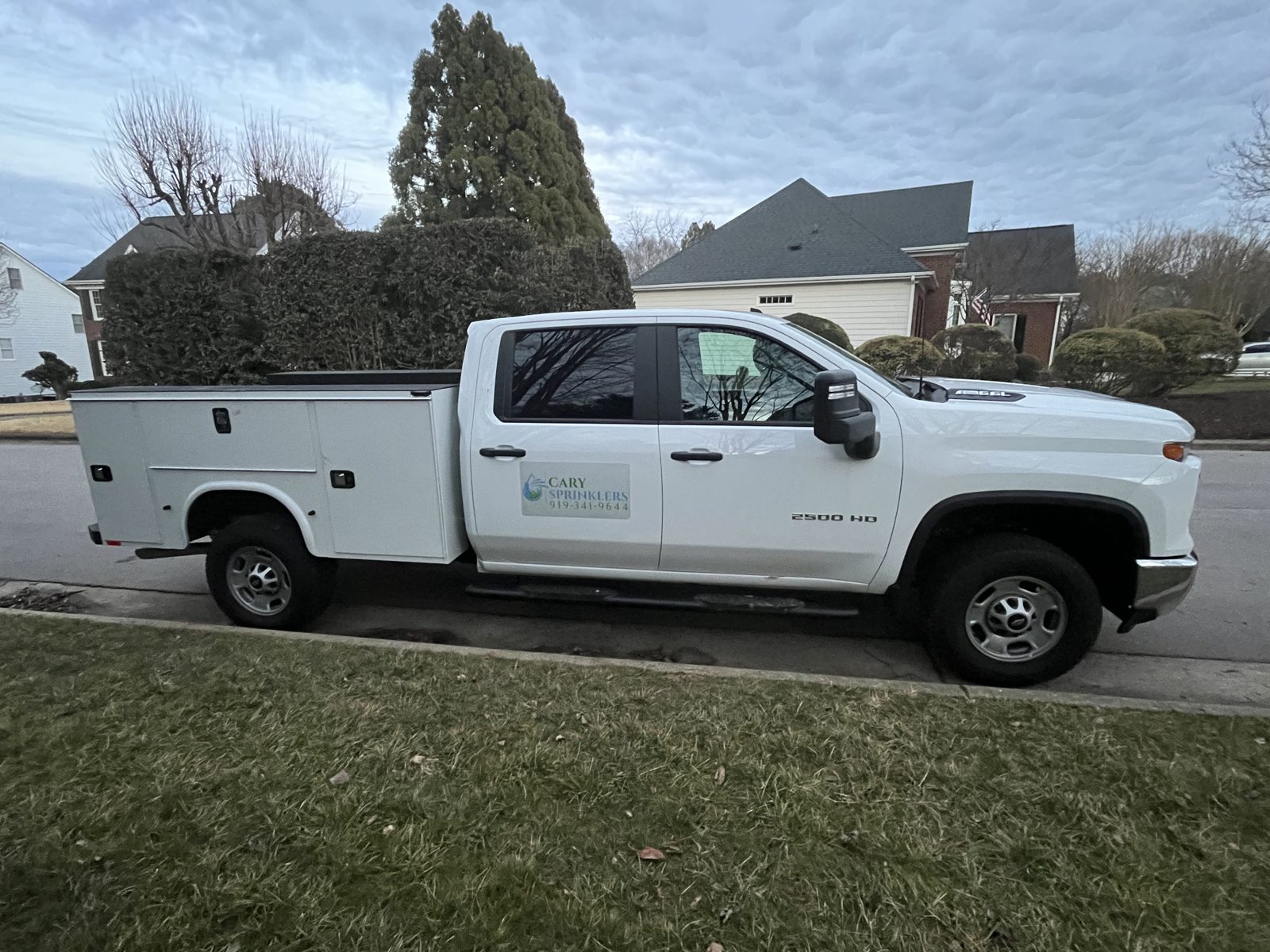
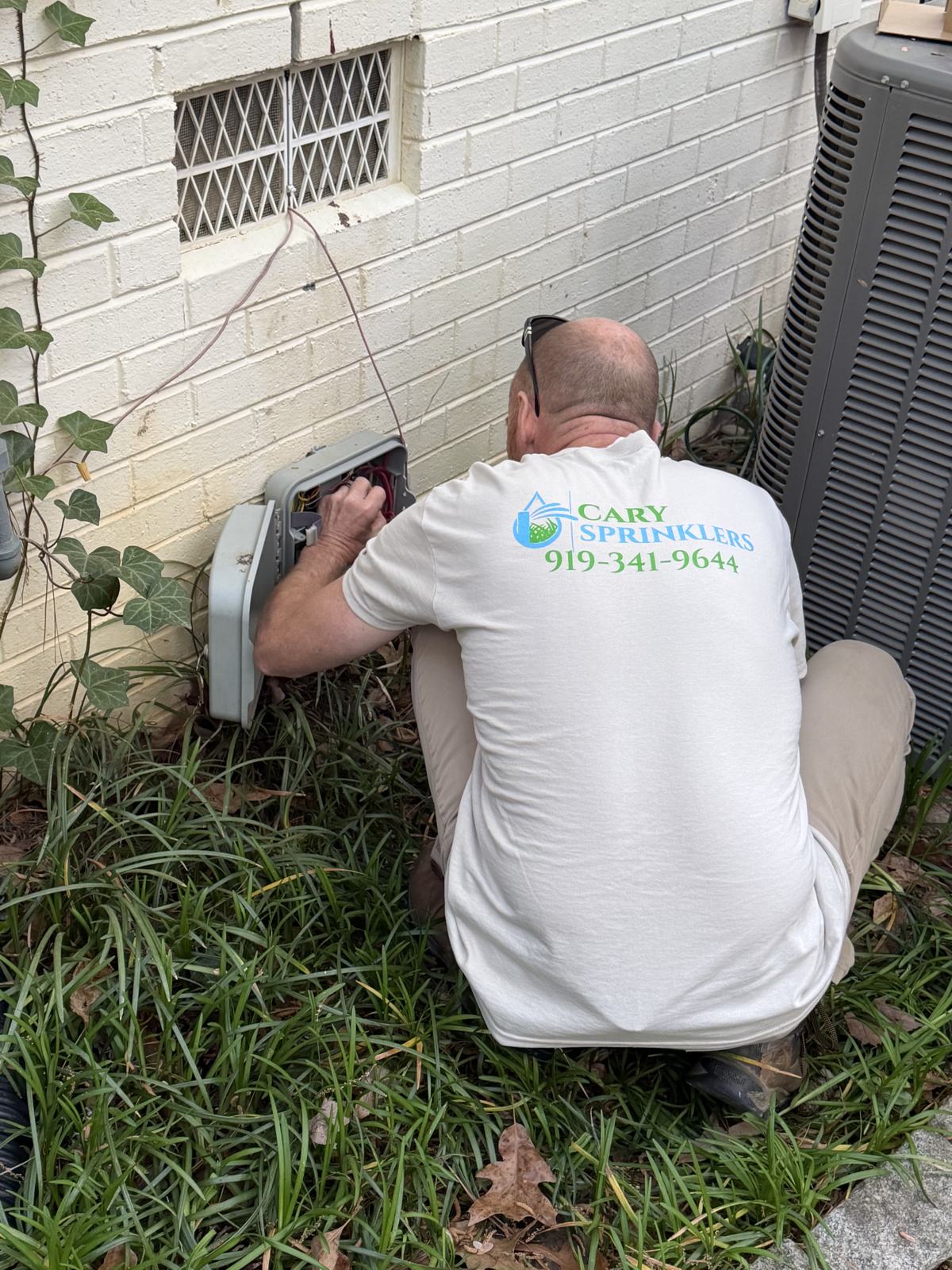
Recent work around the Triangle
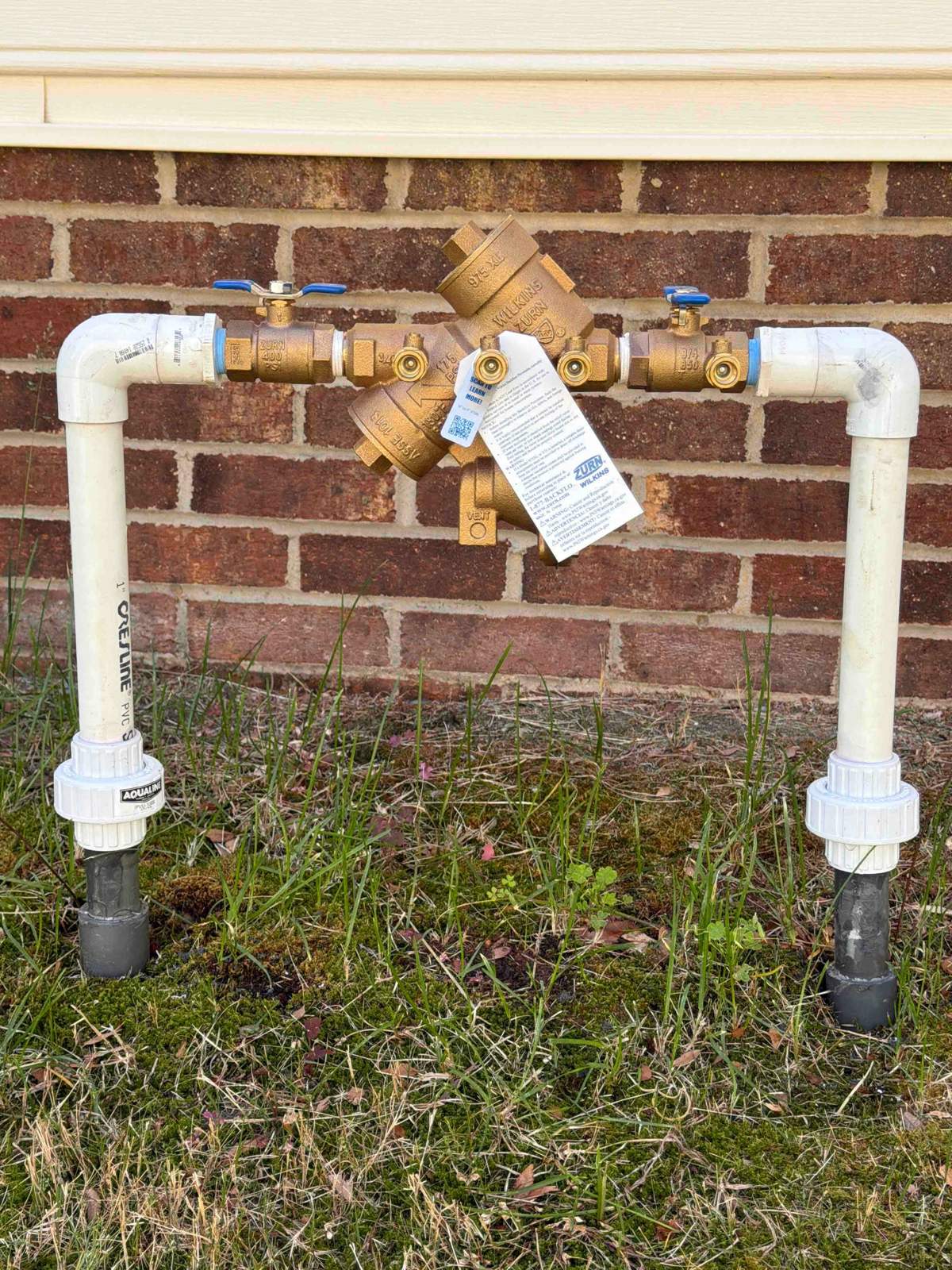
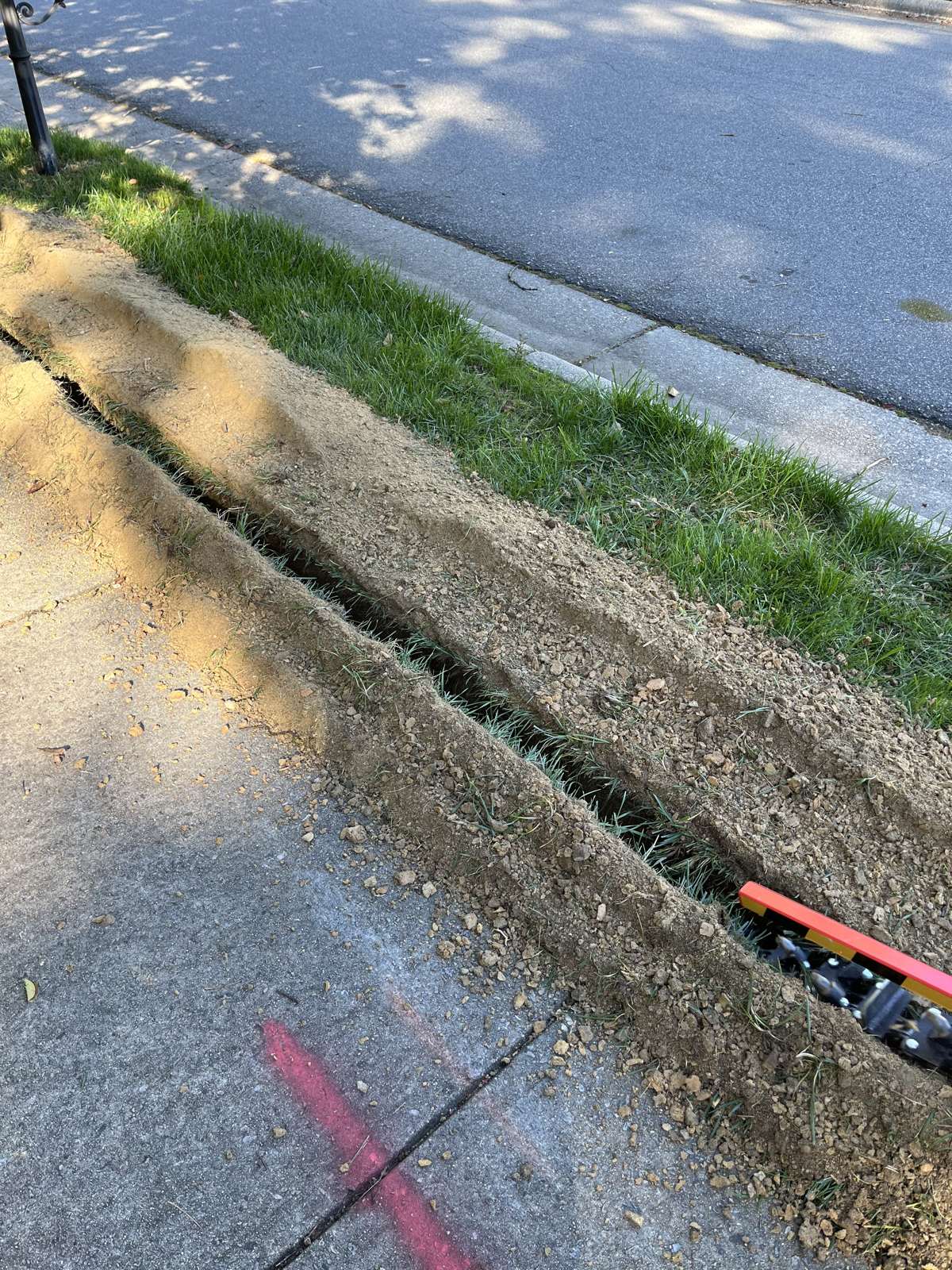
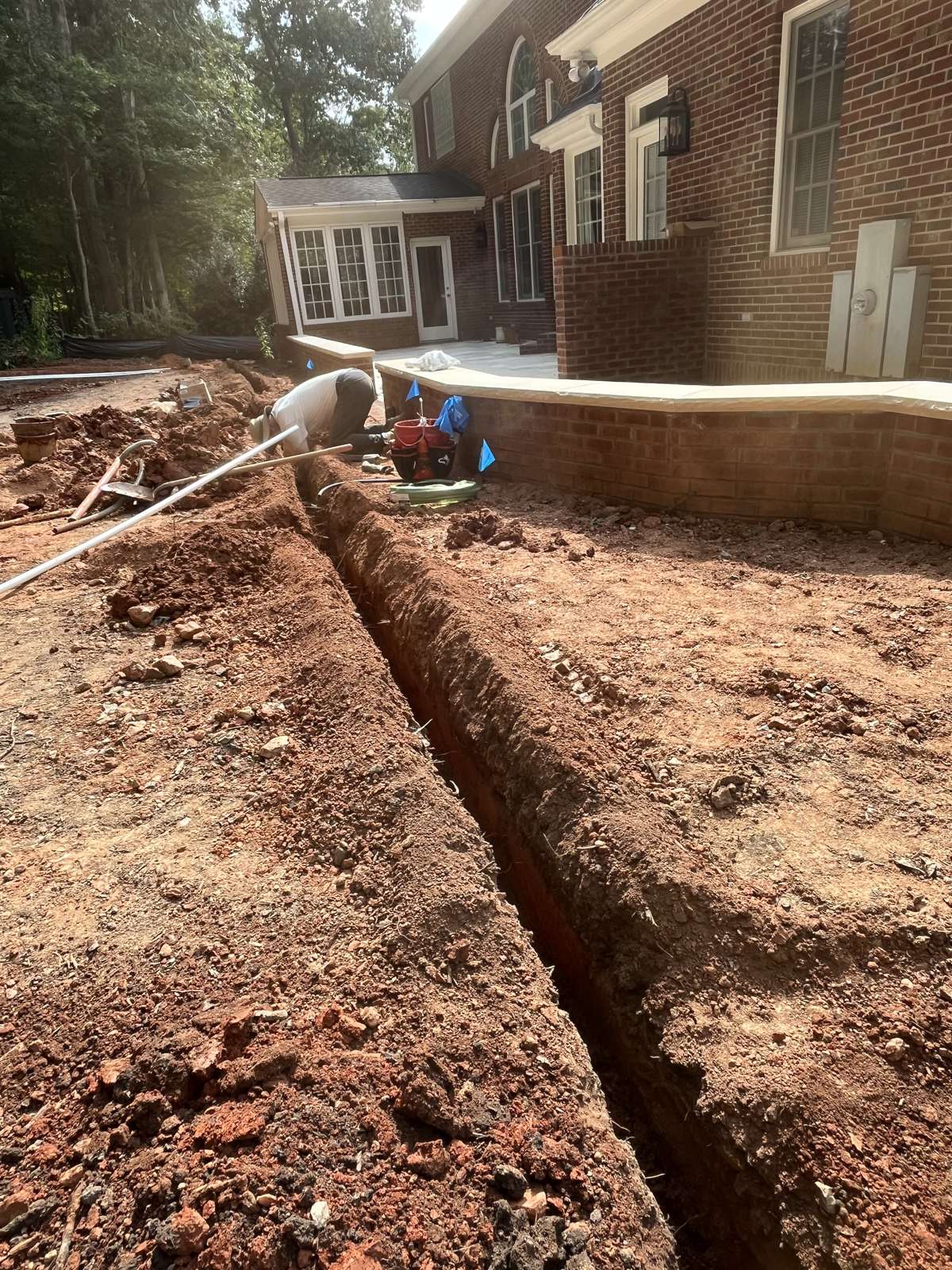
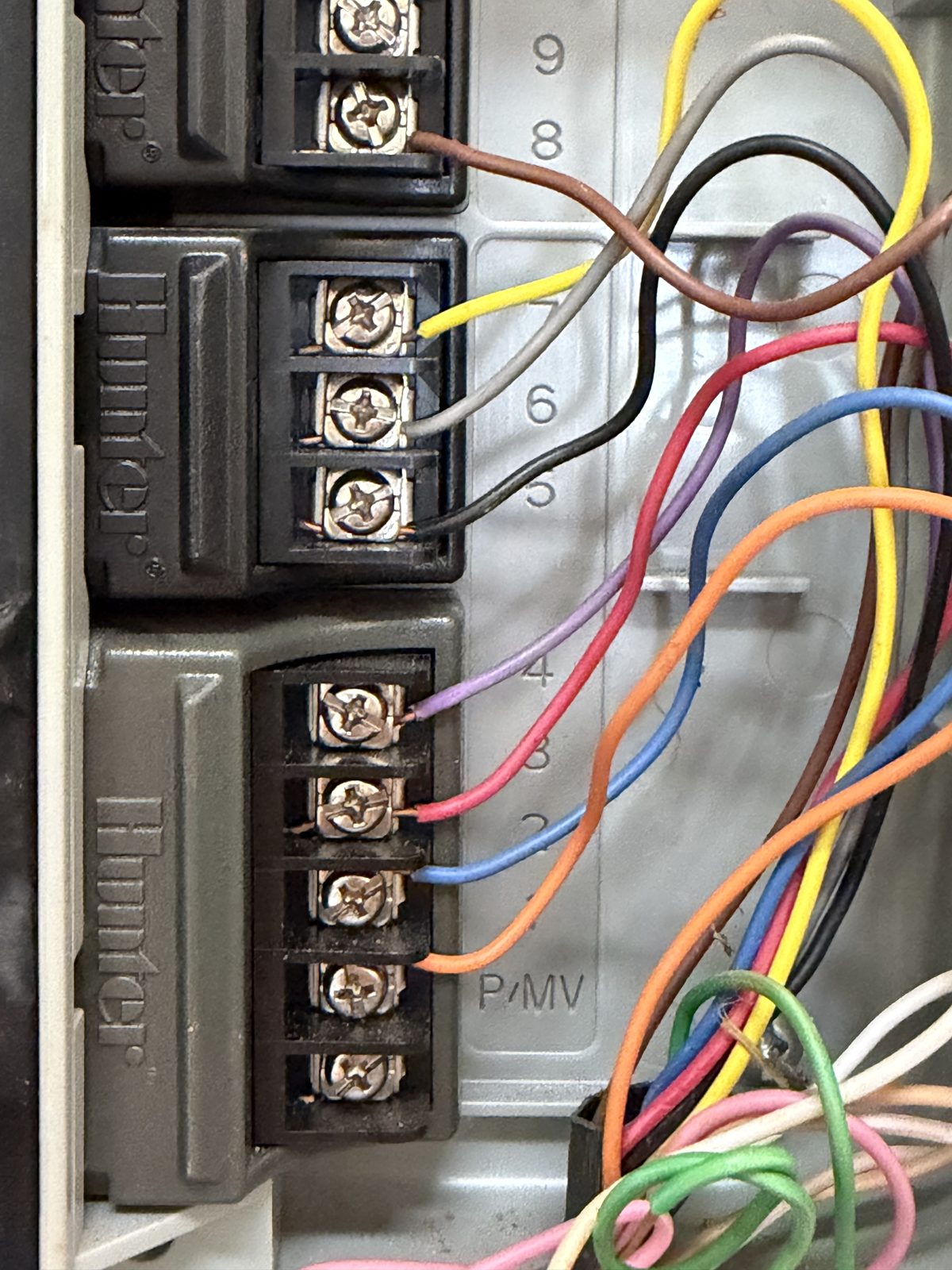
What our Triangle neighbors say




A visit, one zone at a time
Maintenance is mostly walking. We start a zone from the controller, then go stand in it while it runs, because a good half of what goes wrong is invisible with the water off. A rotor that quit turning last August looks perfect dry. A nozzle spitting a fan instead of a stream announces itself in about ten seconds wet.
After that it’s head by head. The ones that have sunk below grade come up, and turf grown over a cap gets cut back. Arcs knocked around by a mower wheel or a boot get reset to where they were meant to point. Clogged nozzles come out, get rinsed, and go back in. Heads that no longer match their neighbors get swapped so the zone throws at one consistent rate end to end. We watch the last head in each run especially — if it barely lifts while the first one hammers, that zone is starving and the cause is somewhere upstream. Valve boxes get opened and looked into, since standing water in a box during a dry week usually means a diaphragm is weeping. Then it’s back to the controller with everything we just saw.
Why two visits beat one
Spring and fall ask completely different questions of the same equipment, which is why a single annual visit always leaves half the system unexamined.
Spring is an inventory of what winter did. Lines get charged slowly and on purpose — slamming pressure into a cold, empty system is its own way to break something — while we look for burst laterals, a cracked assembly, a valve that won’t lift after four months of sitting, and heads that frost heave has pushed out of grade. Whatever program the controller was running in November is wrong for April, so the schedule gets rebuilt rather than resumed.
Fall accounts for what the growing season did. Mower decks, aeration tines, a landscape crew’s shovel, and the occasional determined dog cause most of the damage we find, and none of it speaks up while the lawn is green and full. Fall is also when the schedule needs winding down, and it pairs naturally with a blowout — winterization & startup — since we’re already at every head and valve. A failure found in October gets fixed dry, on your calendar, instead of during the first hot stretch of June.
The schedule you set in April is wrong by August
Turf demand isn’t a flat line across the year. In April, short days and cool nights mean your lawn drinks a fraction of what it will in August, so a program written for a mild spring is badly under-watering by midsummer — and then badly over-watering by October, when growth slows and the ground holds moisture far longer.
Runtime is only half the adjustment. On our soil, one long uninterrupted run doesn’t soak in; it pools and then leaves down the grade. Breaking the same total into two or three shorter passes with rest between them gives the ground time to accept it, and that split matters far more in July than it does in May. Alternate-day odd and even rules limit which days are even available to you, so a week’s worth of water has to fit through fewer openings.
A weather-based controller handles most of this on its own once somebody sets it up properly, though it still wants a look a couple of times a season — that’s where smart controller installation comes in. A plain mechanical timer needs a hand on it four or five times a year.
What five years without a tune-up looks like
It’s never one dramatic failure. It’s accumulation, and it plays out with almost boring consistency from yard to yard.
Year one, a couple of nozzles clog and two heads settle an inch low. Nobody notices; the lawn covers for it. By year three, several heads are spraying into thatch instead of over it, one zone has an arc knocked halfway onto the driveway, and a fitting has been seeping underground on every cycle without ever showing at the surface. The lawn has developed shapes by then — a pale crescent, a dark stripe — and the usual response is to add minutes everywhere, which soaks the healthy grass harder while the thin patches stay thin.
By year five there’s often a zone that won’t come on at all, because a wire splice sitting in a wet box finally corroded through. The controller is running a program nobody remembers writing. Backfill over some old repair has slumped into a soft rut you can feel through your shoes. Correcting all of it in one go is a genuine invoice, and nearly every piece of it began as a two-minute adjustment on a visit that never got booked.
Irrigation maintenance FAQ
How often should I have my system maintained?
A spring startup/tune-up and a fall winterization cover most homes, with a mid-season check if you want. A maintenance plan schedules it so you never have to remember.
My water bill jumped — can maintenance find why?
Usually, yes. A hidden mainline leak or a valve stuck slightly open runs underground with little showing. We pressure-test, isolate the zone, and locate it.
Do you do real-estate irrigation inspections?
Yes. We inspect the full system and document its condition — useful for buyers, sellers, and agents before closing.
What’s the difference between maintenance and repair?
Maintenance is the proactive tune-up that keeps the system efficient; repair fixes something that’s already broken. A good maintenance visit means fewer repairs.
Keep your system efficient
Book an inspection or a seasonal maintenance plan with a local team. Upfront pricing, always.
Get your free irrigation maintenance quote
Tell us what’s going on and we’ll get right back to you — usually the same day. Prefer to talk? Call or text 919-341-9644.
- Local, licensed & insured
- Upfront pricing — no surprises
- 100% guarantee + 12-month workmanship warranty